Are Swim Spas Worth It? A Practical Cost-and-Value Guide
Home / News / Are Swim Spas Worth It? A Practical Cost-and-Value Guide
November 05, 2026
Homeowners who crave aquatic exercise and warm hydrotherapy often find themselves standing before a difficult question: are swim spas worth it, or do they merely serve as an awkward middle ground between traditional swimming pools and portable hot tubs? Investing in residential water equipment demands significant capital, dedicated outdoor space, and regular utility expenditures. Understanding whether a swim spa is worth the money requires examining installation mechanics, hydrodynamics, and true operational expenses.
Water provides an environment unlike any dry-land gym equipment, yet swimming pools consume extensive lot footprints and sit unused during freezing winters. In contrast, a well-engineered swim spa packages continuous countercurrent swimming, targeted hydromassage, and thermal efficiency into a compact footprint. Deciding whether this equipment justifies its financial outlay requires looking beyond showroom sales pitches into real backyard conditions.
Understanding the Swim Spa: Mechanics and Value Metrics
How Countercurrent Propulsion Bridges Fitness and Leisure
A swim spa functions as an aquatic treadmill, driving a continuous stream of water toward the swimmer to permit uninterrupted lap training inside a compact vessel. Traditional swimming requires fifty-foot turns and bulky deck construction, whereas countercurrent engineering uses high-volume pumps to anchor the bather in one steady position.
Beyond cardiovascular endurance, these units incorporate molded ergonomic seating fitted with hydrotherapy jets. This dual architecture transforms a rigorous morning training station into an evening recovery retreat without requiring two distinct backyard installations. The compact water volume also enables more responsive temperature control compared to large swimming pools.
Defining Return on Investment Beyond Upfront Invoices
Calculating return on investment for home aquatic amenities is rarely a simple arithmetic ledger. When asking if a swim spa is worth it for personal wellness, one must account for saved travel hours, avoided public facility memberships, and the benefits of consistent water-based physical activity.
Buyer satisfaction depends heavily on realistic usage expectations. Disappointment occurs when homeowners fail to establish a steady daily routine, letting several thousand gallons of heated water sit idle beneath an unlifted insulated cover. Your actual usage frequency will determine whether the investment delivers tangible lifestyle value.
The financial commitment extends beyond the purchase price. Installation preparation, electrical infrastructure, ongoing chemical supplies, and monthly energy consumption all contribute to total ownership costs. Compare these expenses against your current fitness spending and potential health benefits to establish your personal value equation.
Swim Spa vs. Traditional In-Ground Pool vs. Hot Tub
Spatial Requirements, Permitting, and Excavation Timelines
Installing an in-ground swimming pool commonly involves heavy earthmoving equipment, extensive municipality permits, and permanent landscape changes. Excavation often requires weeks of active construction, followed by concrete curing, plumbing installation, and final finishing work. Swim spas arrive as self-contained acrylic vessels that require an engineered concrete foundation, significantly reducing the installation footprint and timeline compared to traditional excavated pools.
Property owners with compact suburban backyards or tight lot boundaries often discover that a swimming pool is structurally impractical. Installation timelines and permitting requirements vary by region, equipment type, and local regulations. Before purchasing, confirm with local authorities what permits and setback requirements apply to your property.
Feature Parameter
Dedicated In-Ground Pool
Standalone Portable Hot Tub
Swim Spa
Typical Water Volume
Varies by dimensions and depth
Varies by model
Varies by model
Primary Function
Lap swimming, diving, play
Passive seated hydrotherapy
Stationary swimming and hydromassage
Seasonal Usability
Climate and design-dependent
Climate and design-dependent
Climate and design-dependent
Structural Foundation
Requires significant site preparation
Level pad with reinforcement
Requires properly engineered pad
Safety Cover Management
Expansive manual or power roll
Lightweight bi-fold vinyl
High-density foam thermal cover
Hydrodynamics and Stroke Mechanics
Swimming against a steady hydro-jet current requires a brief physiological adjustment period. In open pool water, swimmers push against static resistance while gliding across surface lanes, whereas swim spa currents push against the torso and shoulders, demanding continuous core engagement and symmetrical arm pull cycles.
For fitness enthusiasts, triathletes, and masters swimmers, the continuous current eliminates the dead time of wall turns, allowing uninterrupted swimming in a compact space. The specific swimming experience depends on water flow characteristics, which you should evaluate through an in-person wet test. Different pump configurations and plumbing designs produce different current patterns, flow velocities, and turbulence levels.
The Trade-Off with Standalone Hydrotherapy Spas
Dedicated hot tubs excel at packing multiple deep ergonomic seats into a six-foot shell, delivering intense targeted hydromassage for four to six social bathers at once. If your sole domestic priority is passive soaking with neighbors on weekend evenings, a swim spa might provide excess water volume without corresponding social seating benefits.
Conversely, performing aquatic leg lifts, arm extensions, or resistance-band drills inside a conventional hot tub can be limited by cramped footwells and high bench seating. Swim spas provide an open rectangular channel that may offer more space for active movement. Confirm the interior dimensions and seat placement with the manufacturer to ensure the layout suits your intended exercises.
The True Cost of Ownership: Acquisition and Maintenance
Foundation Preparation and Installation
The price quoted on a manufacturer showroom floor represents only the initial financial milestone. Before the vessel arrives, you must prepare a proper foundation capable of supporting the equipment’s weight. Specific foundation requirements depend on the equipment model, local soil conditions, and manufacturer specifications.
A typical 13-foot swim spa filled with water and bathers can exceed several tons of total weight. The foundation must distribute this load across stable soil without settling, cracking, or shifting over time. Many installations require a four-inch reinforced concrete pad extending several inches beyond the equipment perimeter on all sides. The concrete must cure for an adequate period before bearing the full equipment weight.
In tight residential neighborhoods with privacy fencing or overhead power utilities, positioning a large acrylic vessel may require professional rigging assistance. Consult the manufacturer about the installation requirements for your specific model, and engage a qualified installer to assess your site and confirm what preparation is necessary. Account for delivery truck access, crane positioning clearances, and the pathway from your property boundary to the final installation location.
Electrical Hookup and Circuit Configurations
Operating multiple high-powered jet pumps alongside an electric heating element demands significant electrical infrastructure. Homes with older electrical panels often require a service upgrade to provide dedicated branch circuits required by local safety codes.
A certified electrician must evaluate your main panel capacity and confirm compliance with applicable electrical standards and manufacturer requirements. The specific wiring, conduit, and disconnect configuration depends on your equipment’s electrical specifications and local codes. Do not estimate electrical costs without a professional assessment.
Electrical installation typically involves running heavy-gauge copper wiring from your main panel to an exterior disconnect box near the equipment location. Local codes often mandate ground-fault circuit interrupter protection, weatherproof enclosures, and specific clearance distances from water edges. Permit fees, inspection costs, and labor charges can represent a substantial portion of your total installation budget.
Monthly Energy Consumption Across Seasonal Climates
Heating thousands of liters of outdoor water through cold winters naturally increases household kilowatt consumption. Energy efficiency depends on insulation quality, cover condition, heater capacity, usage patterns, and local climate. High-quality thermal covers are essential for minimizing heat loss.
To optimize energy efficiency:
Use and maintain a quality thermal cover whenever the spa is not in use.
Consult the manufacturer about programmable filtration and heating schedules.
Use water temperature settings appropriate for your activity level and climate.
Position the cabinet to minimize exposure to prevailing winter winds when possible.
Actual energy costs depend on your local utility rates, equipment settings, usage patterns, and climate. Request specific energy consumption data from the manufacturer for your climate zone and usage profile. In regions with harsh winters, monthly heating costs can increase substantially compared to temperate seasons. Budget for higher electricity bills during peak heating months when evaluating total ownership expenses.
Chemical Sanitization and Water Care Regimes
Water in an enclosed hot-water vessel accumulates body oils, perspiration, and environmental debris much faster than cold swimming pool basins. The CDC recommends maintaining hot-tub pH at 7.0–7.8 and maintaining the applicable chlorine or bromine level; follow local requirements and the spa manufacturer’s instructions.
Supplemental sanitation hardware can lighten chemical dependency and protect bather skin. Ozone generators inject active trioxygen to break down organic contaminants, while germicidal ultraviolet lamps disrupt microorganisms passing through the filtration system. These supplemental systems reduce the concentration of harsh oxidizers needed to maintain water clarity and safety.
Regular water testing, filter cleaning, and occasional water replacement form the foundation of proper maintenance. Establish a consistent testing schedule, keep accurate records of chemical additions, and replace filter cartridges according to manufacturer recommendations. Neglecting water chemistry leads to cloudy water, equipment corrosion, and potential health concerns.
Technical Anatomy: Engineering That Drives Functionality
Water Pumps, Plumbing Manifolds, and Water Current
The quality of a stationary swim experience depends on how the equipment’s plumbing and pump system distribute water. Different designs produce different water current characteristics. Visit a showroom and request a wet test to directly experience the water flow for the model you are considering.
Evaluate whether the water current feels steady and suitable for your swimming stroke, and whether flow intensity adjustments are available. Do not purchase based solely on pump horsepower; test the actual swimming experience firsthand. Some designs concentrate water flow into narrow turbulent jets, while others distribute flow across wider discharge ports for smoother swimming conditions.
Acrylic Shell Molding and Structural Cabinetry
A swim spa shell must endure sustained water pressure and resist ultraviolet degradation from sunlight exposure. Specific shell construction, material composition, and durability characteristics depend on the manufacturer. Confirm the shell material, construction methods, and any warranty coverage with the manufacturer before purchase.
Exterior cabinets protect the internal equipment and provide aesthetic appeal. Different manufacturers use different cabinet materials and finishes. Verify the specific material composition, weathering properties, and maintenance requirements for your chosen model. Some cabinets require periodic cleaning and sealing, while others use synthetic composites designed to resist fading and cracking without regular maintenance.
Practical Case Evaluation: The M-400 Swim Spa
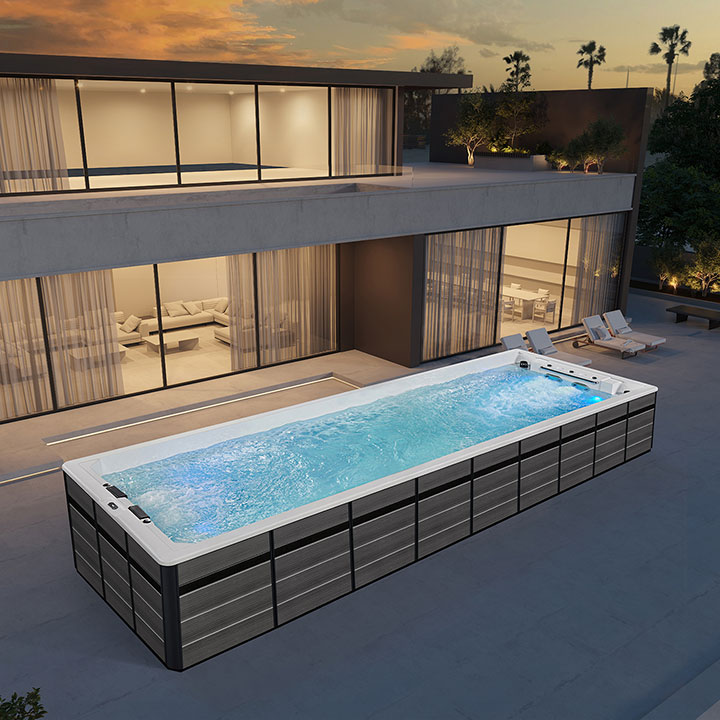
For prospective buyers analyzing whether a swim spa is worth the money investment and matches practical household constraints, examining real specifications clarifies engineering choices. Victoria Star, established by Foshan Gaoming Shiyi Sanitary Ware Technology Co., Ltd., offers residential wellness products including the 13 Foot 3 Seater Swim Spa M-400.
Balanced Footprint and Hydrotherapy Configuration
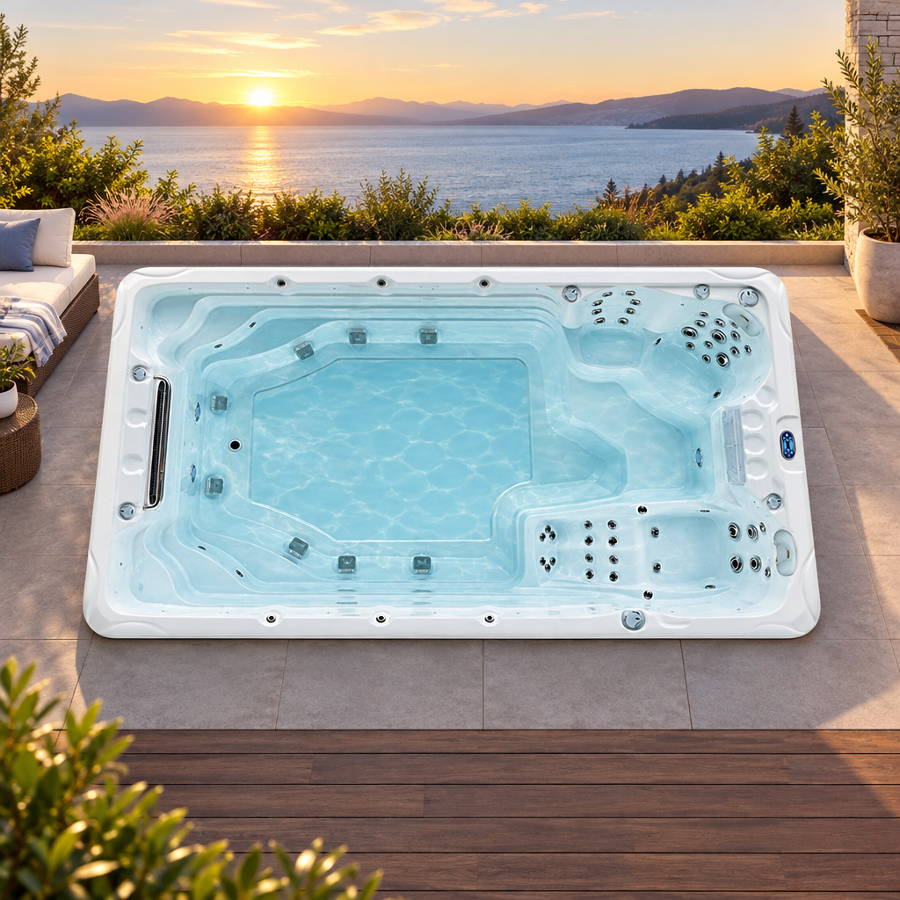
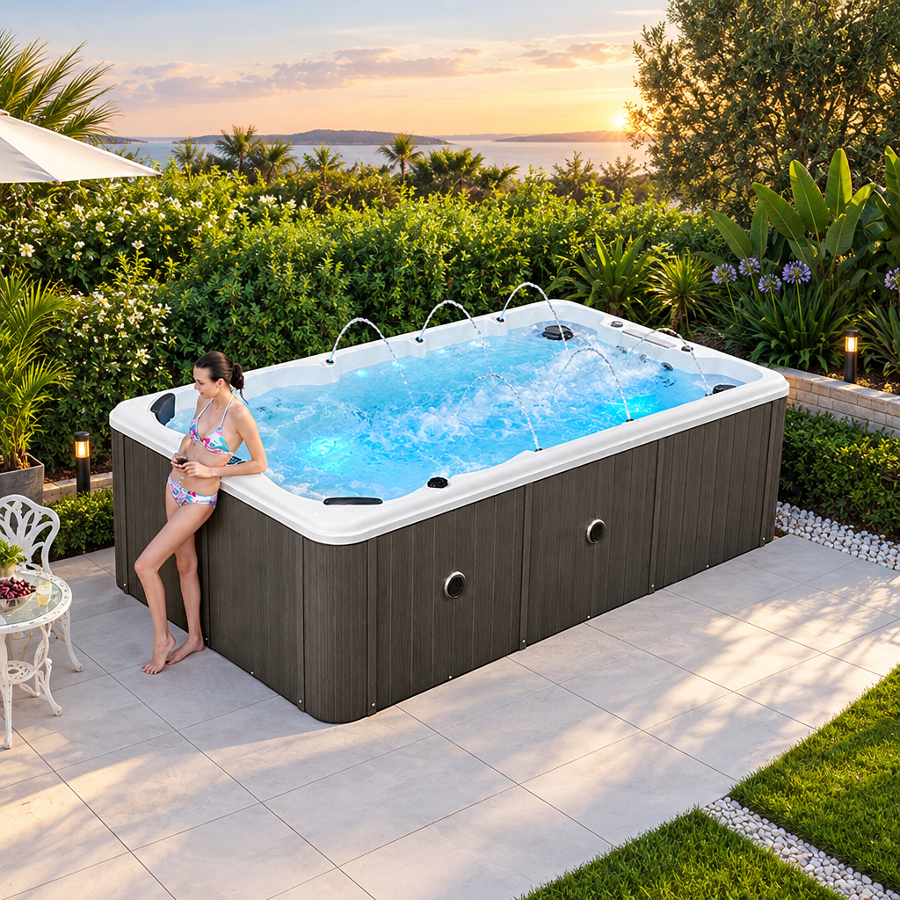
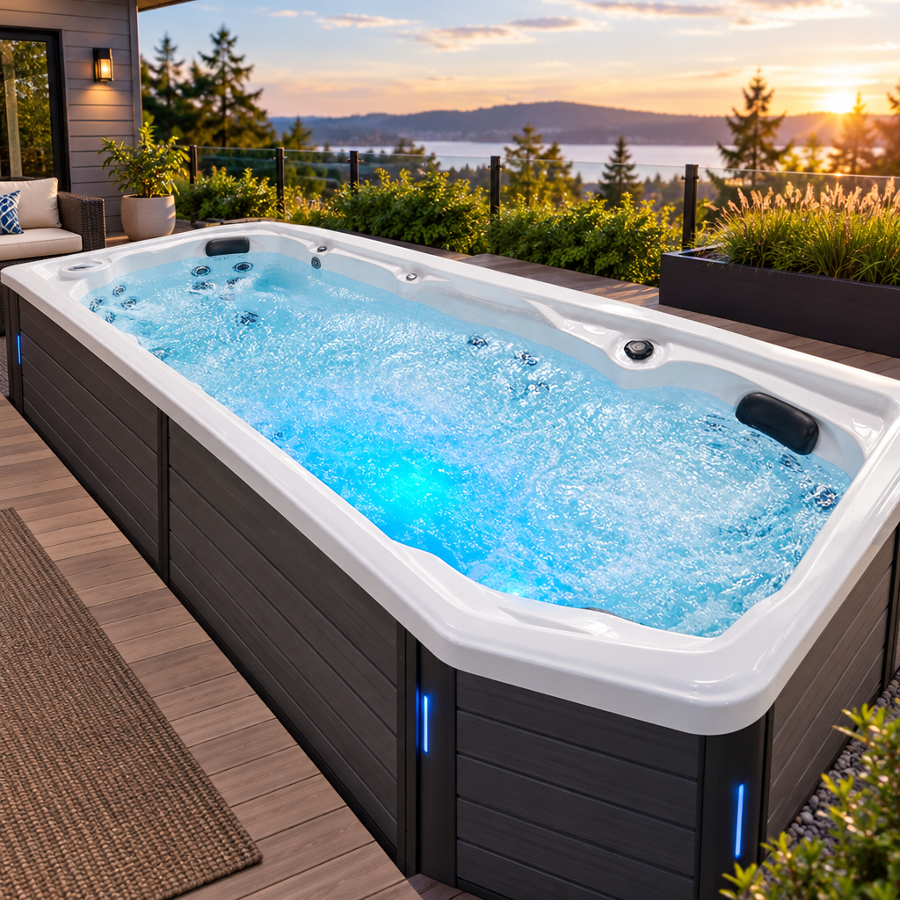
The M-400 measures 13 feet in length (4020 × 2280 × 1260 mm) with a water capacity of 6,000 liters. This size represents a balance between compact installation and functional swimming space. Verify that this footprint, along with adequate clearance for maintenance and bather access, fits within your available installation space, including entry pathways.
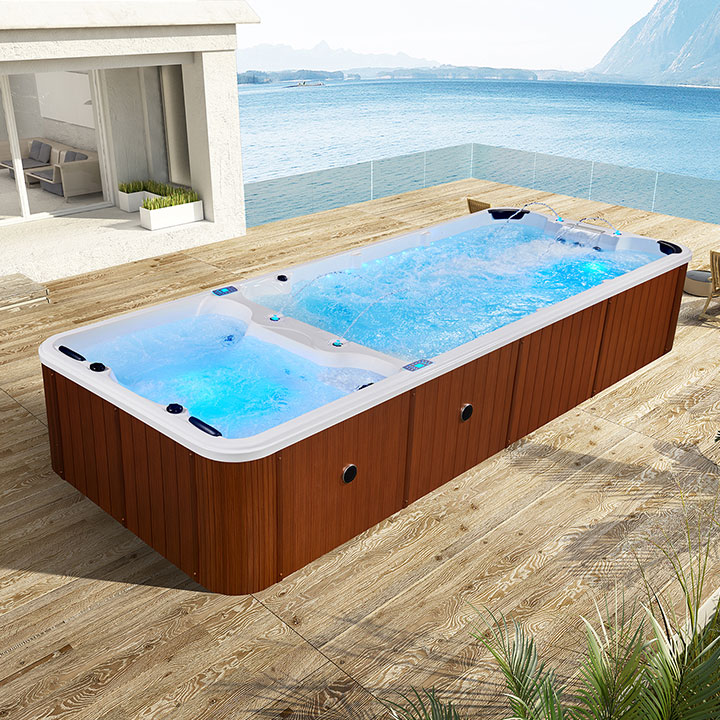
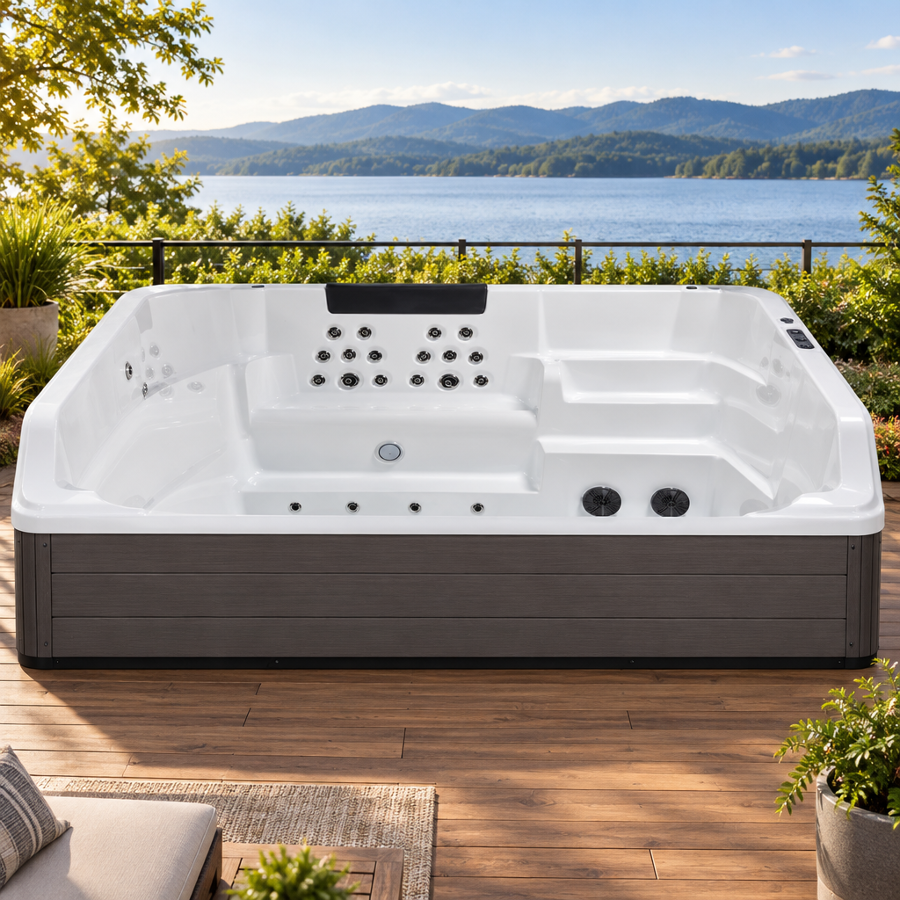
Inside the acrylic basin, the design incorporates a countercurrent swimming area with hydrotherapy seating areas, totaling three dedicated seats. The model features 56 total massage jets distributed across the seating areas. One bather can use the swimming function while others access hydrotherapy features simultaneously.
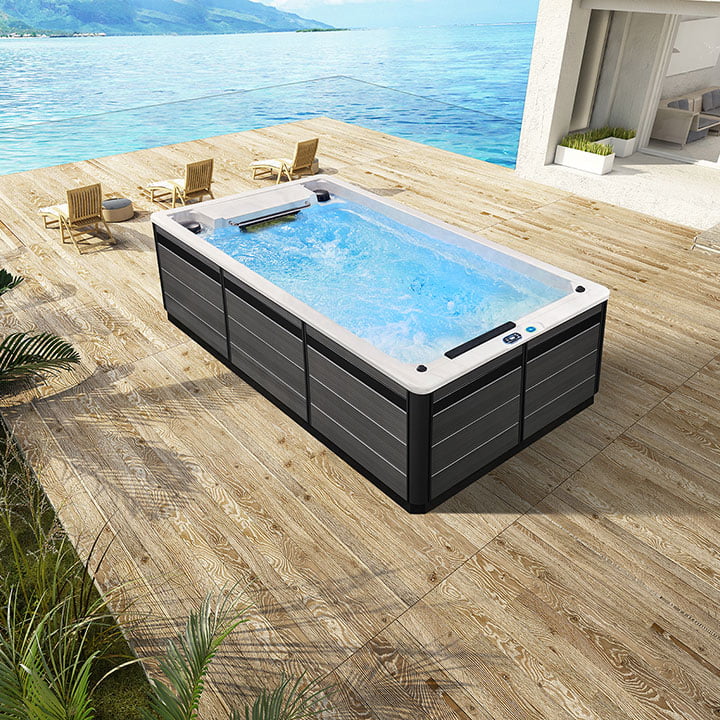
The cabinet is available in Platinum and Midnight exterior finishes, while the interior shell comes in a Porcelain glossy white acrylic finish. These aesthetic options allow homeowners to coordinate the equipment with existing outdoor décor and landscaping themes.
Powertrain and Water Treatment Specifications
The M-400 integrates three 3-horsepower water pumps alongside one 2-horsepower pump for the primary arrays, accompanied by a 1-horsepower circulation pump dedicated to continuous water filtration. This multi-pump configuration provides the hydraulic capacity necessary for simultaneous swimming and hydrotherapy functions.
Countercurrent System: Multiple-pump configuration allows bathers to adjust water flow intensity.
Thermal Management: A 3,000-watt electric heater maintains water temperatures suitable for both exercise and relaxation sessions.
Integrated Sanitation: Factory multi-stage filtration combines with ultraviolet (UV) treatment and an ozone disinfection system for water purification.
Smart Touchscreen Interface: The KL2020BT digital touchscreen panel controls pump speed, temperature setpoints, and atmospheric LED lighting.
Electrical Rating: The equipment requires a 12.55 kW power supply. Consult the manufacturer and a certified electrician to confirm supply requirements and installation specifications.
Who Extracts Maximum Value from a Swim Spa?
Low-Impact Exercise and Mobility
Buoyancy during water-based exercise can reduce weight-bearing on joints during some activities, which may make certain exercises more comfortable for some individuals. However, whether water-based exercise is appropriate depends on the person’s specific condition and medical guidance. Always consult a healthcare professional before beginning any new exercise regimen, particularly if you have existing health conditions or are recovering from surgery.
The warmth of heated water may provide temporary comfort relief during soaking sessions. This environment can support regular aquatic activity as part of a daily routine for those cleared by their healthcare providers to participate in water-based movement.
Masters Swimmers, Triathletes, and Fitness Enthusiasts
Competitive endurance athletes face persistent logistical hurdles: packed public pool schedules, indoor air quality concerns, and strict lane reservation times. A home swim spa removes scheduling friction between waking up and commencing training sessions, offering athletes control over workout timing and water temperature.
A countercurrent system allows continuous swimming without wall turns, which eliminates the interruption and momentum assistance of pushing off pool ends. Verify the water current characteristics and adjustability through a hands-on wet test to confirm the equipment matches your training needs and swimming style.
Families with growing children often seek outdoor entertainment without the extensive maintenance demands of a massive swimming pool. A swim spa can serve multiple functions: recreation on warm afternoons, low-impact exercise for parents, and relaxation for grandparents.
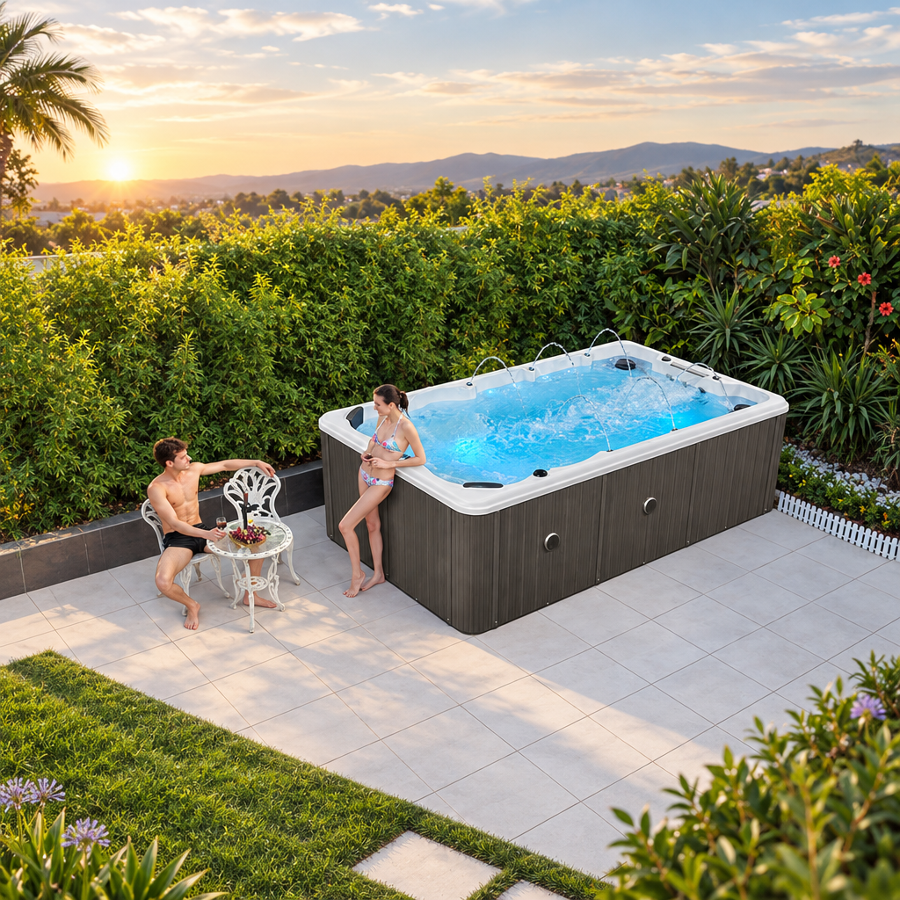
The interior LED lighting and water fountain features create visual appeal during evening hours, anchoring patio entertainment as a focal point for social gatherings. These aesthetic elements transform the equipment from purely functional fitness apparatus into an architectural landscape feature that enhances outdoor living spaces.
When a Swim Spa Is the Wrong Investment
Expectations of Large Summer Pool Parties
If your domestic vision involves hosting large neighborhood gatherings for pool volleyball, float lounger activities, and deep-water diving, a swim spa will prove restrictive. These vessels are designed for targeted fitness and intimate hydrotherapy, not wide-open aquatic recreation for crowds.
Children accustomed to expansive municipal pools may feel confined by the rectangular swimming channel once the novelty wears off. Purchasing an aquatic fitness unit expecting it to duplicate a full-sized recreational facility often leads to disappointment.
Renters and Frequent Relocators
While swim spas are self-contained appliances, relocation involves significant logistical and financial challenges. Disconnecting electrical systems, draining water, arranging professional rigging, and securing transportation costs substantial capital for each move.
Homeowners planning to sell their property within a few years rarely recoup their total installation investment through real estate appreciation. The equipment delivers its highest return when installed as a long-term personal wellness asset that will be used consistently over many years.
A 5-Step Framework to Make Your Final Purchase Decision
Conduct a Property and Installation Assessment: Measure available space, overhead clearances, boundary setbacks, and confirm local permitting requirements before contacting manufacturers. Walk the delivery path from your property boundary to the installation location, noting any gates, overhangs, or landscaping obstacles that could block equipment transport.
Verify Electrical Service Capacity: Have a certified electrician assess your main panel to confirm it can support the equipment’s power requirements without service upgrades. Obtain a written estimate for all electrical work, including permits, inspections, and final connection to manufacturer specifications.
Schedule an In-Person Wet Test: Never purchase based solely on digital photos or specifications. Test the water current, shell comfort, seat contours, and control interface at a showroom or installation. Bring a swimsuit and spend at least fifteen minutes in the water to evaluate whether the swimming current suits your stroke mechanics and fitness goals.
Request Detailed Manufacturer Information: Obtain specifications for foundation requirements, installation timeline, electrical hookup, maintenance schedules, and warranty coverage specific to your climate. Ask about winter operation limits, recommended service intervals, and the availability of replacement parts.
Estimate Your Realistic Usage Frequency: Honestly assess how often household members will actually use the equipment. This personal assessment heavily influences long-term satisfaction and return on investment. If you cannot commit to using the spa at least several times per week, the financial investment may not deliver proportional lifestyle benefits.
Frequently Asked Questions (FAQs)
Are swim spas worth it compared to building an in-ground swimming pool?
Cost and value depend on your specific priorities. Compare total acquisition, installation, maintenance, and energy costs for both options using quotes from local vendors. For year-round fitness and joint-friendly exercise with minimal yard disruption, a swim spa may offer advantages. If your primary goal is hosting large summer parties with deep diving zones, a traditional pool may better suit your needs. Obtain written estimates for both options, including all site work, permits, electrical upgrades, and projected annual operating costs.
How much do swim spas raise your monthly electric bill?
Monthly electricity costs vary based on regional climate, local utility rates, water temperature settings, thermal cover quality, and equipment efficiency. Request specific energy consumption data from the manufacturer for your climate zone. In moderate climates with quality insulation and covers, increases may be moderate during temperate seasons but higher during winter heating demands. Compare against your regional electricity rates to estimate actual costs. Some manufacturers provide estimated monthly operating costs for different climate zones and usage patterns.
Can a swim spa realistically be used during freezing winter months?
Usability during winter depends on the specific equipment model, manufacturer’s environmental temperature specifications, insulation quality, and freeze-protection features. Consult the manufacturer about the operating temperature range, environmental limits, and winter protections recommended for your location. Confirm with the installer that your installation method supports year-round use in your local climate. Some models include freeze-protection sensors and automatic heating cycles to prevent equipment damage during extreme cold.
Does a swim spa require as much chemical maintenance as a pool?
Swim spas contain significantly less water volume than full-sized pools, which generally requires less total chemical additives by volume. However, water quality management requires consistent attention. Follow the manufacturer’s guidelines for sanitizer testing, pH adjustment, filter maintenance, and water replacement intervals specific to your usage patterns. Actual requirements depend on bather load, usage frequency, local water quality, and climate. Consult your equipment manual and local health regulations for specific schedules.
How long does a quality acrylic swim spa shell last?
Shell lifespan depends on material quality, usage environment, water chemistry maintenance, and ongoing care. Manufacturers typically warrant acrylic shells for specific periods; check the warranty details for your model. With proper water chemistry management and UV protection, an acrylic shell can remain functional for many years. Mechanical components such as water pump seals, electronic sensors, and heater elements may require routine servicing or replacement during the equipment’s operational life. Establish a relationship with a qualified service technician for periodic maintenance and component replacement as needed.
Final Verdict: Balancing Investment Against Everyday Living
When evaluating whether swim spas are worth it, the answer depends on your daily habits, local climate, budget, and realistic usage patterns rather than the equipment alone. For homeowners who will regularly utilize low-impact aquatic exercise, hydrotherapy features, and convenient year-round water access, a compact swim spa can deliver meaningful lifestyle benefits.
By conducting thorough site and electrical assessments, obtaining detailed manufacturer specifications, testing equipment in person, and maintaining realistic usage expectations, you can make an informed investment decision. Transform your backyard into a functional wellness asset that supports consistent personal use for years to come, but only after confirming that your household will commit to regular usage that justifies the substantial financial commitment.
Victoria Star Swim Spa offers the perfect balance between exercise and relaxation, whether you want to swim for fitness or relax in the spacious seating.
Victoria Star Swim Spa offers the perfect balance between exercise and relaxation, whether you want to swim for fitness or relax in the spacious seating.