Arctic Ice Bath Guide: Recovery Evidence, Cold Plunge Safety, and Tub Selection
Home / News / Arctic Ice Bath Guide: Recovery Evidence, Cold Plunge Safety, and Tub Selection
November 04, 2026
Stepping into an arctic ice bath challenges human instinct within seconds. The sharp bite of chilled water forces an immediate gasp, rapid pulse changes, and a sudden mental reset that enthusiasts actively seek. Across modern athletic training grounds and home patios, this practice of deliberate cold exposure has shifted from an eccentric outdoor ritual into a structured daily discipline. People pursue immersion to soothe post-exercise aches, sharpen focus, or cultivate stress resilience under controlled conditions.
Yet the boundary between verified physiological impact and online folklore remains blurred. Understanding how low temperatures interact with human biology prevents injury and sets realistic performance expectations. Exploring this cold therapy discipline requires evaluating published scientific findings alongside dependable equipment design, transforming a freezing challenge into an intentional habit.
Marketing campaigns often label cold immersion with dramatic names, invoking polar landscapes and extreme endurance feats. Beneath the evocative terminology lies cold-water immersion, defined as submerging the body up to the neck or chest in water typically maintained below normal ambient temperatures. Public health and athletic conditioning bodies evaluate these exposures through measurable physical criteria rather than poetic descriptions.
Water conducts thermal energy away from human skin far more rapidly than ambient air of an identical temperature. Consequently, an arctic ice bath does not require sub-zero ice crystals to trigger profound thermal strain. Immersion at moderate chill levels creates significant physiological work for the cardiovascular system, proving that extreme ice accumulation is unnecessary for genuine cold therapy.
Primary User Segments and Common Expectations
Athletes constitute a primary demographic, seeking rapid recovery turnaround between intense training sessions. Their immediate focus centers on reducing delayed onset muscle soreness and suppressing systemic inflammation. For competitive individuals, the sensation of reduced muscle tightness provides clear psychological reassurance before the next training bout.
Concurrently, home wellness practitioners adopt low-temperature plunges to stimulate mental clarity and build emotional grit. Exposure to acute thermal stress demands steady breath control, creating an effective laboratory for practicing calm in high-arousal states. Commercial boutique spas and recovery studios also embrace these installations, offering turnkey immersion setups for clients pursuing contrast therapy routines.
The Science of Cold-Water Immersion: Evidence and Limitations
Post-Exercise Muscle Soreness and Subjective Fatigue
A Cochrane review found limited evidence that cold-water immersion may reduce delayed-onset muscle soreness compared with passive recovery following strenuous physical exertion. Some research subjects have reported reduced discomfort when treated with cold baths, though the magnitude and consistency of this effect vary across studies.
However, scientific literature emphasizes that subjective relief does not automatically signify complete structural tissue repair. Masking sore sensations allows athletes to feel renewed, yet microscopic muscle damage may still demand biological healing time. Relying solely on cold water to fast-track training volume without adequate nutrition and sleep can overlook underlying systemic fatigue.
Physiological Responses: Vasoconstriction and Circulation
Sudden immersion prompts rapid cutaneous vasoconstriction, wherein peripheral blood vessels narrow to redirect blood volume toward core vital organs. This defensive circulatory redistribution conserves core warmth during cold exposure. Once a person exits the arctic ice bath and begins rewarming, reactive vasodilation takes place as peripheral circulation gradually reopens.
Whether these vascular changes deliver lasting benefits for tissue repair or long-term recovery remains an active area of investigation. Cold immersion triggers measurable cardiovascular responses, but the clinical significance of these mechanisms for structural healing has not been fully established.
Distinguishing Established Science from Unproven Health Claims
Rigorous exercise science reveals a notable trade-off concerning resistance training. Multiple sports physiology reviews demonstrate that regular cold immersion immediately following hypertrophy-focused lifting can attenuate long-term muscle growth and maximal strength gains. Suppressing acute inflammatory cascades dampens the cellular signaling needed for optimal muscle fiber remodeling over time.
Furthermore, sweeping assertions that daily ice baths cure chronic metabolic illnesses, melt visceral fat, or permanently boost endocrine vitality lack robust clinical trials. Cold immersion may reduce perceived muscle soreness for some people, while evidence for broader or faster physical recovery remains limited. It serves as an acute recovery intervention and a potent nervous system stimulant, yet it cannot serve as a stand-alone medical treatment for established disease states.
Safety Protocols and Risk Mitigation for Cold-Water Immersion
Understanding the Cold-Shock Response
The first minutes after submersing in cold water trigger the cold-shock response, an involuntary neurogenic reflex. Cutaneous thermoreceptors trigger an immediate gasping reflex followed by hyperventilation, paired with sudden elevations in heart rate and peripheral vascular resistance. The first minute can be especially hazardous, as uncontrolled gasping and rapid breathing may impair breathing control and increase drowning risk if an individual panics or inhales underwater.
Authoritative bodies like the United States National Weather Service clarify that cold-shock hazards emerge in water temperatures between ten and fifteen degrees Celsius, well above freezing. Immersing in an arctic ice bath tub without breath composure exposes the cardiovascular system to sudden strain, making calm respiration mandatory before entering.
High-Risk Groups and Medical Consultation
Certain physiological profiles face acute health dangers in chilled water. Individuals with diagnosed cardiac arrhythmias, coronary artery disease, uncontrolled hypertension, or peripheral circulatory conditions like Raynaud’s syndrome should avoid abrupt cold immersion unless cleared by a physician. The sudden blood pressure spike can destabilize vulnerable vascular systems.
Pregnant individuals and those taking prescription medications that alter heart rate regulation or vascular tone must also exercise extreme caution. Entering cold water should never occur under the influence of alcohol, sedatives, or recreational substances. In every home or athletic setting, solitary immersion without nearby supervision should be strictly discouraged.
Structuring a Safe and Progressive First Immersion
Novices must avoid adopting aggressive, multi-minute polar plunge protocols on their initial attempt. Approaching the water with patience fosters physiological adaptation while minimizing psychological panic.
Use a thermometer to check water temperature and avoid extremely cold water for your first attempt. Choose conditions appropriate to your health status and prior cold-water exposure. Consider seeking medical advice if you have any relevant health condition.
Inhale deeply, step smoothly into the basin, and lower the torso gradually while maintaining continuous, slow exhalations through pursed lips.
Keep your initial session brief, focusing entirely on quiet nasal breathing rather than testing physical pain thresholds. Exit the water steadily if you experience uncontrolled breathing, numbness, or dizziness.
Exit the tub steadily using secure handholds, wrapping the torso in warm layers to allow natural, gradual metabolic rewarming without scalding hot showers.
How to Select the Right Outdoor Cold Plunge Tub
Temperature Control: Dedicated Chillers vs. Manual Ice Addition
Transitioning from basic tubs to dedicated equipment hinges on cooling mechanics. Relying on bagged ice requires constant purchases, manual hauling, and produces unpredictable temperature swings that degrade therapeutic consistency. Melting ice constantly dilutes the bath, making target temperature maintenance nearly impossible during summer heat.
In contrast, an integrated heat pump or dedicated mechanical chiller maintains temperature setpoints through active refrigeration loops. Users gain more dependable thermal parameters without pre-planning logistics, ensuring the plunge remains ready on demand. Over time, the economics of equipment versus recurring ice expenses depend on the purchase price, electricity rates, local ice costs, climate, and usage frequency.
Sizing, Capacity, and Structural Footprint
Basin dimensions govern both user ergonomics and practical site feasibility. A basin must accommodate tall individuals with knees bent and shoulders submerged, yet excessive volume increases chilling power consumption and total structural mass. Water capacity in private setups typically ranges between three hundred and four hundred liters.
Before selecting a unit, assessing the combined weight of the shell, internal machinery, water, and user is essential. A filled residential tub easily surpasses several hundred kilograms. Verifying deck deflection limits, patio structural engineering, and substrate stability prevents structural failure over long-term ownership.
Selection Factor
Integrated Chiller Tub
Manual Stock Tank Setup
Temperature Consistency
Automated temperature control
Fluctuates rapidly as ice blocks melt
Operational Convenience
Plug-in readiness with automated circulation and cooling
Labor-intensive hauling, melting, and draining
Structural Durability
Weatherproof composite cabinets with insulated acrylic liners
Basic single-wall polyethylene or galvanized steel
Upfront Hardware Cost
Moderate to high initial capital investment
Low baseline expenditure for bare tank
Thermal Retention
Insulation and covers reduce heat loss
Minimal baseline insulation with heavy ambient losses
Materials, Insulation, and Outdoor Durability
Outdoor installations face intense ultraviolet degradation, rain, and shifting seasonal temperatures. Acrylic basins backed by composite exterior paneling offer durability against weather exposure. The choice of materials and construction quality varies significantly between models.
Thermal containment through insulation and tight-fitting covers blocks ambient heat gain during warm conditions. Different manufacturers employ varying insulation approaches, and prospective buyers should verify the specific thermal design of any model under consideration.
Essential Buying Checklist
Electrical specifications and installation requirements, as confirmed by the manufacturer’s documentation and assessed by a qualified electrician under local code.
Comprehensive cabinet dimensions and dry weight metrics to determine delivery clearance, turning radiuses, and final ground placement.
Ergonomic interior contours, checking for integrated steps, reclined back rests, and recessed drains that prevent uncomfortable seating postures.
Water circulation mechanics, including continuous low-wattage pump systems that prevent thermal stratification within the water column.
Access to technical support, consumable filter cartridges, replacement fittings, and explicit component warranties for major mechanical parts.
Product Spotlight: Victoria Star Outdoor Cold Plunge Tub C02
Published Specifications and Engineering Profile
For facilities and private properties evaluating dedicated equipment, the Outdoor Cold Plunge Tub C02 offers balanced hardware engineering. The C02 is a Victoria Star product from Foshan Gaoming Shiyi Sanitary Ware Technology Co., Ltd. This model targets demanding residential and light commercial settings.
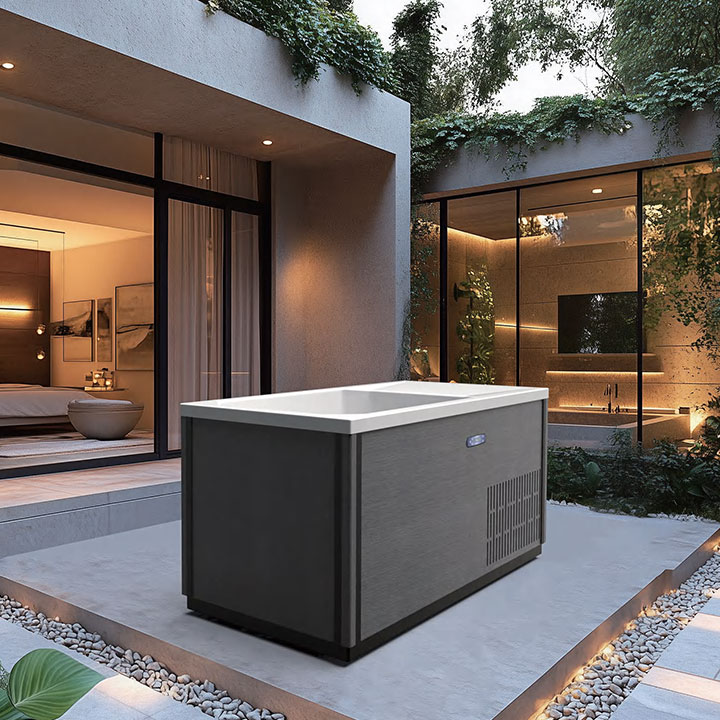
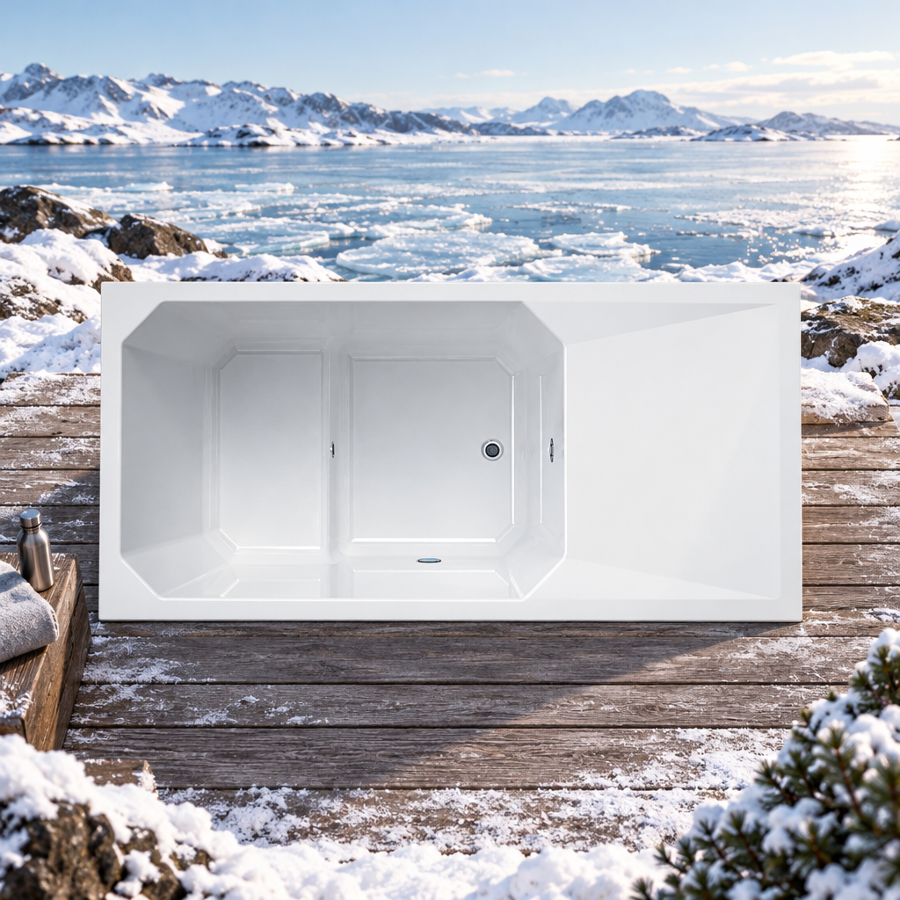
The C02 has an integrated 900 W heat-pump system and a 54 W brushless pump, with a power supply specification of 0.954 kW. Measuring 1695 mm by 830 mm by 850 mm (approximately 6 feet by 33 inches by 34 inches), the tub contains a 320-liter water capacity. With a net dry weight of 140 kg and a gross shipping weight of 180 kg, the structure provides substantial stability while keeping installation logistics manageable.
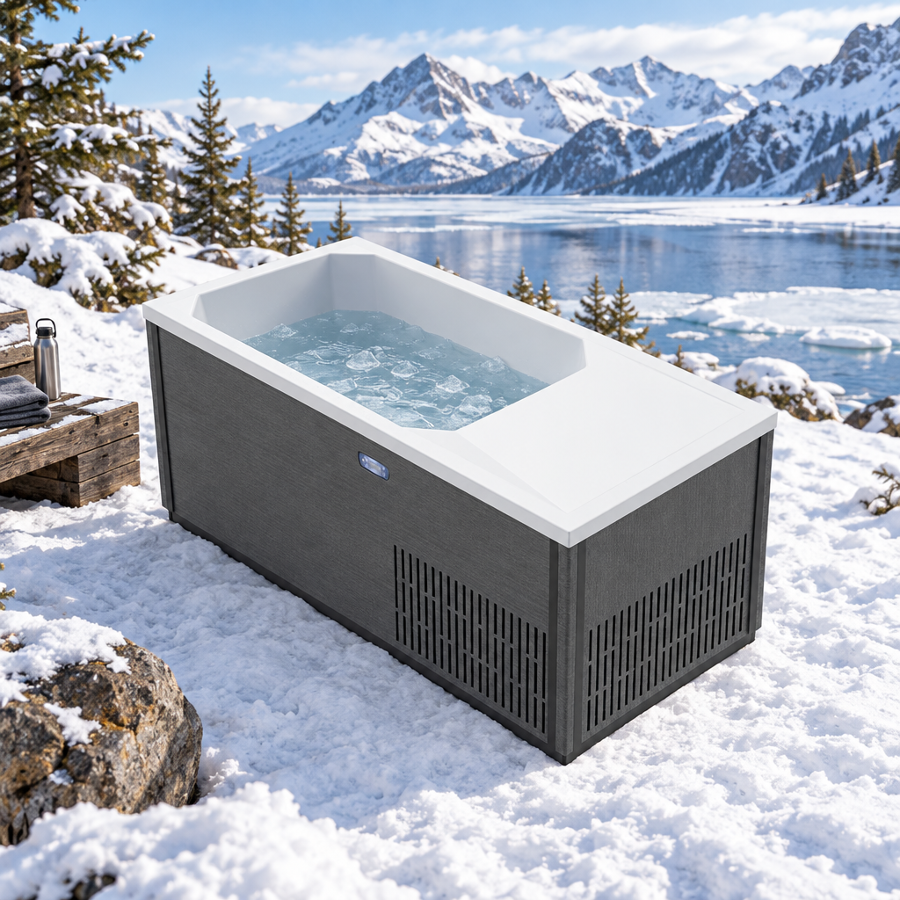
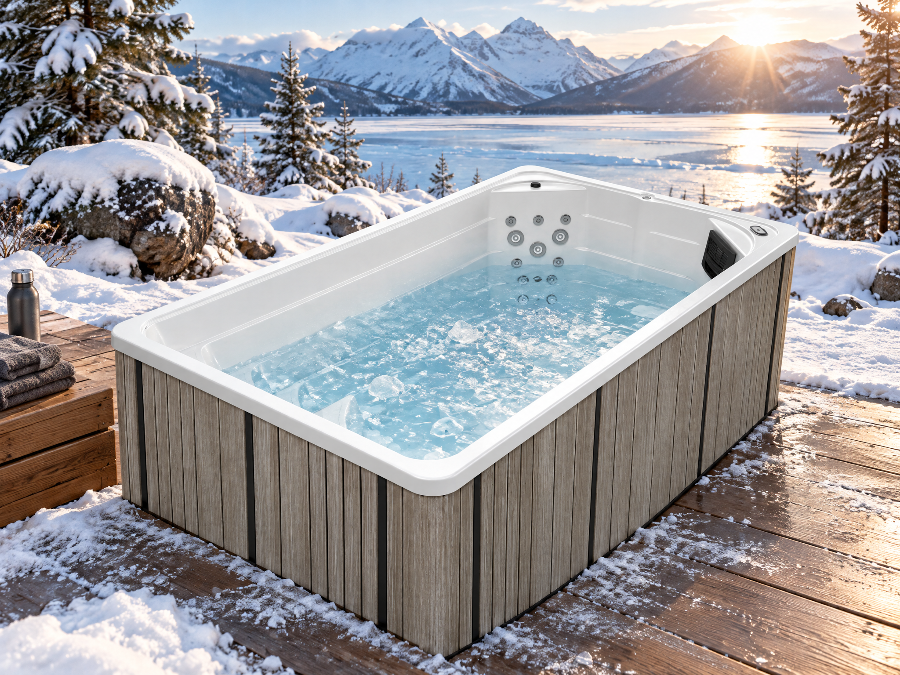
Constructed from high-gloss white Porcelain acrylic, the interior basin is encased in weather-resistant composite cabinetry available in Platinum and Midnight tones. An insulated cover is included with the unit, serving as a thermal barrier against solar loading and airborne debris during dormant hours.
Ergonomic Basin and Practical Field Applications
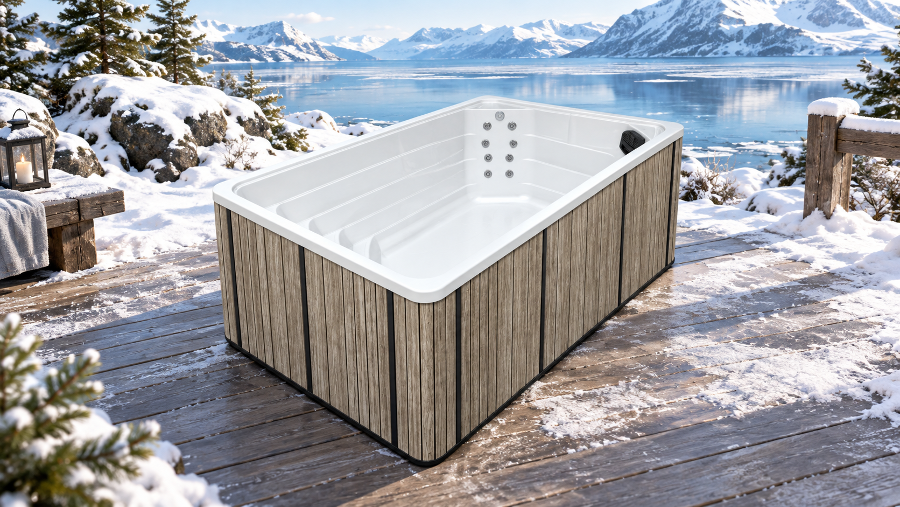
The interior architecture of the C02 incorporates a molded step that doubles as an elevated interior seat. This structural detail simplifies safe ingress, allowing users to enter in stages before immersing up to their shoulders. The basin layout includes suction vents and a recessed drain fitting, according to the supplied product reference.
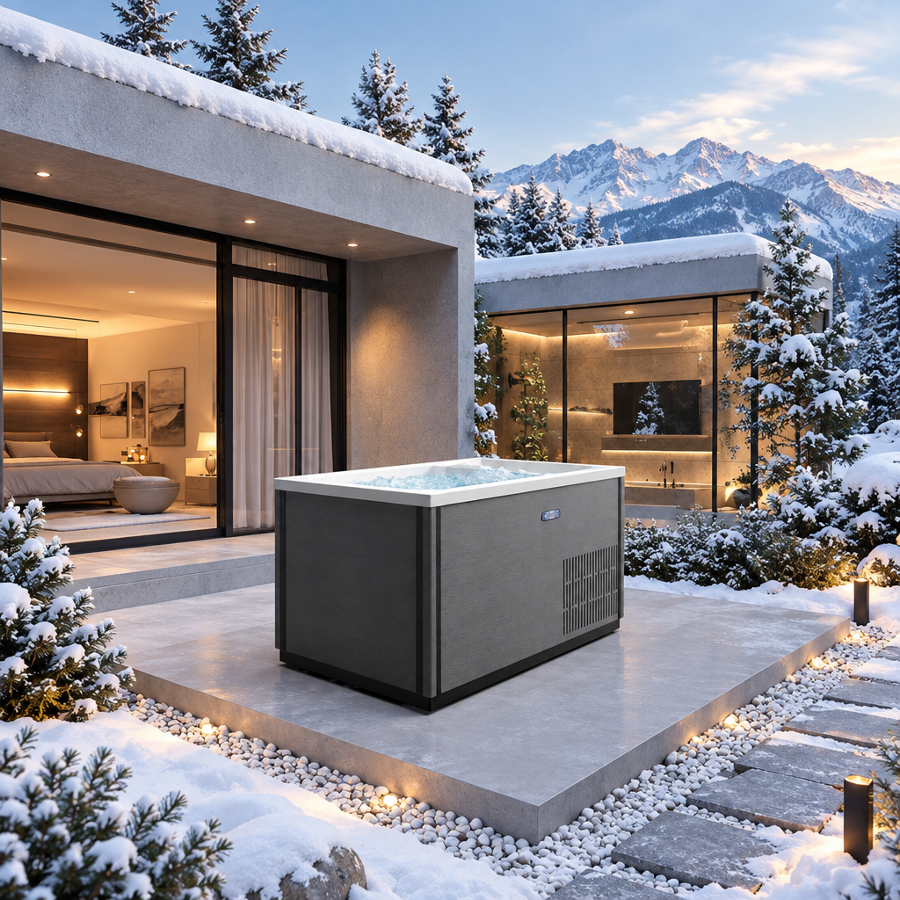
Placement flexibility spans private backyard decks, sheltered urban patios, athletic conditioning facilities, and boutique recovery studios. The sleek brushed-wood aesthetic coordinates with upscale landscape designs, while slotted cabinet vents allow heat pump airflow to circulate without compromising exterior aesthetics.
Important Inquiries for Buyers
While the factory specifications provide a comprehensive baseline, prospective owners must evaluate their specific climatic conditions. Inquiries regarding pull-down cooling duration from warm municipal tap temperatures, sub-ambient limits in hot climates, and recommended daily sanitation procedures should be verified directly with authorized representatives. Clarifying electrical installation requirements with a qualified electrician under local code ensures seamless site setup.
Installation and Site Preparation for Outdoor Plunge Tubs
Ground Load-Bearing and Drainage Planning
Site preparation requires strict engineering calculations before moving hardware into place. The C02 tub possesses a dry weight of 140 kg and holds 320 liters of water; factoring in water density and a heavy adult bather pushes total operational mass well beyond 500 kg. Supporting this mass demands a level, reinforced concrete pad or an engineered deck inspected by a certified contractor.
Drainage logistics also require foresight. Emptying hundreds of liters of water for periodic maintenance cannot flood adjacent structural foundations or garden beds. Planning a gravity-fed hose connection or installing a nearby subterranean drain basin ensures routine water changes remain clean, controlled, and effortless.
Electrical Safety and Outdoor Protection
Water and electricity demand uncompromising separation and rigorous safety standards. The installation must follow the manufacturer’s electrical instructions and be assessed by a qualified electrician under local code. Extension cords must never be used to power continuous-duty aquatic equipment.
Positioning the tub requires preserving adequate perimeter clearances around ventilation panels to prevent compressor overheating. While the exterior composite cabinet handles shifting weather, positioning the tub beneath light overhead architectural shading prolongs acrylic life, reduces thermal strain on the heat pump, and keeps falling organic debris to an absolute minimum.
Arctic Ice Bath FAQs
Is an arctic ice bath different from a regular cold plunge?
The term arctic ice bath is an evocative consumer expression used interchangeably with standard cold plunge or cold-water immersion equipment. Both describe submerging the body in regulated chilled water to induce therapeutic peripheral vasoconstriction. Neither format requires frozen surface ice to produce legitimate physiological recovery effects.
What water temperature is recommended for cold-water immersion?
Research studies on cold-water immersion commonly use temperatures ranging between seven and fifteen degrees Celsius (forty-five to fifty-nine degrees Fahrenheit). However, cold-shock responses can occur even at ten to fifteen degrees Celsius. Beginners should start at the warmer end of this range and approach colder temperatures gradually, never assuming any specific threshold is universally safe without individual assessment and medical clearance.
Can cold plunge therapy hinder muscle hypertrophy after strength training?
Sports science reviews suggest that taking an ice bath immediately after resistance training can blunt intracellular signaling pathways responsible for muscle hypertrophy and strength gains. If maximizing muscle growth is the priority, avoid making cold immersion an immediate routine after resistance training; the best interval is not firmly established and should be individualized.
How long should an immersion session last for general wellness?
There is no single immersion duration appropriate for everyone. Session length depends on water temperature, individual tolerance, prior experience, and health status. Keep exposure brief, choose conditions conservatively, and exit at signs of distress such as uncontrolled breathing, numbness, dizziness, or discomfort. Prolonged exposure in very cold water increases the risk of hypothermia.
What maintenance routine is needed for an outdoor cold plunge tub?
Maintaining hygienic water involves routine skimming of surface debris, regular replacement or washing of mechanical filter cartridges, and using compatible sanitizer treatments suited for cool water temperatures. Keeping the insulated cover securely fastened between plunges prevents sunlight exposure, inhibiting algae growth and preserving thermal efficiency.
Does the Victoria Star C02 tub require specialized electrical installation?
The C02 unit specifies a power supply of 0.954 kW, with a 900 W heat-pump system and a 54 W brushless pump. The installation must follow the manufacturer’s electrical instructions and be assessed by a qualified electrician under local code. Do not connect the system without professional evaluation.
Conclusion
Embracing an arctic ice bath routine bridges acute physical challenge with deliberate bodily recovery. Scientific investigations suggest that cold immersion may reduce perceived muscle soreness for some people, while evidence for broader physical recovery benefits remains limited. At the same time, maintaining realistic expectations regarding muscle hypertrophy trade-offs and respecting the acute risks of the cold-shock response ensures that therapy remains safe and constructive.
Investing in dedicated equipment like the Victoria Star C02 cold plunge tub, with its integrated heat-pump control system, eliminates the logistical burdens of melting bagged ice. Using its 900 W heat-pump system for temperature regulation, the tub fits within a durable, ergonomically planned basin. By balancing sensible medical precautions, structural site preparation, and progressive exposure timings, enthusiasts can transform this ancient cold discipline into a dependable cornerstone of daily wellness and athletic readiness.
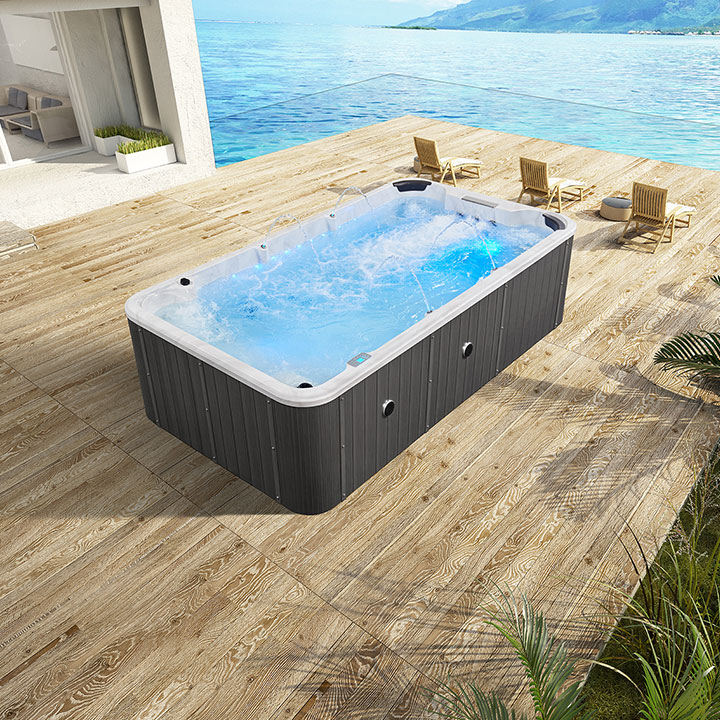
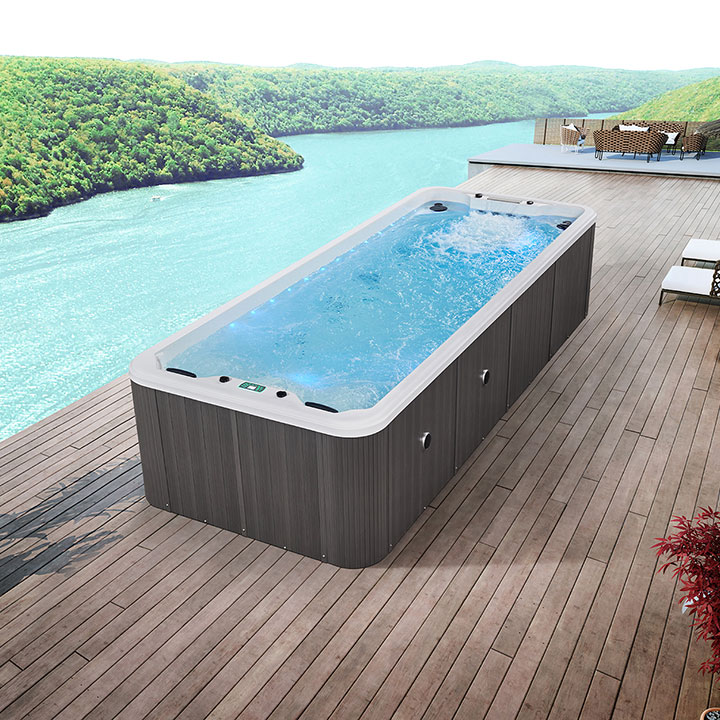
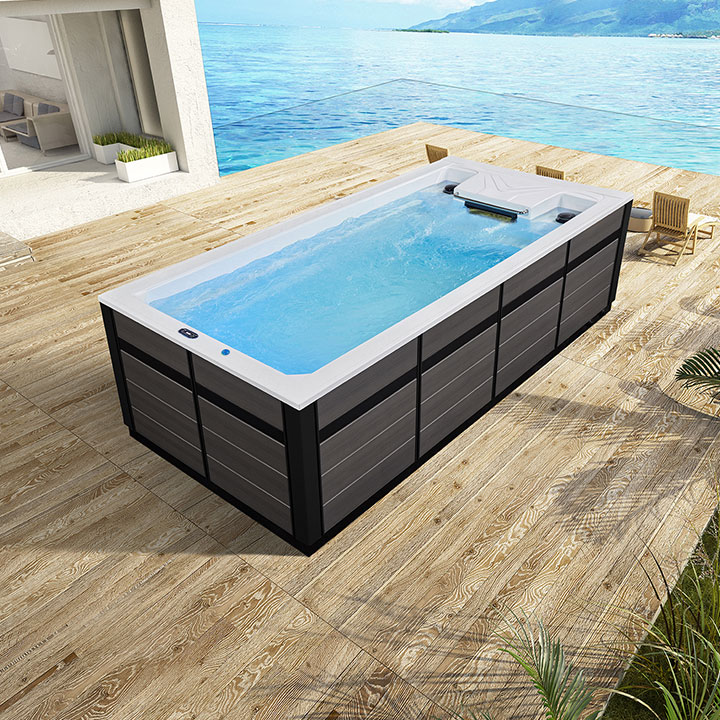
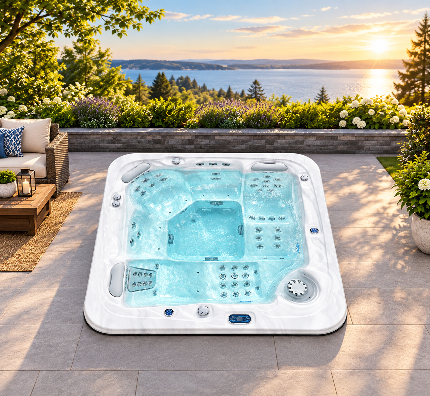
Victoria Star Swim Spa offers the perfect balance between exercise and relaxation, whether you want to swim for fitness or relax in the spacious seating.
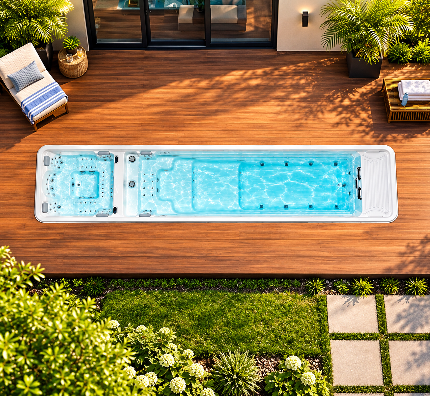
Victoria Star Swim Spa offers the perfect balance between exercise and relaxation, whether you want to swim for fitness or relax in the spacious seating.