Alaskan Cold Plunge Tub Guide: Manual Ice Barrels vs. Powered Systems
Home / News / Alaskan Cold Plunge Tub Guide: Manual Ice Barrels vs. Powered Systems
November 04, 2026
Investing in cold-water immersion often leads buyers to search for information about the alaskan cold plunge tub concept. The term brings to mind rugged wooden barrel profiles, frost-dusted timber decks, and thick slabs of floating ice. Yet setting up an outdoor recovery area requires looking past rustic aesthetics to examine actual thermal dynamics, daily physical upkeep, and structural durability. Choosing between hauling heavy ice bags into a passive wooden barrel and installing a modern powered system determines whether your wellness routine thrives or becomes a neglected chore.
Defining the Alaskan Cold Plunge Tub Concept
What the Term Describes
The phrase alaskan cold plunge tub appears in online searches as an informal buyer description for cold-immersion setups with rugged or northern-inspired styling. Shoppers using this term typically look for deep, vertical, barrel-shaped vessels designed for outdoor cold-water immersion. These tubs often feature designs that evoke wilderness aesthetics—natural wood textures, compact footprints, and a focus on full-body submersion that lets the bather’s shoulders sit beneath the waterline. While traditional wooden barrels rely on natural cedar staves and physical ice blocks, modern cold therapy requires predictable, sanitary water conditions. Today, cold plunge tub equipment falls into two classes: passive, unpowered wooden soaking tubs and powered outdoor plunge tubs with heat-pump temperature regulation.
Evolution from Manual Ice Loading to Automated Recovery Systems
Early adopters of wooden plunge tubs accepted significant physical labor. That meant buying, carrying, and dumping commercial ice blocks into water to achieve cooling. Ice-only systems require repeated testing and replenishment because cooling performance changes with ice quantity, starting-water temperature, insulation, and ambient conditions. Beyond the cost of frequent ice purchases, wooden tubs may require careful moisture management, sealing, cleaning, and inspection. Maintenance depends on the construction, liner, water-treatment method, climate, and manufacturer’s instructions.
Modern bathers have increasingly preferred automated appliances because they reduce the need for manual ice handling. Integrated thermal units eliminate the daily logistical burden, circulating sanitized fluid at controlled setpoints regardless of shifting ambient heat. Equipment manufacturers have developed permanent outdoor units designed to provide reliable, on-demand cooling systems as an alternative to unpredictable ice delivery.
Manual Ice Barrels vs. Integrated Heat-Pump Systems
Operational Realities of Ice-Only Wooden Barrels
A passive wooden alaskan cold plunge tub demands significant recurring labor. Lowering 300 liters of ambient tap water to a therapeutic temperature requires substantial thermal mass. For a 320-liter tub, the ice quantity needed depends on starting temperature, target temperature, and ice temperature—variables that determine the practical effort required. This variability means that on warm days, achieving meaningful cold exposure can require hauling dozens of pounds of commercial ice per session, with results that remain unpredictable.
Mechanical Consistency: Heat-Pump Temperature Regulation
Powered units aim to reduce this friction through internal heat-pump systems. Instead of dumping single-use ice cubes that create unpredictable thermal zones, the manufacturer specifies an integrated heat-pump system for low-temperature regulation. The pump circulates water through the temperature-control system, while the included cover may help reduce heat gain and evaporation. This approach eliminates the daily effort of purchasing and transporting ice.
Comprehensive Comparison: Manual Ice Tub vs. Outdoor Cold Plunge Tub C02
Operational Parameter
Manual Wooden Ice Barrel
Outdoor Cold Plunge Tub C02
Temperature Regulation
Manual ice addition; unpredictable
Integrated 900W heat pump system
Electrical Requirements
None
0.954 kW total power supply
Daily Labor & Setup
Hauling ice per session
Exterior control interface; follow manual
Fluid Circulation
Static water
54W brushless pump; per specifications
Shell Durability
Maintenance needs vary with timber construction and care
High-grade porcelain acrylic
Thermal Insulation
Wood staves with variable ambient loss
Insulated thermal cover included
Physiological Effects and Evidence-Based Immersion Protocols
How Cold Immersion Relates to Muscle Recovery
Athletes turn to cold-water immersion primarily for post-workout recovery. When exposed to cold water below 59°F (15°C), peripheral blood vessels constrict. This vascular response redirects blood flow and may help reduce localized swelling and discomfort. Some systematic reviews suggest that short cold-water immersion sessions may help reduce perceived muscle soreness in the hours following intense exercise, though effects vary depending on the immersion protocol and individual response.
Avoiding Pseudoscience: Realistic Expectations vs. Commercial Hype
Wellness marketing often exaggerates the effects of cold plunge therapy, promising instant weight loss, boosted immunity, and dramatic hormone changes. Medical guidance emphasizes that clinical evidence for long-term metabolic effects remains preliminary and unproven. Cold immersion is a physical recovery tool rather than a cure-all treatment. Short-term cold exposure may produce temporary mood or alertness changes for some users. However, using an outdoor alaskan cold plunge tub should be viewed as a technique for managing post-exercise discomfort and mental stress, not as a replacement for exercise, nutrition, or medical care.
Session Timing: Post-Cardio vs. Strength Training
Timing considerations matter for different training goals. Cold immersion immediately after high-intensity intervals, endurance activities, or team sports may help reduce fatigue perception and speed recovery readiness for the next session. For resistance training focused on muscle growth, immediate post-workout ice immersion may interfere with the body’s natural recovery signaling. Individuals prioritizing strength or hypertrophy gains may choose to avoid routine immediate post-lifting immersion. Those interested in incorporating cold therapy should discuss timing and suitability with a qualified sports-medicine professional.
Technical Breakdown: Outdoor Cold Plunge Tub C02
Structural Construction: Acrylic Basin and Protective Composite Cabinet
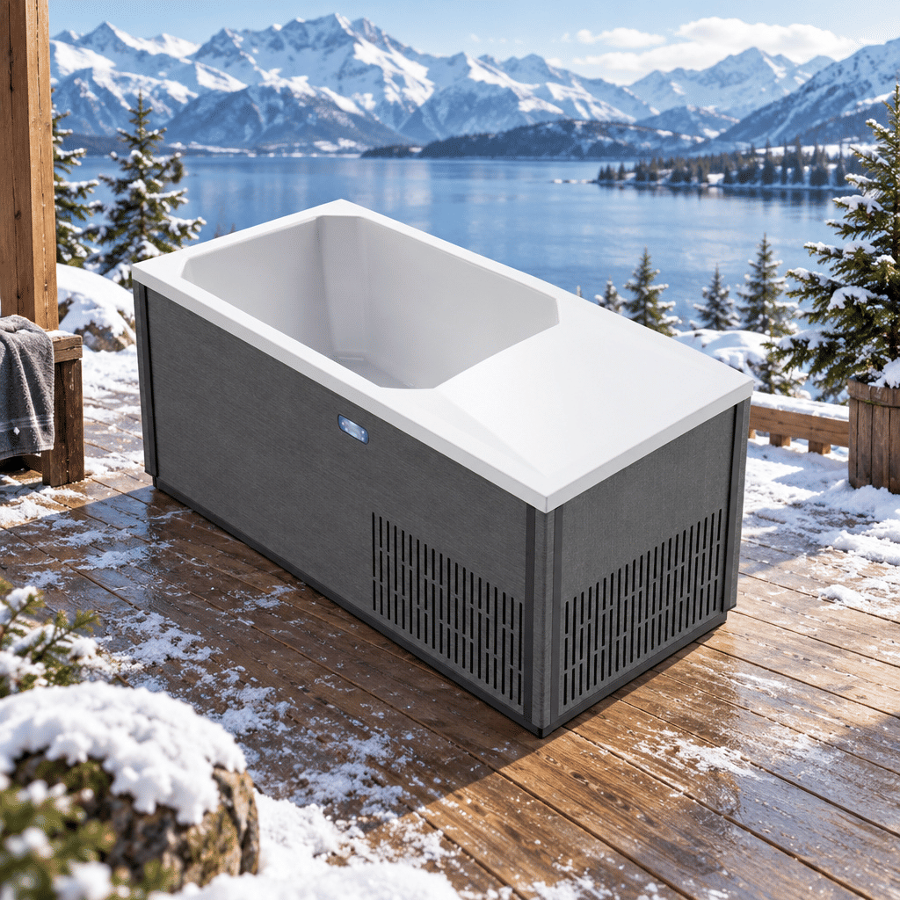
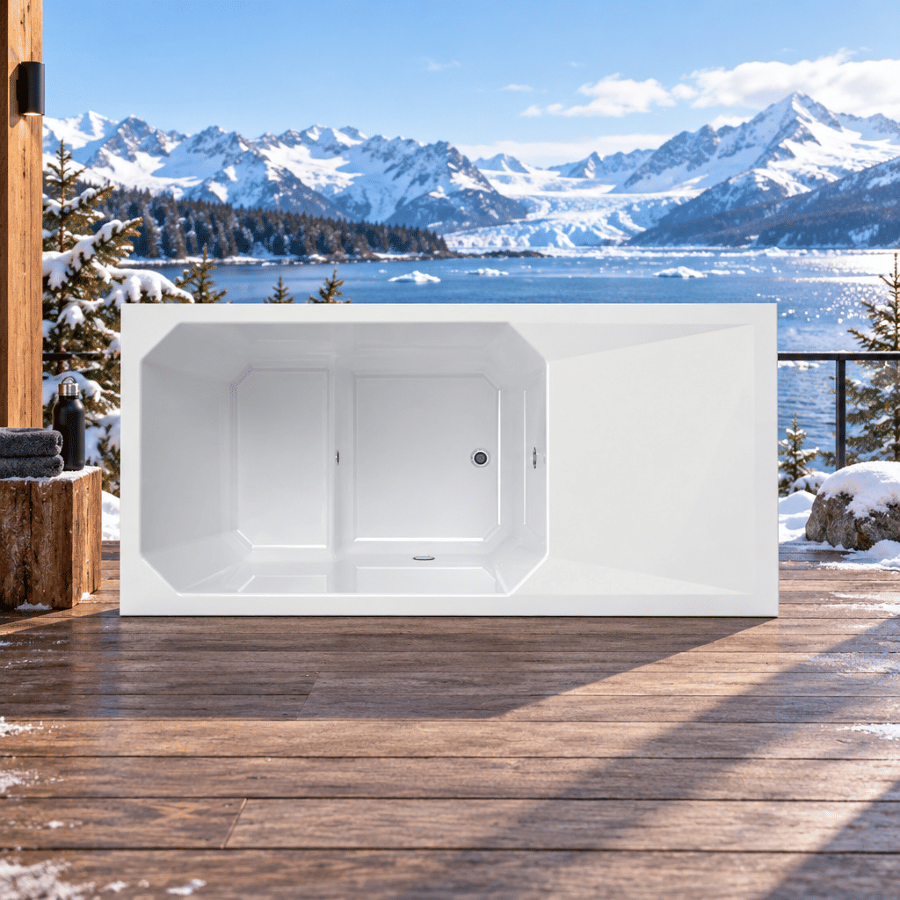
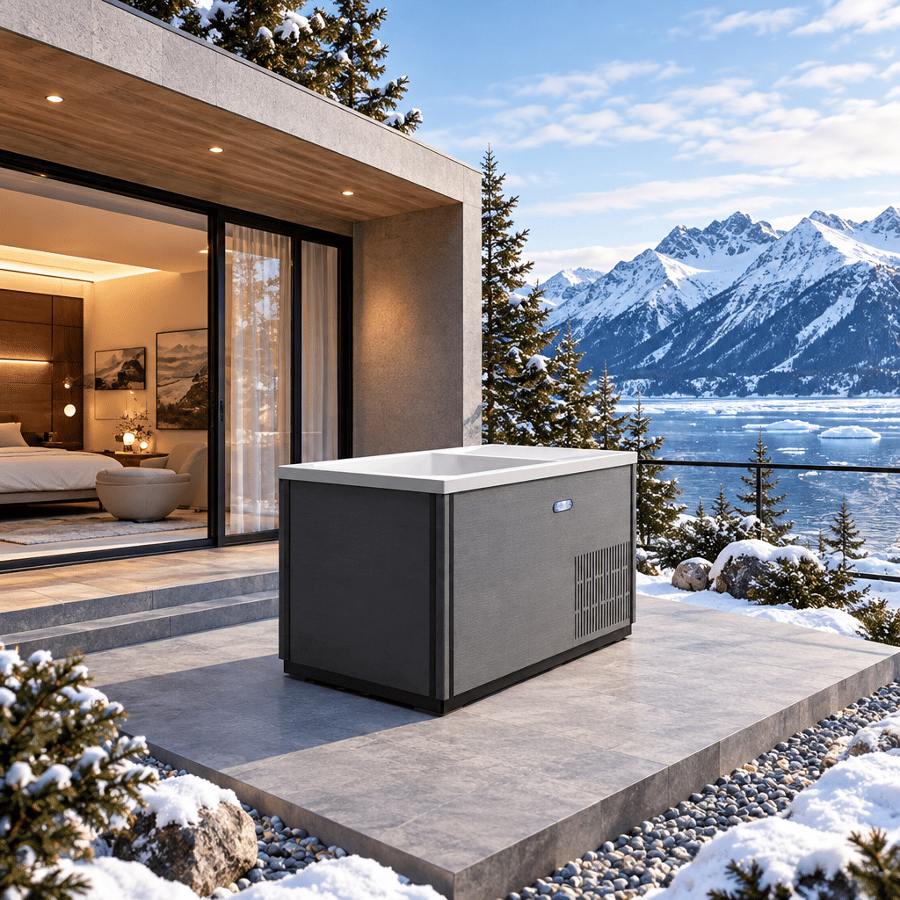
The Outdoor Cold Plunge Tub C02 combines a practical alaskan cold plunge tub design with modern engineering. The interior basin is formed from high-grade white porcelain acrylic, delivering a smooth, durable surface. Its molded inner step provides an ergonomic resting ledge, letting users submerge their torsos comfortably without sitting flat on the cold floor. The smooth acrylic shell may be easier to wipe down than unfinished timber, subject to the manufacturer’s cleaning guidance. The exterior features durable, vented composite cabinet panels designed for outdoor weather resistance and is available in refined Platinum and Midnight finishes that mimic horizontal brushed wood grain without the maintenance issues typical of traditional wet timber barrels.
Mechanical Core: Heat-Pump System and Brushless Pump
At the heart of the C02 model lies an integrated 900W heat-pump system paired with an energy-efficient 54W brushless circulation pump. This internal machinery is housed entirely within the vented structural cabinet, drawing a total electrical load of 0.954 kW. The pump is intended to circulate water through the temperature-control system, while the included insulated thermal cover helps prevent surface evaporation. Digital controls on the exterior panel let users interact with the temperature settings. The manufacturer lists an integrated heat-pump control system, so users should consult the C02 manual for supported temperature settings and operating procedures.
Technical Specifications Reference
Model Designation: Outdoor Cold Plunge Tub C02
Exterior Dimensions (Metric): 1695 mm × 830 mm × 850 mm
Exterior Dimensions (Imperial): Approximately 66.7" × 32.7" × 33.5"
Total Internal Water Volume: 320 Liters
Empty Net Structural Weight: 140 KG
Shipping Gross Weight: 180 KG
Shell Material: White Porcelain Acrylic
Cabinet Finish Variations: Platinum or Midnight Wood-Grain Texture
Mechanical System: Integrated 900W Heat Pump
Internal Circulation: 54W Brushless Pump
Total Electrical Demand: 0.954 KW
Thermal Management Accessory: 1 Fitted Insulated Cover Included
Outdoor Site Planning and Installation Engineering
Foundation Engineering: Managing Structural Water Weight
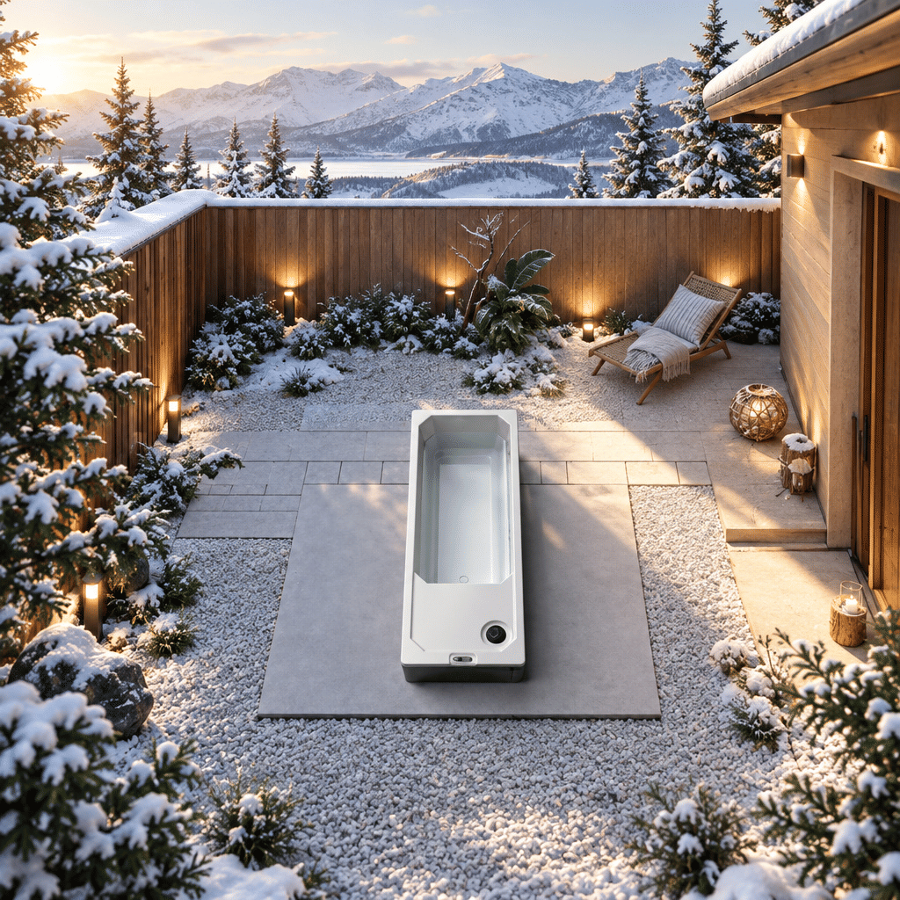
Installing an outdoor cold plunge tub requires careful planning for load bearing. A 320-liter unit cannot be placed on an unverified residential wood deck without assessing the supporting structure. Structural failure can cause serious property damage. Calculating total operating weight requires adding the dry tub mass, total water capacity, and the bather’s body weight:
Tub Dry Mass: 140 kg (approximately 308 lbs)
Water Weight: 320 liters equals 320 kg (approximately 705 lbs)
Occupant Mass: Estimating an average user at 85 kg (approximately 187 lbs)
Total Illustrated Load: Approximately 545 kg (1,200 lbs)
This total weight distributed over the rectangular exterior footprint creates a rough average load. Elevated wooden decks must be evaluated by a structural contractor. A level, load-bearing base is required, and concrete, engineered pads, or properly prepared pavers may be suitable after site-specific assessment of subgrade preparation, settlement, drainage, and load distribution.
Electrical Safety, Drainage Routing, and Ventilation
Operating an electric outdoor cold plunge tub alongside water requires strict electrical safeguards. Before installation, confirm the C02 unit’s voltage, amperage, plug type, circuit requirements, grounding specifications, and required protective devices in the manufacturer’s installation manual and applicable local electrical codes. Have a qualified electrician install the circuit meeting those specifications and local requirements. Never use light-duty extension cords or ungrounded outlets with outdoor water appliances. Proper equipment ventilation is essential. The C02 cabinet uses slatted louvers on its lower front and side panels to exhaust heat from the mechanical system. Follow the manufacturer’s installation instructions for required clearance around these vents to maintain efficient airflow. For routine maintenance, position the recessed bottom drain near an exterior slope or drainage channel to make water management clean and straightforward.
Step-by-Step Selection Framework for Property Owners
Assessing Usage Frequency and Climate Demands
Choosing the right cold plunge depends on your weekly routine and local weather conditions. A simple ice-and-wood barrel can work for someone who only immerses occasionally and does not mind buying commercial ice. However, dedicated daily users quickly grow frustrated with the time and effort involved. When evaluating an alaskan cold plunge tub setup for frequent use, follow this decision framework:
Target Immersion Cadence: If you use a plunge tub three or more times a week, an integrated heat-pump system eliminates the chore of hauling ice.
Local Climate Profile: In hot summers, uninsulated wood barrels lose cooling quickly; a mechanically cooled tub aims to maintain stable recovery temperatures year-round.
Available Prep Time: If you want immediate access without spending time prepping ice and measuring temperatures, an automated system is practical.
Budget and Running Costs: Compare the one-time purchase of a powered tub against recurring ice costs. Ice expenses vary by location and usage—in some areas, frequent ice purchases can accumulate to several hundred dollars per year, depending on local pricing and how often you plunge.
Architectural Integration Across Residential and Commercial Spaces
The refined styling of the C02 model integrates smoothly into high-end architectural settings where an industrial plastic tank or rough timber barrel would look out of place. Its rectangular footprint and dark wood-textured cabinet fit naturally alongside patio furniture, stone pavers, and modern outdoor structures. Beyond private residential decks, this design suits commercial athletic facilities, boutique hotels, and day spas. Commercial environments benefit from the durable acrylic finish and enclosed cabinet that keeps mechanical hardware out of sight, providing a polished aesthetic.
Practical Cold-Water Immersion Safety Guidelines
Managing Cold Shock Response and Breathing
Stepping into cold water triggers an immediate survival reflex called the cold shock response. Cold thermoreceptors in the skin signal the nervous system, prompting involuntary gasping, rapid breathing, and spikes in heart rate and blood pressure. Panic can intensify this reaction. Enter cautiously by pausing at the edge, taking slow breaths, and stepping smoothly into the water to chest depth. Keep your face out of the water. Focus on controlled breathing rather than gasping. If you cannot control your breathing or feel unwell, exit immediately.
Contraindications and Safe Practices
Beginners often assume colder is always better, but plunging into near-freezing water without preparation is risky. Cautious first-time exposure starts with moderate temperatures—commonly discussed cold-immersion temperatures range around 50°F to 60°F (10°C to 16°C), though the C02 model’s supported operating range should be confirmed in its documentation. Short immersion periods allow gradual adaptation. People with heart conditions, circulation problems, or other relevant medical concerns should consult their clinician before cold immersion. Never plunge alone, and exit immediately if you feel lightheaded, numbness, or other concerning symptoms develop.
Water Maintenance and Winter Operation
Maintaining Water Clarity in Recirculating Systems
An alaskan cold plunge tub holds a substantial volume of water that requires proper care. While cold water slows some bacterial growth compared to warm systems, skin oils, sweat, and environmental debris will accumulate. Operating an improperly maintained tub can lead to water cloudiness and discomfort. Run the internal circulation pump regularly as part of ongoing care. Consult the manufacturer’s water-treatment guidelines for appropriate cleaning products and sanitizer compatibility. Use a skimmer net to remove surface debris before securing the thermal cover. Follow the manufacturer’s maintenance schedule for water changes to keep the tub clear and inviting.
Winter Operation and Freeze Protection
Operating an outdoor alaskan cold plunge tub in harsh winter climates requires attention to freeze protection. Sub-zero air can freeze static plumbing lines, potentially cracking internal fittings and damaging the heat pump. The C02 cabinet is designed for outdoor use with weather-resistant composite panels and an included insulated cover. For sub-freezing operation, consult the manufacturer’s installation and operation manual for freeze-protection and power-outage procedures specific to the C02. Follow those guidelines to safeguard all internal components. Do not assume continuous pump operation or emergency drainage without confirming the manufacturer’s recommendations.
Frequently Asked Questions (FAQs)
What is the core difference between an Alaskan cold plunge tub and a traditional hot tub?
An alaskan cold plunge tub is designed to maintain water at cold temperatures for cold recovery therapy, while hot tubs are generally designed to heat water to 100°F–104°F for muscle relaxation. Hot tubs are commonly equipped with heating elements and may include massage jets, while the C02 specifications list a 54W brushless pump and heat-pump cooling rather than massage-jet performance. Cold plunge tubs use gentler circulation designed for consistent temperature maintenance.
Does the Outdoor Cold Plunge Tub C02 require manual ice additions?
No, the manufacturer lists an integrated 900W heat-pump control system, so users should consult the C02 manual for supported temperature settings and operating procedures. This system is intended to cool water without needing bagged commercial ice, eliminating the labor and recurring cost of purchasing and hauling ice for each session.
How long should a typical cold immersion session last?
There is no universally established duration that suits everyone. Individual tolerance varies based on experience, age, fitness, and health status. Start with brief, cautious exposure and stop if any adverse symptoms occur. Consult relevant safety guidance and discuss appropriate duration with a qualified sports-medicine professional if you have health concerns.
What electrical infrastructure is required for the C02 model?
The C02 unit draws 0.954 kW of power. Before installation, confirm voltage, amperage, plug type, circuit type, grounding requirements, and required protective devices in the manufacturer’s installation manual and applicable local electrical codes. Have a qualified electrician install the circuit meeting those specifications and local requirements. Never use light-duty extension cords or ungrounded outlets with outdoor water appliances.
Can the tub operate safely outdoors in sub-freezing winter weather?
The C02 cabinet is designed for outdoor use with weather-resistant composite panels and an included insulated cover. For sub-freezing operation, consult the manufacturer’s installation and operation manual for freeze-protection and power-outage procedures specific to the C02. Follow those guidelines to prevent equipment damage during harsh winters.
Conclusion
Deciding to add an alaskan cold plunge tub to your wellness routine marks a commitment to post-exercise recovery and proactive self-care. While traditional wooden barrels offer a classic aesthetic, their varying maintenance needs and the effort of manual ice hauling often disrupt consistent use. Modern engineered systems like the Outdoor Cold Plunge Tub C02 eliminate that friction by combining the specified heat-pump control system, an easy-to-maintain acrylic basin, and durable all-weather cabinetry. By investing in proper outdoor installation and following the manufacturer’s operating procedures, you can establish a practical cold-therapy routine focused on the physical and mental benefits of regular cold-water immersion.
Victoria Star Swim Spa offers the perfect balance between exercise and relaxation, whether you want to swim for fitness or relax in the spacious seating.
Victoria Star Swim Spa offers the perfect balance between exercise and relaxation, whether you want to swim for fitness or relax in the spacious seating.