Advanced Hot Tubs: Engineering Principles, Hydrotherapy Design, and Home Spa Architecture
Home / News / Advanced Hot Tubs: Engineering Principles, Hydrotherapy Design, and Home Spa Architecture
November 02, 2026
Investing in advanced hot tubs involves navigating mechanical plumbing, energy conservation, hydrodynamic delivery, and long-term water hygiene rather than simply picking an aesthetic garden fixture. Modern buyers seeking high-end hydrotherapy spas often encounter conflicting marketing claims that emphasize high jet numbers over hydraulic balance and structural integrity.
Evaluating luxury spa performance requires understanding how multi-pump networks, filtration protocols, and contoured seating interact to alleviate physical fatigue. By demystifying the underlying machinery, prospective owners can select an advanced hydrotherapy spa that delivers therapeutic pressure, withstands year-round climate variations, and integrates smoothly into their personal outdoor living spaces.
What Defines Modern Advanced Hot Tubs?
Deconstructing the Advanced Label: Hydraulics Over Marketing Buzzwords
The contemporary spa industry often prioritizes sheer component volume over balanced fluid engineering. A tub crowded with a hundred tiny orifices connected to undersized plumbing can produce weak, noisy streams that dissipate heat without relieving sore muscles. True engineering excellence hinges on fluid dynamics: matching the internal pipe diameter and manifold distribution to the precise volumetric displacement of the drive motors.
When water flows through properly sized manifold lines, friction loss drops significantly, allowing the stream to retain kinetic force without requiring excessive electrical wattage. Rather than assuming every outlet maintains constant pressure, buyers should ask the manufacturer for plumbing, flow-rate, and pressure information to assess how well the spa balances its hydrotherapy delivery across all jet stations.
Core Architecture: Distinguishing Vital Mechanics from Decorative Additions
Showroom displays frequently highlight auxiliary features like multi-color LED perimeter accents or Bluetooth-enabled marine speaker assemblies. While integrated audio and ambient illumination enhance outdoor evening entertainment, they should never serve as substitutes for high-grade shell composites or durable heating cores. Decorative touches add atmospheric character, but mechanical reliability dictates how long the unit operates without costly structural breakdowns.
A dependable high-performance spa relies on structural insulation, an isolated circulation loop, and accessible mechanical bays. When evaluating a specific model, ask the manufacturer what reinforcement, insulation, and service-access design it uses. These details ensure the spa can resist weather exposure, maintain thermal efficiency, and allow technicians to perform maintenance without disassembling the cabinet.
Hydrotherapy Engineering: Evaluating Jet Layouts, Dynamics, and Ergonomics
Anatomy of Targeted Pressure: Matching Jet Orifices to Muscle Groups
Therapeutic hydro-massage relies on targeted pressure mapping rather than arbitrary bubbling across the acrylic surface. Jet direction and feel vary by model and user; compare the manufacturer’s stated target areas and try the seating positions if possible. Different users prefer different intensities and patterns depending on comfort level and muscle recovery goals.
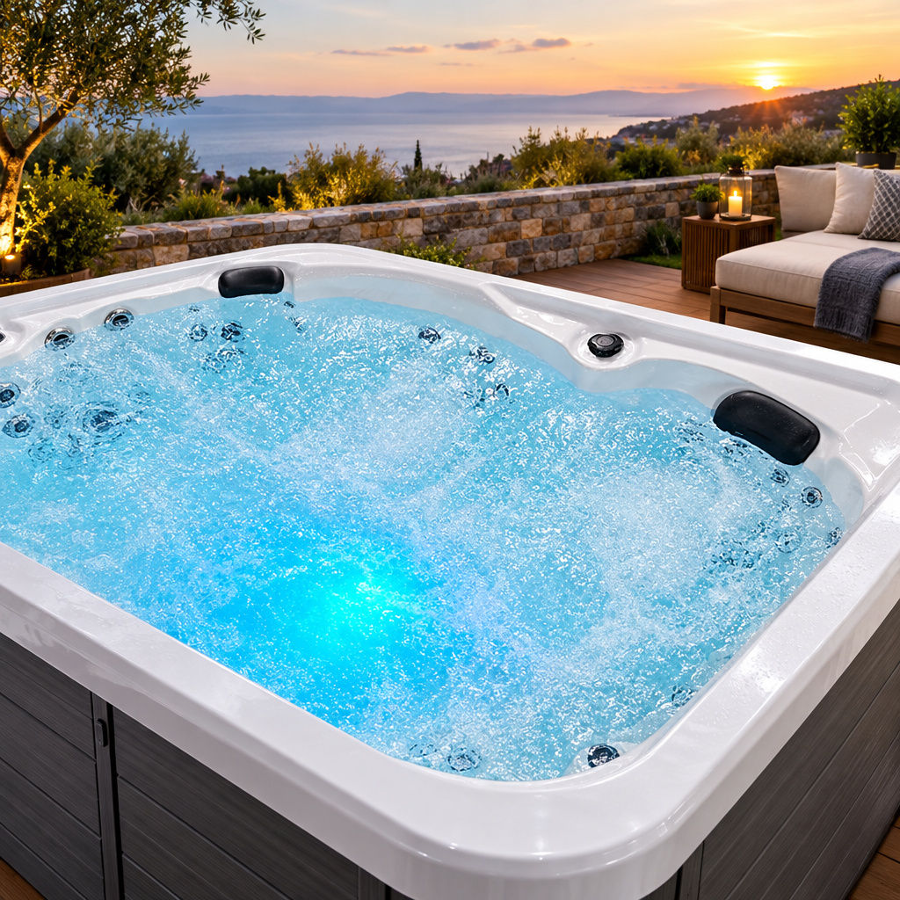
In high-end models, specialized footwell domes incorporate high-pressure streams specifically positioned to address different body areas. The VS-502L is specified with 71 total hydrotherapy jets targeting the back, waist, neck, and legs across five bathing positions. These multi-angle orifices are arranged to focus fluid pressure into these zones. Note that despite the model name referencing 50 jets, the manufacturer specifies 71 total jets; confirm the exact configuration before purchase.
Seating Geometry: Upright Therapy Stations vs. Full-Body Contoured Loungers
Ergonomic design in a personal spa determines whether the user stays comfortably relaxed or continually fights water buoyancy. Standard flat bench seats force occupants to brace their legs against the footwell, causing subtle core strain that undermines the calming purpose of warm soaking. Ergonomically molded shell contours cradle the natural curvature of the spine, keeping bathers comfortably seated even when powerful hydrotherapy pumps operate at maximum capacity.
Full-body loungers represent the peak of spa contouring, angling the user back while elevating the knees to minimize lower back pressure. The VS-502L provides four corner therapy seats surrounding a dedicated full-body lounger in a five-person configuration. Testing the layout in person helps buyers assess whether the seating arrangement suits their household size and individual preferences.
The Physics of Spa Pumping: Displacement, Flow Rate, and Jet-to-Pump Ratios
A common misconception in residential spa selection is that an immense jet count automatically guarantees a superior massage. Performance depends not only on the number of jets but also on pump capacity, plumbing design, and manifold layout. Ask the manufacturer for specific flow-rate and pressure data to understand how the system distributes hydrotherapy across all outlets.
Mechanical Metric
VS-502L Specification
Primary Massage Pumps
2 × 2.0 HP High-Volume Massage Pumps
Dedicated Air Blower
1 × 0.9 HP Dedicated Air Pump
Circulation Pump
1 × 0.35 HP Independent Low-Draw Circulation Pump
Total Hydrotherapy Jets
71 Multi-Angle Hydrotherapy Jets
Heater Output
1 × 3.0 kW Heater
Total Electrical Load Rating
6.95 kW Total Connected Load
The VS-502L is specified with two 2.0 HP water pumps and a separate 0.9 HP air pump. This separation of duties allows each system to operate within its design range rather than forcing one motor to handle multiple functions simultaneously.
Water Management and Sanitization in High-Performance Spas
The Thermodynamics of Water Care: Aerosols, Biofilm, and Temperature Factors
Maintaining pristine water in a warm spa requires dedicated attention to physical chemistry and microbiological factors. Elevated temperatures between 37°C and 40°C accelerate bacterial replication while increasing the rate at which organic bather oils deplete active sanitizer levels. The continuous agitation of water jets also produces breathable aerosols, requiring careful sanitization to mitigate respiratory exposure risks from pathogens.
Automated filtration and circulation pumps significantly ease the mechanical collection of organic particulates, but they cannot replace chemical sanitization. CDC guidance for hot tubs commonly recommends at least 3 ppm free chlorine, at least 4 ppm bromine, and pH 7.0–7.8. Follow the product label, manufacturer instructions, and local requirements, as residential, commercial, and health-department standards can differ.
Continuous Low-Velocity Circulation vs. Intermittent High-Draw Cycles
Basic hot tubs often run their large, noisy primary massage pumps on low-speed settings for periodic filtration cycles. This approach causes noticeable temperature fluctuations, generates unwanted mechanical noise, and wears out heavy-duty pump bearings prematurely. Some spa designs use dedicated low-wattage circulation pumps intended to provide gentler, more consistent water movement through the filtration core.
The VS-502L is specified with a separate 0.35 HP circulation pump. Its operating schedule, noise level, and filtration performance should be confirmed in the product manual or with the manufacturer. Buyers should ask whether the circulation pump runs continuously or on a timed cycle and how it integrates with the primary massage pumps.
The Owner’s Operational Checklist: Practical Chemical and Physical Maintenance
Keeping spa water crystal clear requires a predictable, step-by-step care routine that balances filtration with chemical sanitization. Follow the manufacturer’s instructions and adjust frequency based on usage patterns and water condition:
Test water parameters regularly using multi-parameter test strips or a calibrated digital photometer to verify sanitizer levels and pH balance. Higher bather loads require more frequent testing.
Add approved water clarifiers or scale inhibitors in measured quantities, avoiding excessive chemical mixtures that cause foaming or precipitate buildup.
Remove the pleated filter cartridge as directed by the manual to rinse out trapped organic solids using a pressurized garden hose nozzle. Frequency depends on bather load and water clarity.
Soak the cartridge in a degreasing filter solution periodically to dissolve deep-seated body lotions and mineral scale. Consult the filter manufacturer’s cleaning instructions.
Drain and refill according to the manufacturer’s instructions and water condition; frequency varies with spa volume, bather load, sanitizer control, and water quality.
Understanding these maintenance fundamentals prevents costly equipment damage and ensures the spa remains a hygienic, inviting retreat. Water chemistry is not a one-size-fits-all process; adapt the routine to your specific model and usage intensity.
Control Systems, Structural Materials, and Outdoor Survivability
Digital Command and Logic Systems
Modern digital spa packs act as the central nervous system for residential hot tubs, coordinating pump cycles, freeze protection, and temperature regulation. A topside keypad can provide access to spa controls; confirm the functions available on the specific system in its manual.
Equipped with the KL2022 digital keypad system, the VS-502L gives users access to primary spa functions through an intuitive interface. Consult the product manual for the specific capabilities of the keypad system, including available controls, diagnostic features, and monitoring options.
Shell and Skirt Durability: Acrylic Laminates vs. Extreme Thermal Shifts
A hot tub shell must endure continuous water weight, high internal heat, and harsh outdoor weather without developing hairline surface cracks. Different manufacturers employ various shell construction methods, and durability depends on material selection, design, and installation practices.
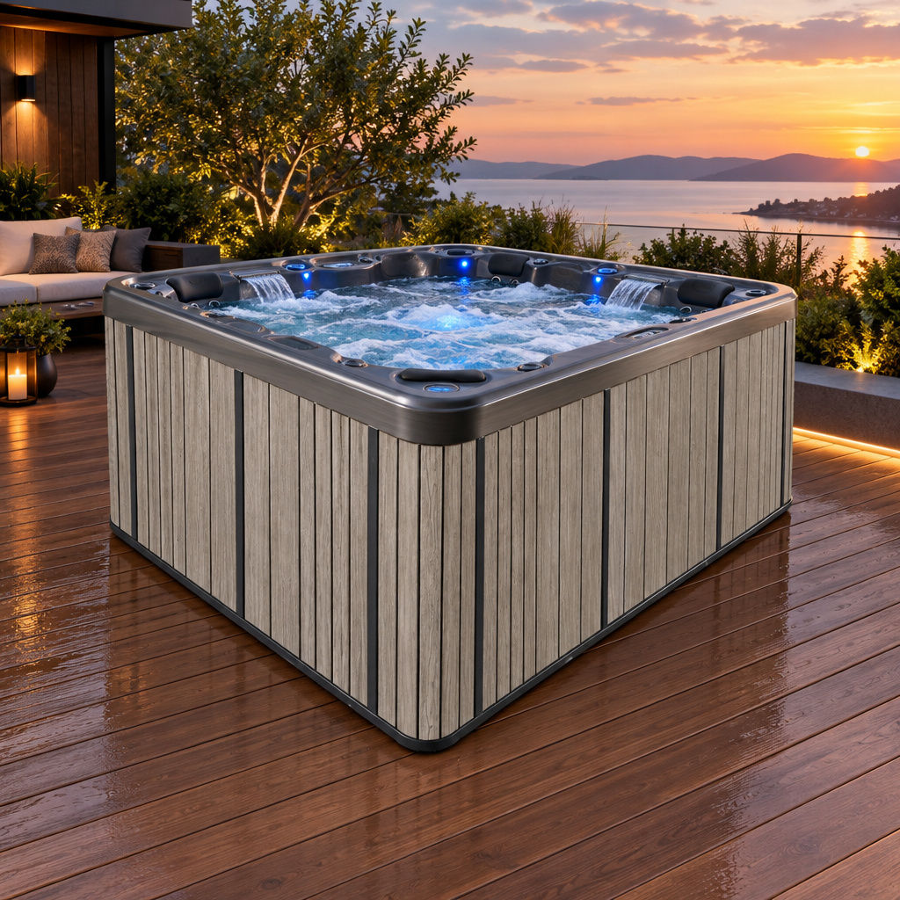
The VS-502L uses a composite acrylic shell paired with an aluminum-plastic composite skirt available in Platinum and Midnight tones. The product is described as suitable for year-round outdoor use. For detailed information about shell construction, material thickness, and warranty coverage, consult the manufacturer directly.
Electrical Planning and Site Engineering: Structural Load, Service, and Safety
Installing a five-person luxury hot tub requires thorough site preparation long before the delivery truck arrives. Total load depends on the manufacturer’s stated water capacity plus occupants. Obtain that figure and have decks or elevated structures assessed by a structural professional before installation.
Electrical safety is equally critical when setting up advanced hot tubs. The 6.95 kW nameplate load requires electrical planning. Confirm the manufacturer’s voltage, circuit, disconnect, and GFCI requirements with the installation manual and a licensed electrician. Do not prescribe a specific breaker size or subpanel configuration without those details, as local code and conductor sizing can affect the exact requirements.
Use a level, adequately supported foundation designed for the filled spa’s total load. Concrete thickness and reinforcement must be determined by site conditions, local requirements, and the installer or structural professional. Have all suction outlet fitting assemblies and related entrapment protections verified to comply with the applicable current code and standards, including ANSI/APSP/ICC-16 where applicable.
Foundation Preparation and Delivery Planning
Concrete pads remain the most common spa foundation because they distribute weight evenly and resist settling over decades of use. The pad should extend beyond the cabinet footprint to provide stable support for the entire perimeter. Reinforcement mesh or rebar placement depends on soil conditions, local frost depth, and the structural engineer’s recommendations.
Alternatively, some installers use reinforced composite decking systems engineered to carry concentrated loads. These systems require precise joist spacing, proper ledger-board attachment, and blocking to prevent deflection. Verify that the deck manufacturer rates the structure for hot tub loads and consult a structural professional if any doubt exists about load capacity.
Delivery access deserves equal attention. Measure every gate, doorway, and tight corner along the route from the street to the installation site. Large composite spas cannot be disassembled for transport, so a clear path with adequate width and overhead clearance is mandatory. Coordinate with the delivery team ahead of time to identify potential obstacles and arrange for temporary fence panel removal if necessary.
Technical Profile: Victoria Star VS-502L Luxury Hydrotherapy Spa
At Victoria Star, our design teams bring together targeted hydrotherapy mechanics and durable architectural materials to create personal wellness retreats. For us, every shell radius and manifold junction reflects meticulous quality control across every stage of fabrication. The VS-502L model showcases this balanced engineering approach, delivering therapeutic massage performance alongside reliable outdoor protection.
Built-in Bluetooth with 4 AV High-Clarity Speakers
Exterior Skirt Construction
Aluminum-Plastic Composite Skirt with Integrated Corner LEDs
Finish Color Combinations
Porcelain White Shell with Platinum or Midnight Skirting
Application Scenarios: Selecting the Right Environment
The physical dimensions and mechanical layout of the VS-502L suit a wide range of residential and commercial outdoor settings:
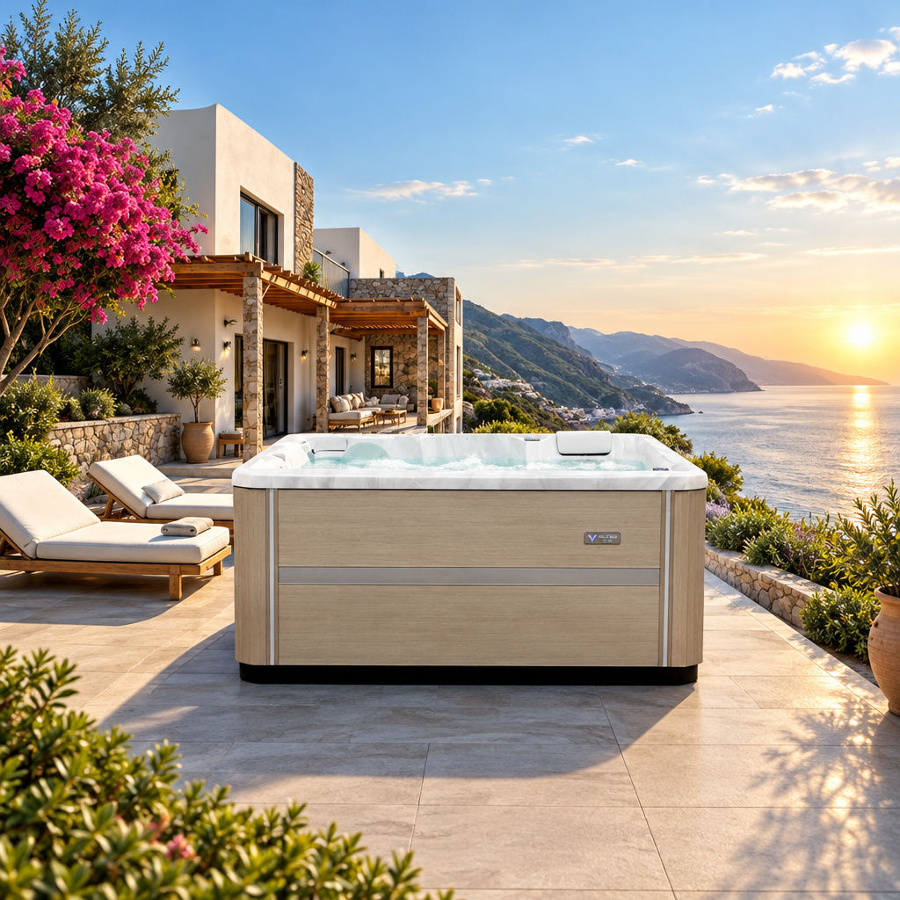
Residential terraces and garden decks: Provides year-round hydrotherapy for family relaxation and targeted post-workout muscle recovery.
Boutique hospitality venues: Enhances high-end guest amenities at vacation rentals and mountain lodges with dependable digital controls.
Evening entertaining spaces: Sets an engaging outdoor mood using synchronized perimeter LEDs and an integrated four-speaker Bluetooth sound system.
Each environment presents unique installation challenges. Rooftop decks require careful structural assessment to verify load capacity and waterproofing integrity. Ground-level patios need adequate drainage to prevent standing water around the cabinet base. Indoor sunroom installations must account for ventilation, humidity control, and floor protection from splashing.
Step 1: Mapping Spatial Footprint and Delivery Access Clearances
Before ordering a spa, prospective buyers must map out the entire delivery path from curbside to the final installation pad. Because large composite spas cannot bend around tight corners, installers need adequate clearance past fence gates, roof overhangs, and air conditioning units. Confirm the VS-502L installation manual’s recommended service clearances and verify equipment access requirements with the installer before placing the order.
Step 2: Hydraulic Matching: Allocating Dedicated Circuits and Flow Rates
Examine your home’s main electrical service panel to confirm it has sufficient amperage capacity for a dedicated spa circuit. Work with a licensed electrician to determine the exact circuit configuration, breaker size, and disconnect placement required by your installation location and local electrical code. The electrician should review the product’s installation manual to ensure compliance with manufacturer specifications and verify that the service panel can handle the additional load without approaching its rated capacity.
Step 3: Verifying Ergonomic Fit Prior to Delivery
Whenever possible, test a spa shell in person to assess seat depth, footwell room, and backrest angles. Taller individuals should ensure their shoulders remain fully immersed below the waterline without forcing their knees against the center jet dome. Similarly, smaller bathers should check that the lounger design keeps them securely seated without floating upward during high-flow massage cycles.
Bring the entire household to the showroom if possible. Each person has different height, weight, and comfort preferences, so what feels perfect for one family member might feel cramped or unstable for another. Pay attention to headrest positioning, armrest height, and how easily you can reach the control panel without standing up.
Step 4: Evaluating Long-Term Ownership Costs
The purchase price represents only one component of total ownership cost. Electrical consumption depends on climate, insulation quality, cover fit, and usage patterns. Request energy-use estimates from the manufacturer based on your local climate zone and typical usage frequency.
Maintenance costs include replacement filter cartridges, water treatment chemicals, occasional pump or heater repairs, and professional winterization services in cold climates. Budget for filter replacement every one to two years, depending on water quality and cleaning frequency. A well-maintained spa can operate reliably for fifteen to twenty years, but deferred maintenance accelerates component wear and increases long-term costs.
Critical Pitfalls to Avoid in Premium Spa Acquisition
Focusing exclusively on jet count: Disregarding pump horsepower ratings and manifold designs often leads to weak water pressure at individual jets.
Placing spas on unlevel ground: Installing a heavy tub on pavers or soil causes structural flexing that can warp the composite frame over time.
Skipping water testing routines: Assuming automated filtration pumps replace chemical sanitizers leads to cloudy water and rapid scale buildup.
Overlooking local safety regulations: Neglecting dedicated disconnect boxes and approved suction covers can create serious electrical and entrapment risks.
Underestimating delivery logistics: Failing to measure gates, doorways, and tight corners results in costly delays or impossible installations.
Ignoring climate-specific requirements: Purchasing a spa without verifying its freeze-protection features in cold climates risks plumbing damage during winter months.
Frequently Asked Questions
What technical benchmarks distinguish advanced hot tubs from standard models?
Standard hot tubs often share a single dual-speed pump across all hydrotherapy jets, heating elements, and filtration duties. High-performance models instead use separate drive units, including dedicated massage pumps, independent low-wattage circulation pumps, and separate air blowers. They also feature multi-layer composite shells and weather-resistant composite cabinetry built to handle seasonal outdoor exposure.
Does a 71-jet system require specialized residential electrical infrastructure?
Yes. Running a 71-jet system alongside dual 2 HP massage pumps, an air blower, and a 3 kW heater demands substantial power. Spas like the VS-502L have a total power rating of 6.95 kW. Work with a licensed electrician to determine your specific circuit, disconnect, and breaker requirements based on the installation manual and local electrical code.
How does the dedicated circulation pump in the VS-502L improve system efficiency?
The VS-502L is specified with a separate 0.35 HP circulation pump. A dedicated circulation pump can offer certain advantages compared to cycling the larger massage motors, though actual operational benefits depend on how the system is designed and configured. Consult the product manual for details about operating schedules and energy consumption.
What structural foundation is required for a 5-person composite hot tub?
Total load depends on the manufacturer’s stated water capacity plus occupants and bathers. Use a level, adequately supported foundation designed for that total load. Concrete thickness and reinforcement must be determined by site conditions, local requirements, and the installer or structural professional.
Can an advanced hot tub be operated outdoors throughout freezing winter conditions?
Outdoor winter operation depends on continuous electrical power, adequate insulation, correct water care, and the manufacturer’s freeze-protection and winterization instructions. A well-fitted, dense insulating cover is essential to prevent surface heat loss during cold months. Review the product manual for specific guidance on winter operation.
How often should water be fully drained and replenished in high-performance spas?
Drain and refill according to the manufacturer’s instructions and water condition. Frequency varies with spa volume, bather load, sanitizer control, and water quality. Even with regular filtration and chemical balancing, dissolved solids, minerals, and organic byproducts gradually accumulate over time. Refreshing the water keeps your sanitizers working efficiently and protects heating elements from premature mineral scaling.
Are hot tubs with powerful multi-pump arrays safe for all household members?
Multi-pump hydrotherapy systems are safe when used with common-sense precautions. Have the installer verify that all suction outlet fitting assemblies and related entrapment protections comply with the applicable current code and standards, including ANSI/APSP/ICC-16 where applicable. Additionally, water temperatures should never exceed 104°F (40°C), and younger children should always be supervised around warm water environments.
Conclusion: Balancing Engineering, Ergonomics, and Realistic Ownership
Investing in advanced hot tubs for year-round outdoor use is ultimately an exercise in evaluating engineering integrity, hydrotherapy mechanics, and practical daily maintenance. By looking past surface-level novelties and focusing on pump displacement ratios, multi-tier filtration loops, and durable structural composites, prospective owners can make confident, well-informed choices. When precision engineering and durable materials come together, a home spa transforms into an inviting sanctuary of long-term physical wellness and reliable outdoor enjoyment.
Victoria Star Swim Spa offers the perfect balance between exercise and relaxation, whether you want to swim for fitness or relax in the spacious seating.
Victoria Star Swim Spa offers the perfect balance between exercise and relaxation, whether you want to swim for fitness or relax in the spacious seating.