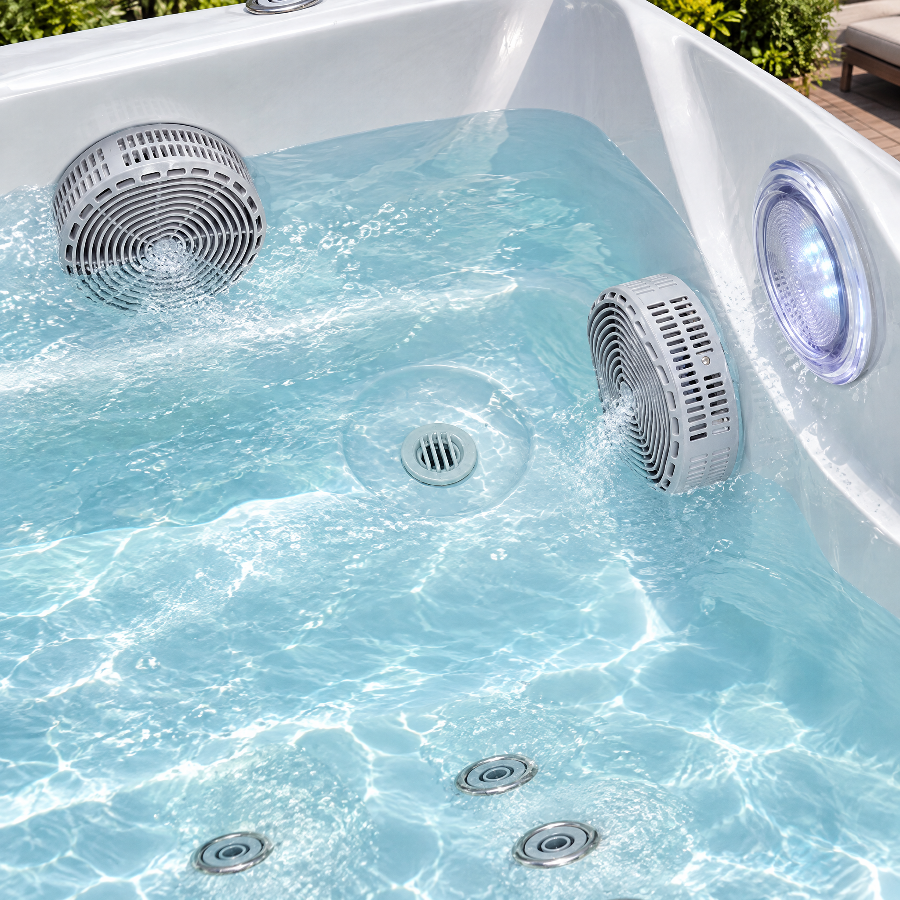
Above Ground Jacuzzi: The Practical Engineering and Selection Guide
Home / News / Above Ground Jacuzzi: The Practical Engineering and Selection Guide
November 07, 2026
Investing in an above ground jacuzzi transforms an ordinary patio or garden into a private hydrotherapy sanctuary. While many homeowners dream of warm, pulsating water, navigating technical plumbing, electrical loads, and ergonomic layouts can feel overwhelming. A proper elevated spa blends hydraulic efficiency with resilient architectural materials, offering daily tension relief without the extensive excavation of concrete pools. Understanding real-world performance, weight distribution, and sanitation allows you to choose an above ground jacuzzi that delivers long-term wellness.
Understanding the Above Ground Jacuzzi Experience
Clarifying Terminology and Product Architecture
Many prospective buyers use the term above ground jacuzzi as an umbrella phrase for self-contained, elevated outdoor hot tubs. Technically, Jacuzzi is a protected trademark, yet the public frequently uses it to describe any hydrotherapy vessel with dedicated jet pumps and heating systems. An above-ground model houses its internal pump, heater, plumbing harness, and electronic brain completely inside an insulated perimeter cabinet.
Unlike many in-ground spa projects, which may require remote plumbing trenches and subterranean vaults, an elevated spa arrives as a self-contained unit. This modular design significantly changes the installation process compared to long-term custom landscape construction. It also preserves your landscape, avoiding destructive heavy machinery while maintaining control over water temperature and massage dynamics.
For property owners planning an outdoor installation, recognizing this self-contained design clarifies maintenance expectations. Because the mechanical components remain integrated within the shell perimeter, routine checks do not require searching for external equipment pits. The entire hydraulic circuit, from pump intake to heater core, stays housed in one weather-resistant enclosure.
Hydrodynamics and Targeted Musculoskeletal Relief
True hydrotherapy depends on water volume, pump displacement, and nozzle geometry working together. Warm water immersion dilates blood vessels, while buoyancy counteracts gravity to offload compressive weight from spinal vertebrae and lower extremities. When targeted water streams strike specific muscular trigger points, the localized hydromassage provides an opportunity for physical relaxation.
Effective hydrotherapy systems avoid arbitrary nozzle placement. Instead, designers arrange hydrodynamic zones where varying orifice sizes create varied massage sensations across the body. These range from broad, swirling lumbar agitation to concentrated streams along the upper shoulders, allowing bathers to decompress after strenuous physical activity.
Hydrodynamic pressure depends on how internal pipe manifolds distribute water flow from the main pump. When water lines are balanced, bathers experience steady jet output whether they sit alone or share the tub. This consistent water delivery forms the foundation of modern domestic hydrotherapy design.
Structural Layout and Ergonomic Planning
Contoured Seating Versus Open Social Wells
Seating design determines whether a spa functions as a personal physical therapy station or an open conversational lounge. Traditional bucket seats hold bathers in an upright posture, making them ideal for lively social interaction across the vessel. However, upright positions provide limited support for the hamstrings, gluteal complex, and calves.
Full-length lounger seats cradle the human body along an extended semi-reclined plane. By supporting the thighs and elevating the lower legs, a lounger prevents the bather from sliding when vigorous massage jets activate. This ergonomic stability allows focused hydromassage along the posterior chain without requiring continuous effort to hold one’s position.
When evaluating seating options, buyers should consider how often they plan to host guests versus soaking alone or with a partner. Open bench configurations accommodate varying body sizes and larger social gatherings with greater seating flexibility. In contrast, dual-lounger models prioritize dedicated personal relaxation, giving each user a molded contour suited for full-body immersion.
Dimensional Planning and Service Access
Every elevated spa requires clearance beyond its outer cabinet edges. While the physical footprint occupies a set rectangle, technicians require sufficient access around the perimeter to service pumps, heating elements, and union couplings. Neglecting service corridors during early planning can complicate routine inspections and increase repair time.
Pedestrian Pathways: Maintain an unobstructed, slip-resistant walkway from the home door to the spa entry step.
Equipment Clearances: Confirm manufacturer-recommended clearance around service panels to allow maintenance access without moving the spa.
Cover Handling Space: Account for the specific radius and rear clearance demanded by your chosen manual or mechanical cover lifter.
Overhead Margins: Keep the vertical envelope clear of low-hanging tree branches, gutter downspouts, and overhead utility lines.
Evaluating delivery access paths is just as critical as site layout. Spas arrive as rigid, fully assembled structures that delivery crews transport on edge using specialized dollies. Measuring gate widths, eaves, air conditioner projections, and fence corners prevents costly delivery delays on installation day.
The Engineering Profile of the VS-301L Hot Tub
Ergonomic Three-Person Architectural Geometry
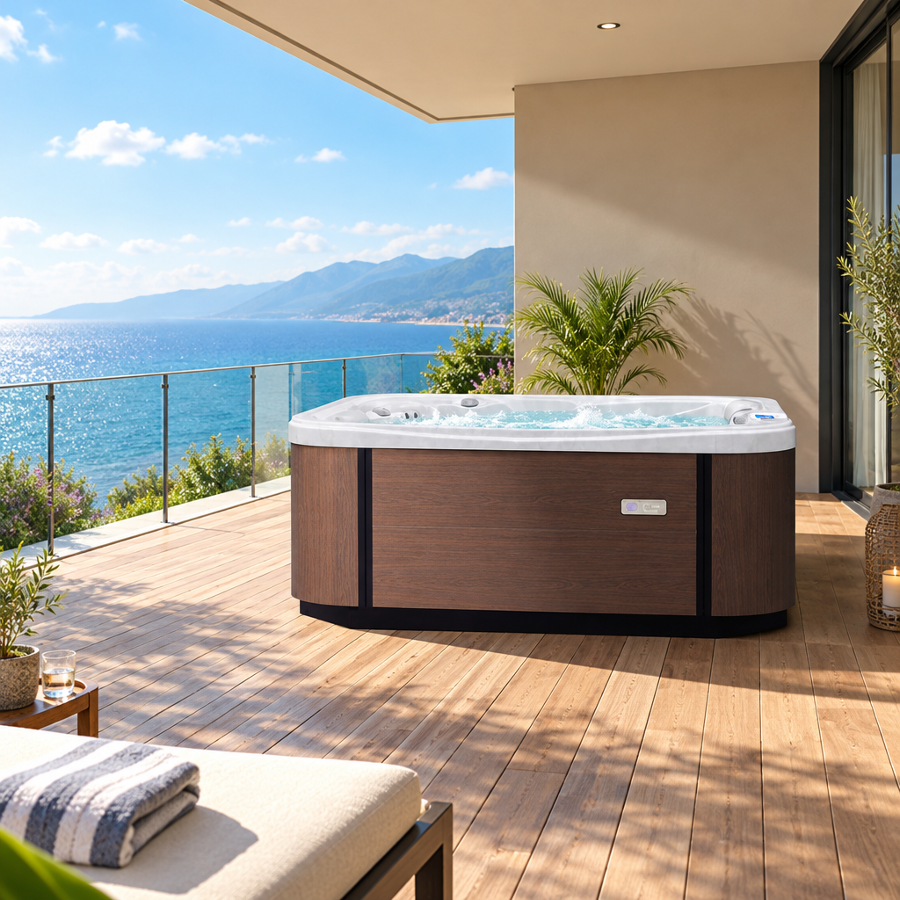
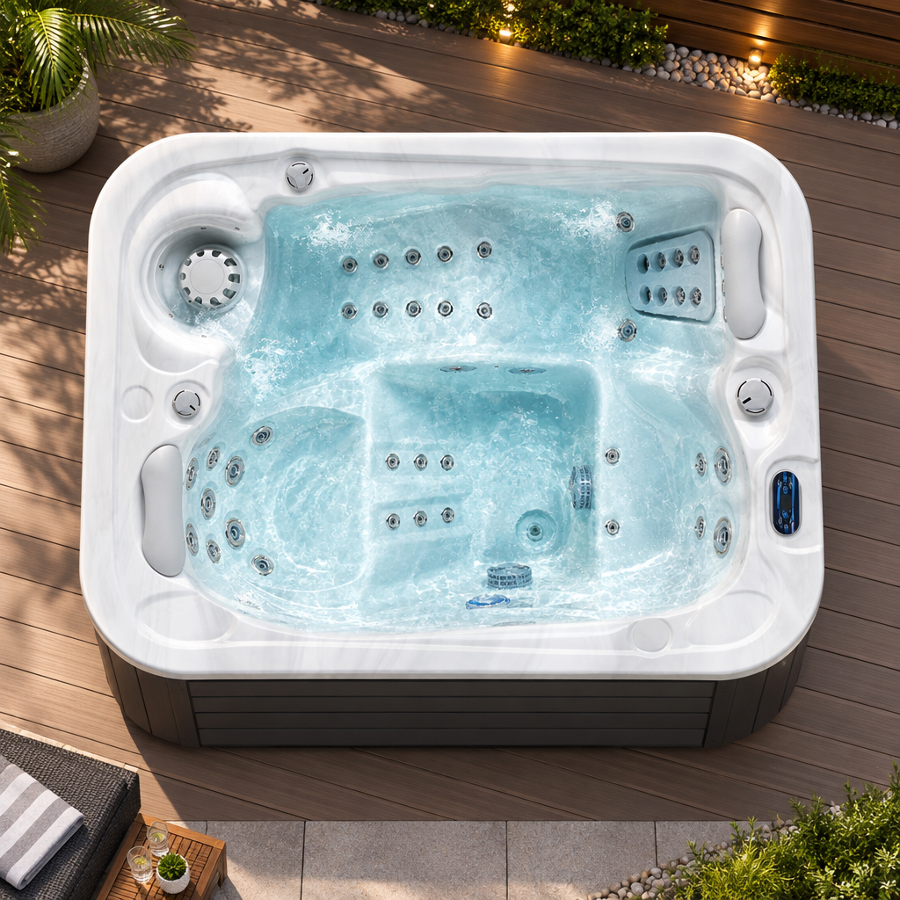
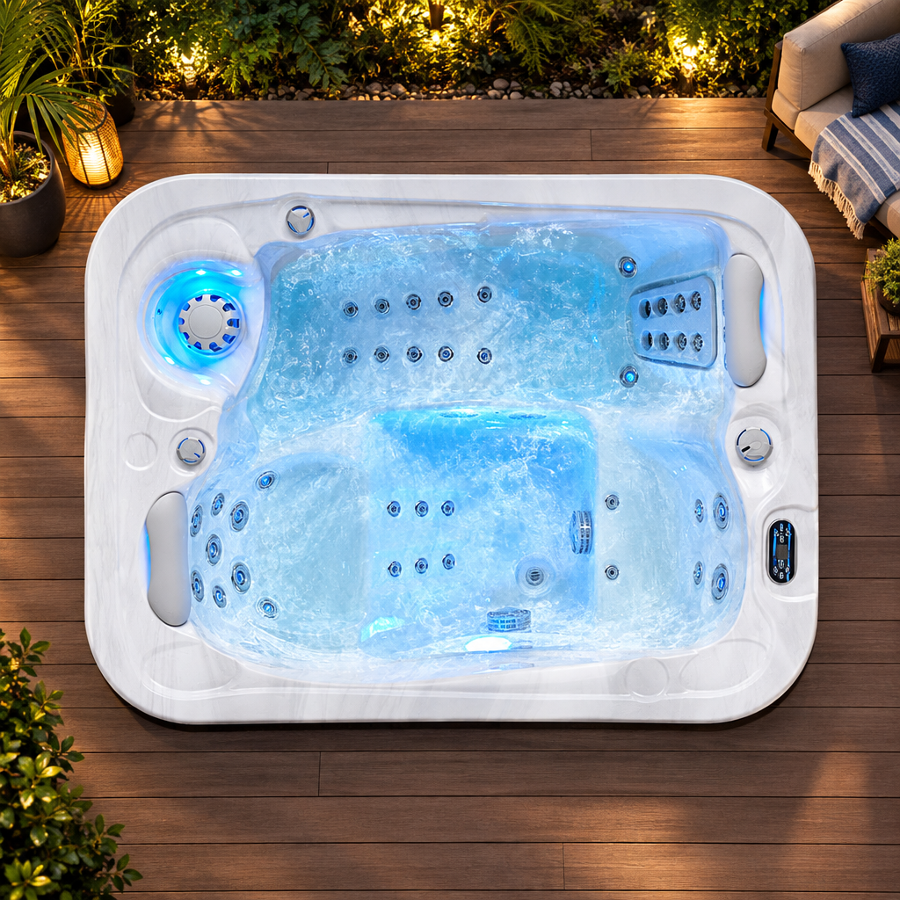
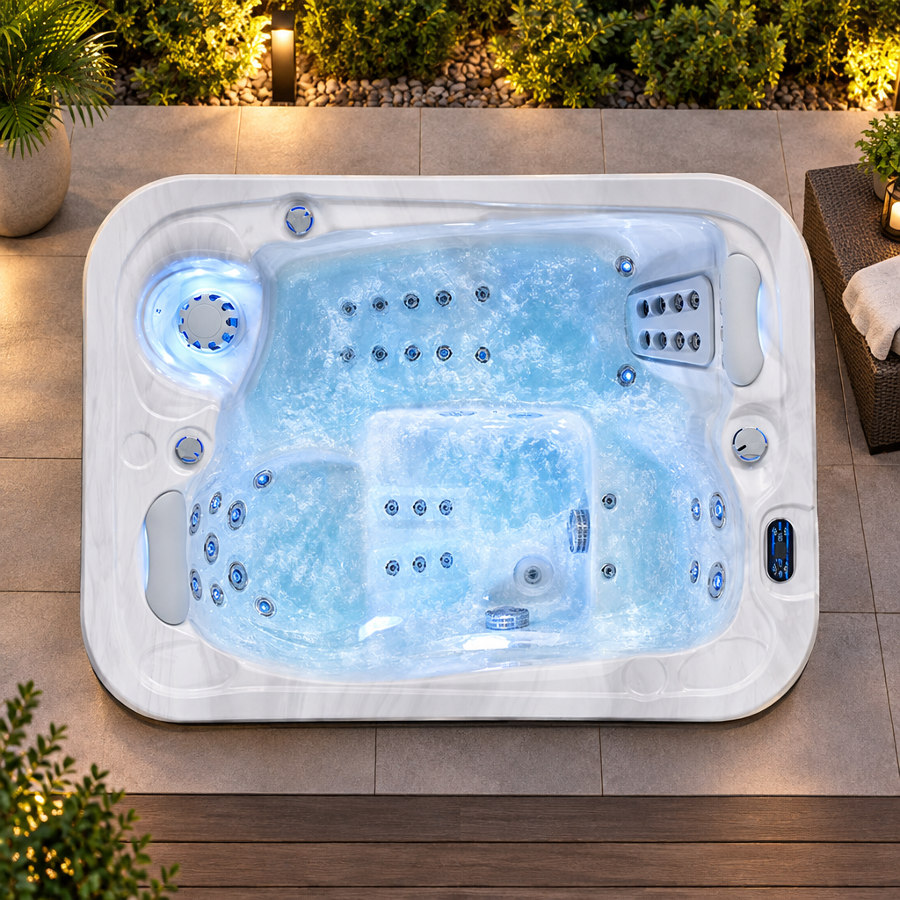
The VS-301L Luxury Above Ground Hot Tub showcases specialized layout planning by dedicating its 2000 mm × 1500 mm × 800 mm footprint to two full-length body-contouring loungers and one upright hydrotherapy seat. Rather than overcrowding the basin with nominal seating, this configuration provides a tailored environment where occupants can relax in supported comfort.
Manufactured by Foshan Gaoming Shiyi Sanitary Ware Technology Co., Ltd. under its dedicated Victoria Star brand, for us the vessel reflects a disciplined manufacturing process. The shell is available in a Porcelain color, while the structural perimeter utilizes an aluminum-plastic skirt available in Platinum or Midnight finishes, designed for weather resistance in outdoor wellness areas.
Technical Parameter
Engineering Specification
Exterior Dimensions (Metric)
2000 mm × 1500 mm × 800 mm
Exterior Dimensions (Imperial)
Approximately 7′ × 59″ × 32″
Seating Configuration
3 Persons (1 Upright Seat + 2 Full Loungers)
Total Hydrotherapy Jets
47 Hydrotherapy Jets
Water Massage Pump
1 × 3.0 HP High-Output Massage Pump
Circulation Filtration Pump
1 × 0.35 HP Dedicated Circulation Pump
Electric Heating Element
1 × 3.0 KW Rapid-Recovery Heater
Total System Power Rating
5.45 KW Electrical Supply
User Interface Control
KL2022 Smart Keypad Control System
Shell & Cabinet Colors
Porcelain Color; Platinum or Midnight Cabinet
Hydrodynamic Jet Distribution and Pump Staging
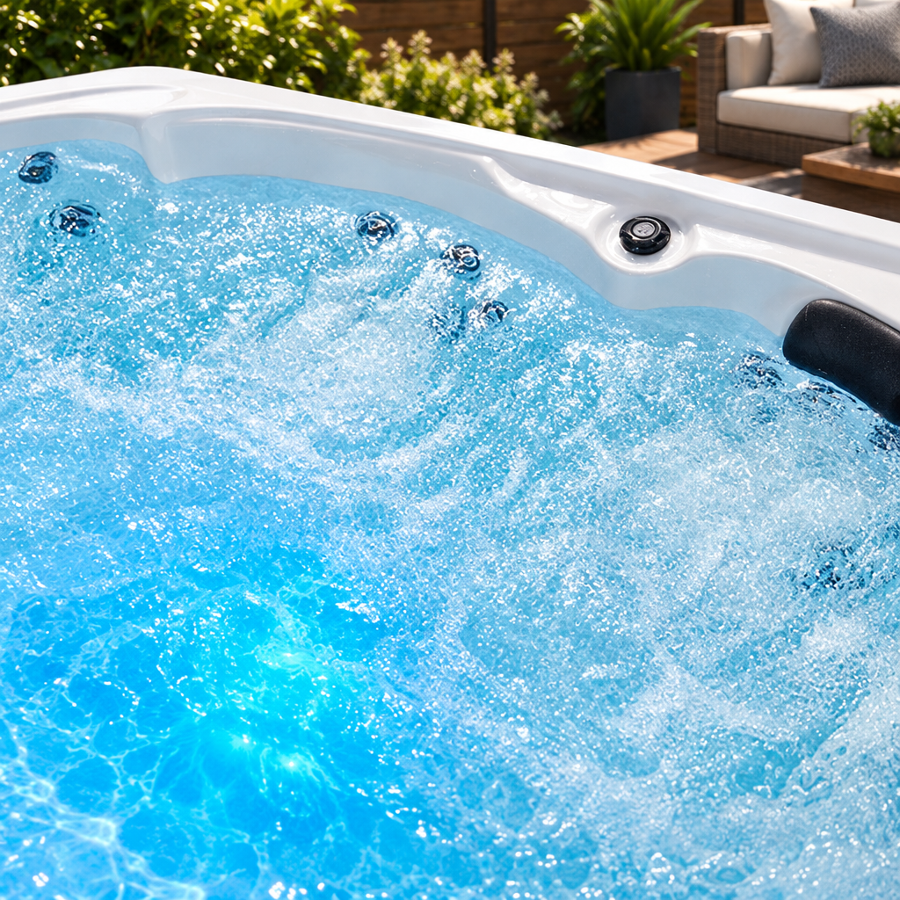
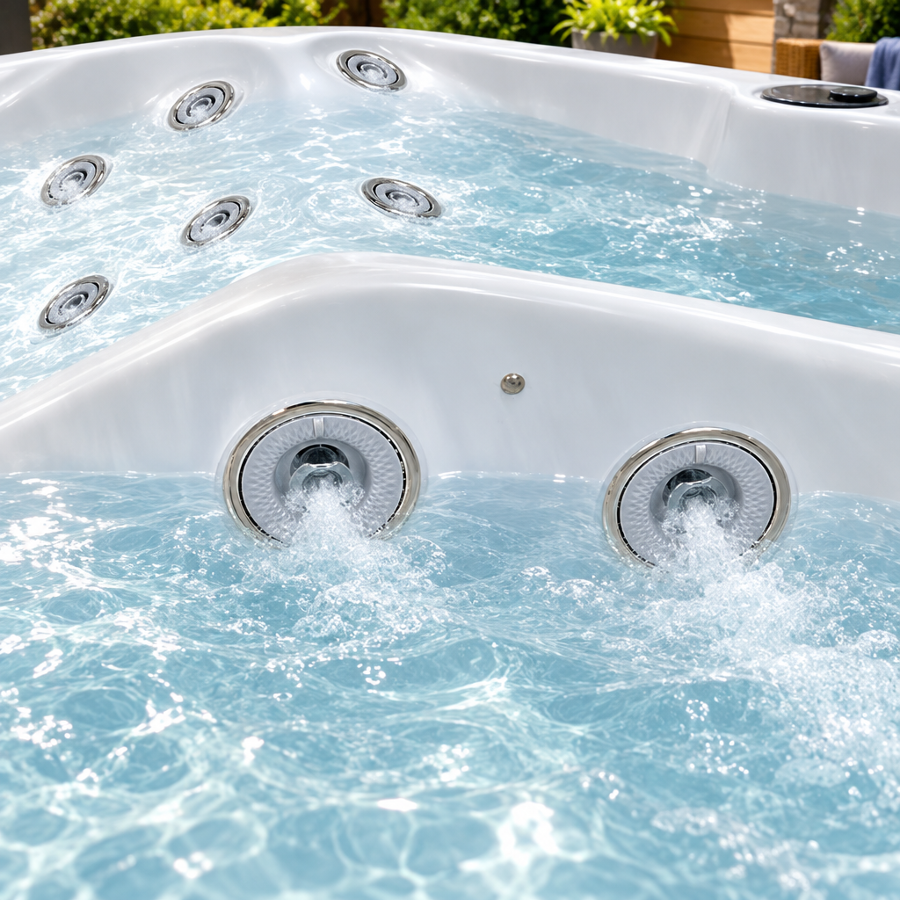
The VS-301L features a 47-jet hydrotherapy system fed by a high-output 3.0 HP water massage pump. According to the manufacturer, this system is engineered to simulate professional massage techniques across the back, waist, and legs. Multi-jet arrangements deliver targeted hydro-massage to relieve muscle tension after everyday strain.
A separate 0.35 HP circulation pump handles water movement and filtration through the system. This dedicated pump operates independently from the primary 3.0 HP massage pump, circulating water through the filtration housing and heater loop as required by the control system.
Dividing circulation and hydromassage duties allows each pump to fulfill a specific role within the vessel. The smaller 0.35 HP unit manages routine water circulation through the filter cartridge and past the 3.0 KW heating element, while the 3.0 HP pump remains reserved for driving high-volume hydrotherapy flow to the 47 jets during active massage sessions.
Site Preparation and Structural Engineering
Structural Support and Surface Planning
Water is heavy, weighing approximately 8.34 pounds per gallon. Once an above ground jacuzzi fills to operating depth and welcomes occupants, the combined weight of the vessel, internal machinery, water volume, and bathers produces a substantial structural load. This load requires careful evaluation of the supporting surface.
Placing an elevated spa on unreinforced wooden joists or uneven ground risks uneven settling and structural failure. Foundation deflection places torsional stress across the rigid shell, potentially damaging internal plumbing joints. A structural engineer or licensed builder should always assess existing deck framing or design an appropriate on-grade concrete foundation.
Site Assessment and Clearing: Remove organic topsoil and vegetation down to solid, undisturbed sub-base ground.
Base Compaction and Drainage: Install an engineered gravel or crushed aggregate base to allow adequate perimeter drainage away from the cabinet.
Engineered Foundation Construction: Construct a level, reinforced concrete pad or engineered sub-structure specified by a professional to support total operating weight.
Level Verification: Confirm the finished surface is level within manufacturer-approved tolerances before scheduling delivery and setting the vessel.
Electrical Service and Professional Installation Standards
A spa requiring 5.45 KW of total power supply demands dedicated electrical planning. This is not an appliance that can run from an ordinary household receptacle. Safe, reliable operation requires a dedicated electrical circuit installed strictly in accordance with local electrical codes and manufacturer instructions.
Because water and electricity operate in close proximity, electrical codes mandate an approved disconnect switch or Ground Fault Circuit Interrupter (GFCI) within sight of the spa. The disconnect must provide clear physical isolation, typically requiring a minimum horizontal separation of 5 feet from the inside wall of the tub unless separated by an approved barrier under applicable codes. A licensed electrician must determine exact wire gauge, conduit type, and circuit breaker ratings to ensure stable voltage delivery.
Properly matching conductor size to total electrical draw protects sensitive digital controllers from line drops during pump startup. Modern smart keypads, such as the KL2022 system on the VS-301L, rely on steady voltage to manage temperature sensors, jet cycles, and illumination smoothly without electrical interference.
Water Chemistry and Filtration Maintenance
Ozone Technology and Water Sanitation Principles
Keeping spa water sanitary requires effective continuous oxidation alongside dependable filtration. The VS-301L features an integrated ozone water purification system combined with advanced filtration and circulation. Ozone introduced into the circulation line helps break down organic bath residues, assisting the physical filter in maintaining hygienic water.
While ozone purification enhances water clarity and reduces chemical consumption, it serves as a supplementary sanitizer. It cannot hold an enduring residual in the water when the spa is covered or idle. Bathers must maintain an active sanitizer residual to protect against waterborne pathogens introduced during each soak.
Regular filter cartridge maintenance remains vital to hydraulic efficiency. When debris clogs the filter media, circulation volume drops, causing pressure switches to open and disabling the heater. Rinsing filter pleats weekly and using specialized filter degreasers restores proper flow dynamics.
Routine Chemical Balancing Protocols
Unbalanced water damages internal spa hardware and irritates bathers’ skin. Low pH makes water corrosive, which degrades heating elements and pump seals. High pH causes dissolved minerals to precipitate, resulting in cloudy water and mineral scaling across the shell and jet orifices.
Total Alkalinity: Maintain between 80 and 120 ppm to provide an effective buffer against rapid pH fluctuations.
pH Balancing: Keep testing strictly between 7.0 and 7.8, with 7.2 to 7.8 preferred for bather comfort and sanitizer efficiency.
Sanitizer Residual: Maintain a continuous residual of at least 3.0 ppm for free chlorine or at least 4.0 ppm for bromine, following applicable public health guidelines.
Calcium Hardness: Keep balanced within manufacturer recommendations, typically 150 to 250 ppm, to prevent scale deposition.
Testing water at least twice daily—and more often with heavier bather use—using reliable test strips or a photometric kit prevents subtle chemistry drifts from turning into equipment damage. Keeping a simple chemical log helps owners recognize trends in sanitizer demand and evaporation.
Environmental Integration and Sensory Ambience
Integrated Audio and Water Features
A premium above ground jacuzzi provides sensory relaxation through sound and light. The VS-301L includes an integrated Bluetooth audio module connected to four waterproof AV speakers mounted within the tub perimeter. Bathers can stream audio content directly from connected devices without bringing delicate electronics near the water.
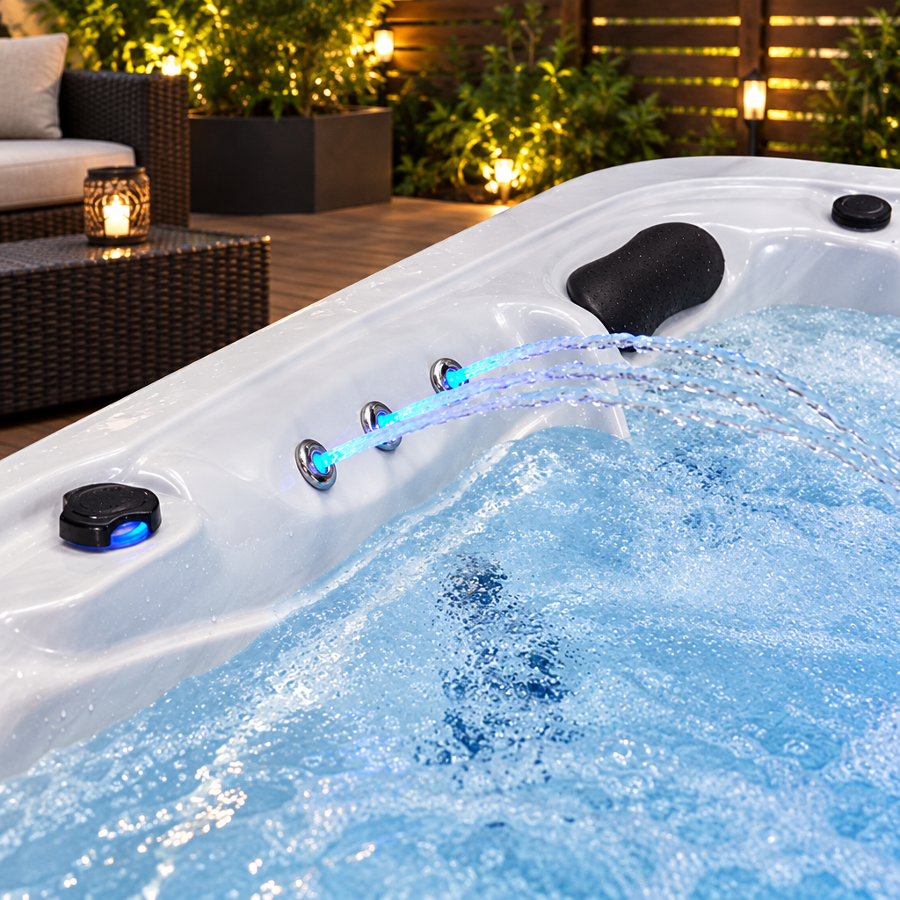
Complementing the acoustic system, integrated water fountain jets arch streams of water into the tub basin. The sound of moving water creates a soothing outdoor atmosphere, adding to the tranquil mood of a private garden or backyard patio. Topside control valves allow bathers to fine-tune stream height or shut fountains off completely.
Integrating audio and water features enhances the spa’s versatility across different entertainment scenarios. Whether playing soft acoustic tracks during an evening recovery soak or providing background music during a gathering, built-in AV components create a cohesive outdoor retreat.
Multi-Color LED Ambient Illumination
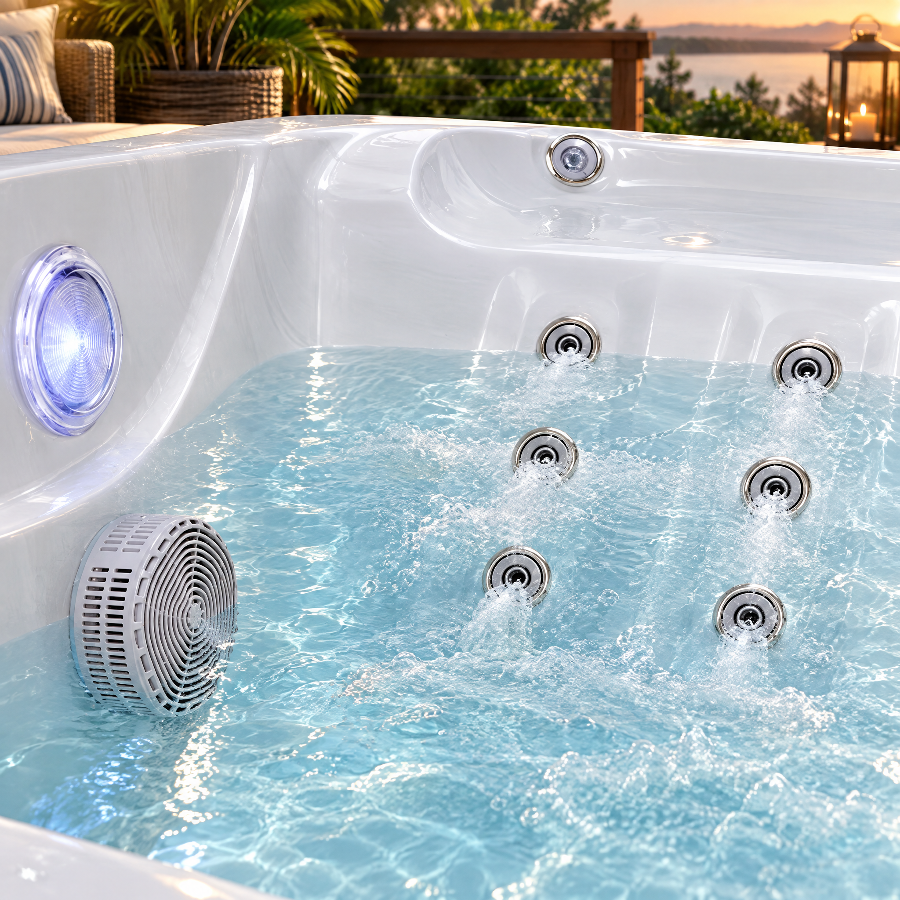
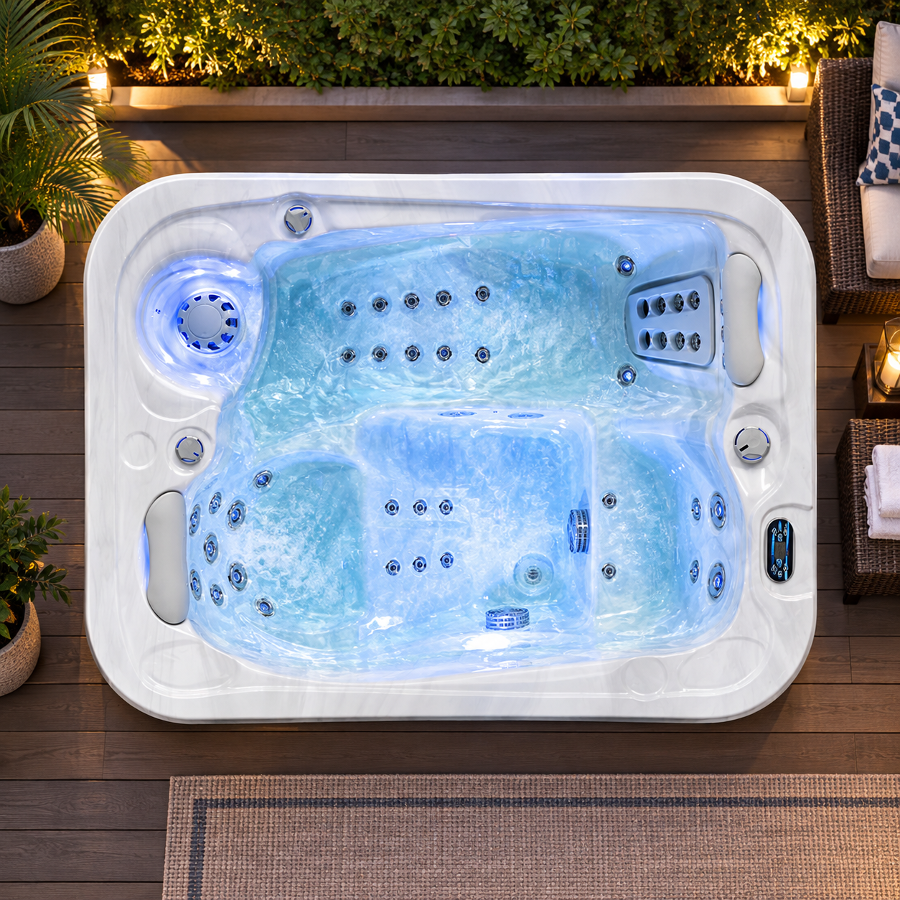
Illumination contributes to the visual aesthetic and nighttime enjoyment of an outdoor spa. The VS-301L incorporates dynamic multi-color LED illumination across the interior basin, waterline, and exterior skirt panels. Multi-color lighting sets an evening tone and complements surrounding landscape design.
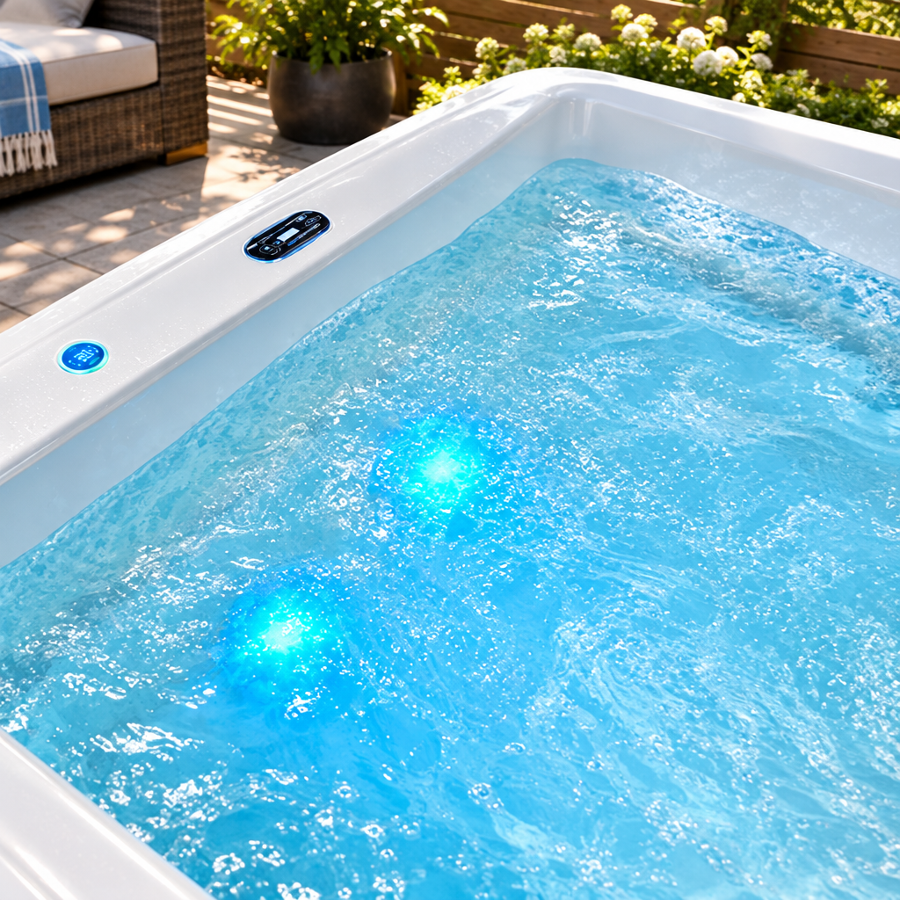
Submerged and perimeter LED lights define the vessel’s internal contours, headrests, and footwell surfaces in the dark. Controlled through the KL2022 smart keypad, users can cycle through various colors or select solid tones to match the mood of their garden sanctuary or patio lounge.
Exterior skirt lighting adds depth to the spa’s profile when viewed across a dark lawn or deck. By lighting the immediate perimeter, the aluminum-plastic cabinet acts as an attractive landscape element rather than an obtrusive utility box.
Evaluating Above-Ground and In-Ground Installations
Site Flexibility and Construction Requirements
Choosing between an above ground jacuzzi and an in-ground concrete spa involves weighing architectural permanence against installation agility. In-ground installations typically involve bespoke site excavation, forming, and specialized trades, requiring extensive structural planning that permanently anchors the spa to a single location on the property.
Above-ground models like the VS-301L arrive as self-contained units with plumbing, circulation, and filtration systems housed inside the outer cabinet. Once a suitable foundation pad and proper electrical connections are established, the physical setup focuses on setting the spa in place, filling it with water, and commissioning the mechanical pack.
Installation Factor
Self-Contained Above Ground Hot Tub
Custom In-Ground Concrete Spa
Equipment Housing
Enclosed entirely within perimeter cabinet
Often requires separate remote vaults or equipment pads
Structural Shell Form
Factory-molded ergonomic contours and loungers
Site-formed masonry, typically with custom benches
Plumbing Distribution
Factory-assembled internal manifold harnesses
Site-plumbed piping routed through trenching or backfill
Relocation Feasibility
Movable via draining and disconnection
Permanent architectural fixture tied to the property
Accessibility for Servicing and Property Relocation
Service accessibility distinguishes installation styles. If plumbing joints or mechanical components fail on an in-ground concrete spa, diagnosing leaks can require specialized acoustic listening tools or concrete removal. Access to underground suction and return lines often depends on how the original subterranean plumbing was engineered.
Above-ground models provide accessible servicing through removable exterior cabinet skirts. Technicians can inspect the pump, heater, ozone unit, and electronic control boards without disturbing surrounding landscaping. Furthermore, if you relocate to a new home, an above ground hot tub can be drained, disconnected, and transported, protecting your wellness investment.
Frequently Asked Questions
What are the standard electrical requirements for an above ground jacuzzi?
Most mid-to-high-capacity above ground hot tubs, including models like the VS-301L with its 5.45 KW total power rating, require a dedicated high-voltage circuit. This circuit must run through an approved outdoor disconnect switch or GFCI breaker positioned within sight of the tub and installed according to local electrical codes. The disconnect typically requires a minimum 5-foot horizontal separation from the water unless separated by an approved barrier. Always consult a licensed electrician to review the product manual and install proper wiring.
Can I install an above ground hot tub directly on a standard wooden backyard deck?
Never install an elevated spa on a wooden deck without an evaluation by a structural engineer or licensed builder. A filled spa containing water and occupants creates significant structural weight that often exceeds standard residential deck live-load design codes. Your contractor can determine whether joist sistering, additional support posts, or a dedicated ground-level concrete slab is necessary.
How often should the water in an above ground hot tub be completely drained and refilled?
Water replacement depends on tub water volume, frequency of use, bather load, and ongoing chemical maintenance. As bathers use the spa, total dissolved solids and organic residues gradually accumulate until sanitizers become less effective. Following manufacturer recommendations and testing water quality regularly will help you determine the appropriate schedule for refreshing the water.
What is the primary difference between a circulation pump and a water massage pump?
A circulation pump is a low-horsepower, energy-efficient pump—such as the 0.35 HP unit in the VS-301L—engineered to move water continuously and quietly through the filter and heater. A massage pump is a high-output unit, such as a 3.0 HP motor, designed to generate vigorous water flow through hydrotherapy jets during active massage sessions.
Does an integrated ozone water purification system eliminate the need for chlorine or bromine?
No, an ozone purification system supplements water sanitation but does not replace residual sanitizers. Ozone neutralizes organic matter in the circulation line to support water clarity, but it leaves no residual protection in the standing water. You must still maintain appropriate baseline levels of chlorine or bromine to protect against bathers’ bacterial contamination.
How should I maintain the exterior aluminum-plastic cabinet against outdoor weathering?
Cabinets made from aluminum-plastic composite materials are engineered for weather resistance in outdoor conditions. Routine maintenance involves wiping down skirt panels with a soft cloth, clean water, and mild non-abrasive soap to remove airborne dust and pollen. Refer to your manufacturer owner’s manual for specific cleaning recommendations and avoid harsh solvents.
Making the Right Investment Choice
Selecting the right above ground jacuzzi comes down to finding an engineering layout that matches your personal wellness goals and property parameters. By carefully assessing site load limits, electrical supply, and ergonomic seating, you can avoid common installation snags and enjoy effortless relaxation. Models like the VS-301L show how balancing high-pressure hydrotherapy jets, targeted lounger comfort, and efficient water management can create an exceptional spa experience. Investing in an above ground jacuzzi adds enduring personal wellness to your daily routine, providing restorative hydrotherapy and peaceful outdoor living for years to come.
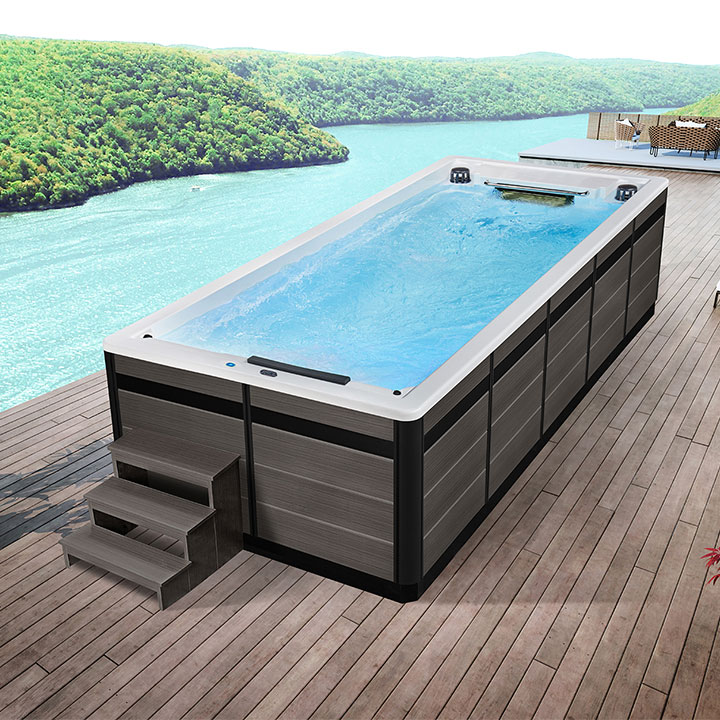
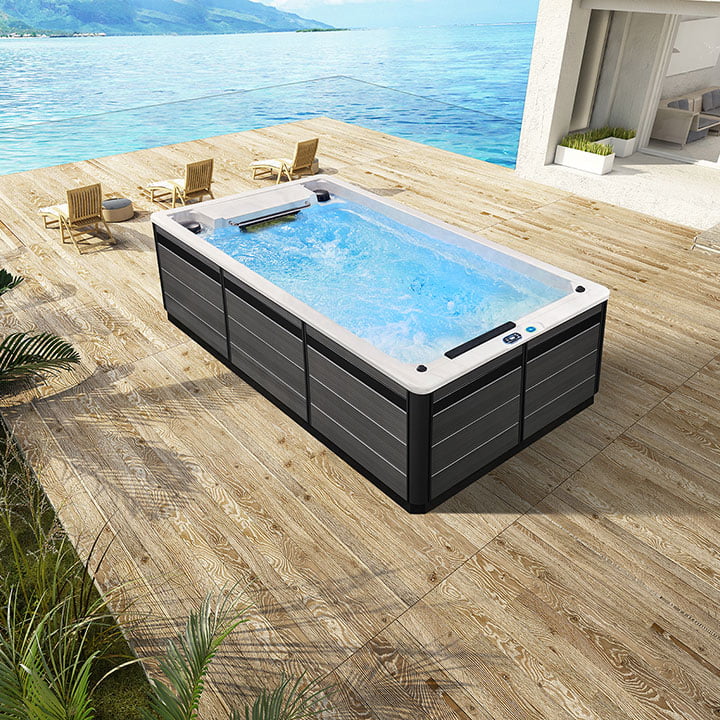
Victoria Star Swim Spa offers the perfect balance between exercise and relaxation, whether you want to swim for fitness or relax in the spacious seating.
Victoria Star Swim Spa offers the perfect balance between exercise and relaxation, whether you want to swim for fitness or relax in the spacious seating.