Above Ground Hot Tub: Complete Buying, Installation, and Care Guide
Home / News / Above Ground Hot Tub: Complete Buying, Installation, and Care Guide
November 07, 2026
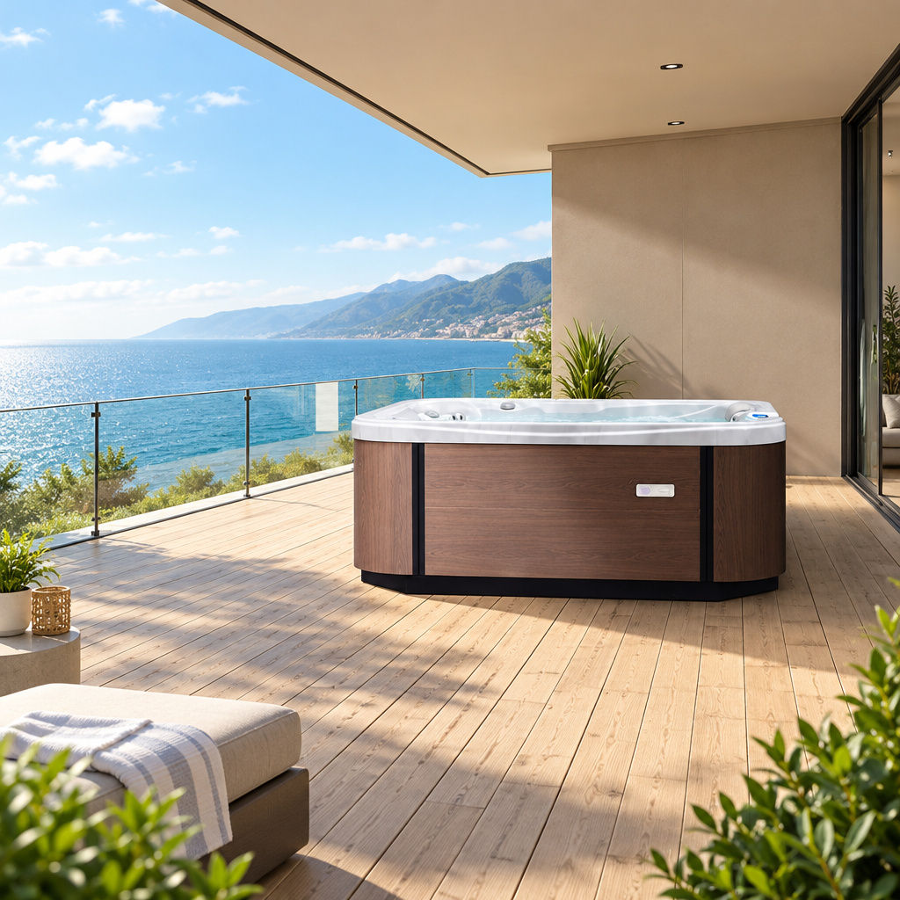
An above ground hot tub can turn a plain patio or garden corner into a place for warm-water recovery and quiet evenings. Unlike an in-ground spa built into excavated concrete, a modern above ground hot tub is a self-contained appliance. Heating, circulation, filtration and seating all sit inside one insulated cabinet. Whether you want relief for a stiff lower back, a social spot on the deck, or the best above ground hot tub for year-round use, the right choice depends on space, electrical capacity, water care and running costs.
Understanding the Modern Above Ground Hot Tub
Portable spas have come a long way from wooden soaking barrels. Today they are factory-built appliances with dedicated pumps, heaters and control systems. Knowing how that self-contained design works helps you see where installation costs are saved and where planning still matters.
Defining Portable Spas and Self-Contained Systems
A self-contained above ground hot tub holds its acrylic shell, massage pump, circulation pump, electric heater and control pack inside a perimeter cabinet. The plumbing, air injectors and drain fittings are assembled at the factory. As a result, the unit arrives ready to sit on a level foundation. No trenching for water supply pipes is needed, because you fill it with a garden hose.
Core Lifestyle Benefits: Hydrotherapy, Recovery, and Social Space
Warm water does several useful things at once. Buoyancy takes part of your body weight off the hips, knees and spine. Heat relaxes tight muscles, and moving water from the jets adds a massage effect. Many people use a hot tub after workouts or long days at a desk. It is also one of the few places at home where phones stay out of reach, which makes it a natural gathering spot for couples and families.
Key Selection Factors Before You Buy
Before comparing jet counts or colors, check these practical limits first. Each one can rule a model in or out:
Yard footprint: the spa needs room for the tub itself, the cover when it is folded back, and access to the equipment panel.
Bather load: count how many people will soak together on a typical evening, and whether they prefer sitting or reclining.
Electrical capacity: your main panel must have space and capacity for a dedicated spa circuit.
Foundation strength: a slab, gravel base or deck must carry the full weight of water and bathers.
Maintenance time: sanitizer and pH should be tested at least twice a day, and filters need regular rinsing. Each check takes only a few minutes, but it has to become a habit.
Above Ground vs. In-Ground Hot Tubs: Making the Right Investment
Once you know your site limits, the next decision is the type of spa. Choosing between an above-ground portable spa and a custom in-ground spa means weighing upfront cost, yard disruption, serviceability and whether the spa can move with you.
Structural Complexity and Site Disruption
In-ground spas usually require excavation, a concrete or gunite shell, trenched plumbing lines and a separate equipment pad. That work can take months and permanently changes the yard. An above ground hot tub installation, by contrast, mainly involves a level pad and an electrical run. Once the approved foundation, delivery route, electrical work and required inspections are complete, setting up the spa itself can be relatively quick. The overall schedule still depends on the site and local requirements.
Upfront Costs and Long-Term Value Retention
The budget for a custom in-ground spa grows with every trade involved: excavation, masonry, plumbing, landscaping and restoration. An above ground hot tub keeps most of the cost in three predictable items: the spa, the base and the electrical hookup. If you move house, the spa can be drained, disconnected and transported to the new property. An in-ground spa stays behind.
Equipment Access and Future Relocation Flexibility
Serviceability is a quieter advantage, but it matters over the life of the spa. On most above-ground models, removable skirt panels give direct access to the pumps, unions, heater and control pack. With an in-ground spa, a leak in buried plumbing may mean digging up soil or cutting concrete to reach it.
The table below summarizes typical differences. Actual timelines and performance depend on the project and the specific build.
Evaluation Metric
Above Ground Hot Tub
In-Ground Custom Spa
Typical Installation Timeline
Usually shorter; depends on permits, base work and inspections
Often several months, including excavation and curing
Ground Disruption
Low; needs a level pad and electrical run
High; excavation and trenching
Component Serviceability
Direct access behind removable panels
Buried lines or a remote equipment area
Thermal Insulation
Depends on cabinet and cover insulation
Depends on shell construction and surrounding materials
Relocation Capability
Can be moved to a new home
Permanent part of the property
Sizing, Seating Ergonomics, and Layout Strategy
With the spa type settled, size and layout come next. The number of seats printed on a brochure tells you little on its own. What matters is how the seats fit real bodies and how bathers share the footwell.
Upright Therapy Seats vs. Full-Length Contoured Loungers
Upright seats keep the torso vertical and aim jets at the neck, shoulders and lower back. They also make it easy to sit up, talk and get in or out. Full-length loungers recline the body and run jets along the back of the legs and the feet. Loungers feel more like a full-body treatment, but each one takes more floor space than an upright seat. A tub with several loungers suits people who soak to unwind rather than to socialize.
Footwell Clearance and Multi-User Comfort
A cramped footwell can turn a relaxing soak into a tangle of legs. A generous footwell gives room for suction fittings and foot jets without forcing bathers to interlock their feet. When you look at a shell, picture people of different heights sitting at once. Check that taller bathers can bend their knees naturally and that lounger users are not kicking the person opposite.
Delivery Pathways, Turn Clearances, and Gate Access
Many delivery problems happen on the path to the backyard, not in the backyard itself. Measure gate widths, fence posts, gutters, air conditioning units and roof overhangs along the route. Spas usually travel on their side on a spa dolly, so the route has to fit the spa’s depth plus the dolly and room to steer. Measure the actual packaged spa, then confirm the required route width, turning clearance, overhead clearance and dolly requirements with the manufacturer or delivery team. On its side, the spa’s long or short edge becomes its height, so overhead clearance matters as much as width.
Site Preparation, Foundations, and Structural Support
Once the spa can reach its spot, the ground under it has to hold it. Water weighs about 8.34 pounds per gallon, or 1 kilogram per liter. A full spa on a soft or uneven base can settle unevenly, stress the shell and plumbing, and may void the manufacturer warranty.
Calculating Total Wet Weight and Load Dynamics
The figures below are a hypothetical example for a generic three-person spa holding about 220 gallons. They do not describe any specific model, so check the actual dry weight and water capacity of the spa you are considering:
Dry spa weight: assume about 500 to 700 lbs for this example.
Water weight: 220 gallons × 8.34 lbs equals about 1,835 lbs.
Three adult bathers: about 500 to 600 lbs combined.
Total operating load: about 2,835 to 3,135 lbs.
Spread across a 7-foot by 5-foot footprint of 35 square feet, that load comes to roughly 80 to 90 pounds per square foot. Loose topsoil cannot carry that evenly, especially where the ground freezes and thaws each year. The soil compresses in some places more than others, and the cabinet ends up resting on high spots.
Comparing Solid Foundation Options
The right base depends on budget, site slope and the look you want. Whatever you choose, it must be level to the manufacturer’s stated tolerance and meet local construction requirements. These are the common choices, from most to least rigid:
Poured concrete pad: a reinforced slab over compacted gravel is a common and dependable choice. A 4-inch slab with rebar or wire mesh is a frequent example, but thickness and reinforcement should follow the manufacturer’s requirements and local rules.
Modular spa pads: interlocking polymer pads placed over 4 to 6 inches of compacted crushed stone. They are quicker to install and easy to remove later.
Crushed stone base: a 4- to 6-inch excavation filled with tamped, angular crushed stone and held in place by a timber frame. Check that your spa manufacturer approves this base type.
Elevated Deck Installations and Structural Engineering Inspections
Placing an above ground hot tub on a raised wooden deck calls for a qualified structural engineer or contractor. Deck design requirements vary by jurisdiction, and a filled spa concentrates a large load on a small area. A simple comparison of per-square-foot figures is not enough to judge safety. The professional should assess the spa’s dry weight, water and bather load, how that load is distributed, the joist and beam connections, the footings and local code requirements. If reinforcement is needed, it may include extra posts, doubled or sistered joists, and new footings set below the local frost line.
Electrical Planning, Power Requirements, and Safety Codes
After the foundation, electricity is the second major site task. Power runs the pumps, the controls and the heater that keeps water warm through cold nights. Requirements vary by country and municipality, so always follow local code and the spa manufacturer’s installation manual.
110V/15A Plug-and-Play vs. 220V–240V Hardwired Systems
Some entry-level spas plug into a standard 110V/15A outlet. Their heaters are small, often around 1 kW, and on many models the heater switches off while the jets run on high. In cold weather, the water can lose heat faster than it recovers. Larger spas are hardwired to 220V–240V and use heaters of around 3 kW or more. Some of these systems can run the heater and massage pump at the same time, but that depends on the model’s control system and electrical requirements. Check the installation manual before assuming it.
Dedicated Circuit, Amperage Sizing, and GFCI Subpanel Requirements
Multi-pump spas commonly need a dedicated 240V circuit, often rated somewhere between 40 and 60 amps depending on total load. The manufacturer’s manual states the exact requirement. In the United States, the National Electrical Code requires ground-fault protection for spa circuits, usually through a GFCI disconnect. A GFCI compares current leaving and returning on the circuit. When it detects a leak of a few milliamps to ground, it cuts power almost instantly.
Conduit Routing, Emergency Disconnect Proximity, and Local Codes
Under the US National Electrical Code, the spa disconnect must generally be within sight of the spa and at least 5 feet from its inside wall. That distance keeps a bather from reaching the switch while sitting in the water. Underground conduit must be buried to a depth that depends on conduit type and local rules. A licensed electrician will know the local requirements and handle the permit.
Hydrotherapy Systems: Jets, Pumps, and Hydraulics
With power in place, attention can turn to the part people feel. Massage quality depends on how pump output, plumbing size and jet design work together. Jet count alone says little.
Jet Count vs. Jet Placement and Hydraulic Flow Balance
Think of a pump as a fixed budget of water. Spread it across too many small jets, and each stream gets weak. A balanced system sends that flow to jet groups placed along major muscle areas, such as the shoulders, lower back, legs and feet. Directional jets aim a focused stream at one spot. Rotating jets sweep in a circle and feel more like kneading across a wider area.
Dual-Pump Configurations: Circulation Pumps vs. High-Flow Massage Pumps
Many spas split water care and massage between two pumps. Each has a different job:
Circulation pump: a quiet, low-power pump, often around 0.25 to 0.5 HP. It runs continuously or on programmed cycles to move water through the filter, heater and ozone system.
Massage pump: a larger pump, often 3 HP or more on mid-sized spas. It moves high volumes of water through the jets when you switch on the massage.
Air Induction Regulators and Water Flow Customization
Air control dials on the top rim open venturi lines that pull outside air into the jet stream. Opening the dial adds air and makes the massage feel stronger and more turbulent. Closing it gives a smoother, water-only stream, which some people prefer for sensitive joints. Note that more air also cools the water slightly faster.
Water Sanitation, Filtration, and Health Safety
A great massage is only half the experience. Clean, balanced water protects bathers from germs and protects the heater and seals from scale and corrosion.
Safe Water Temperatures and Bather Exposure Guidelines
The CDC advises that hot tub water should not exceed 104°F (40°C). Hotter water raises the risk of overheating and dizziness. Many adults find 100°F to 102°F (about 38°C to 39°C) comfortable. Pregnant women should ask their doctor before using a hot tub. Young children, especially those under five, should generally stay out, because their bodies overheat more quickly than adults.
Daily Water Chemistry: Sanitizers and pH Balance
Every soak adds sweat, skin oils and lotions to the water, and these use up sanitizer. Warm water also uses up sanitizer faster than a cool pool does. CDC hot tub guidance recommends testing sanitizer and pH at least twice a day. Follow that, or stricter local or manufacturer instructions where they apply. Common targets are listed below:
Free chlorine: at least 3 ppm. Many owners keep it in the 3 to 5 ppm range.
Bromine: if you use bromine instead of chlorine, keep it around 4 to 8 ppm.
pH: CDC guidance for hot tubs recommends 7.0 to 7.8. Low pH can irritate eyes and corrode parts, while high pH causes scale and weakens chlorine.
Total alkalinity: around 80 to 120 ppm. Alkalinity acts as a buffer that keeps pH from swinging.
Ozone Purification Systems as Secondary Sanitizers
Many spas include an ozone generator that injects ozone into the circulation line. Ozone is a strong oxidizer that breaks down organic matter, which can help water stay clear and reduce how much chlorine or bromine you use. It works as a helper, though. Ozone does not leave a lasting residual in the tub, so you still need a measurable level of chlorine or bromine.
Filter Cleaning Routines and Drain-and-Refill Schedules
Rinse cartridge filters with a garden hose every one to two weeks, working between the pleats. About once a month, soak the cartridge in a filter cleaner to remove body oils. Over time, minerals and chemical residues build up as total dissolved solids (TDS). Drain and refill according to the manufacturer’s schedule and the condition of the water. A heavily used spa may need fresh water more often, and the right interval depends on water volume and average bather load.
Anti-Entrapment Suction Fittings and Safety Drain Covers
The massage pump pulls water through suction fittings in the footwell. Spa suction covers are designed to prevent hair and body entrapment. Inspect them regularly. Make sure they are firmly attached, not cracked and not blocked by leaves or debris. Replace a damaged cover before using the spa again.
Energy Efficiency, Thermal Covers, and Cabinet Insulation
Heating water outdoors uses energy every day, especially in winter. Good insulation is what keeps monthly running costs under control.
The Critical Role of Tapered Insulating Covers
A spa without a cover behaves like an uncovered pot on a stove. Much of its heat escapes through evaporation from the water surface. A good outdoor cover uses dense foam, typically tapered from about 4 inches in the center to 2.5 or 3 inches at the edges so rain and snow run off. Look for a vinyl outer skin, sealed foam cores that resist waterlogging, and locking straps that keep children out.
Full-Foam vs. Perimeter Thermal Cabinet Insulation
Cabinets use two main insulation methods. Full-foam insulation fills the space between shell and skirt with dense foam. It holds heat well and supports the plumbing, but finding a leak can mean digging through foam. Perimeter insulation lines the inside of the cabinet walls and floor instead. Heat from the pumps stays inside the cabinet, and technicians can reach the plumbing more easily.
Product Spotlight: VS-301L Luxury Above Ground Hot Tub
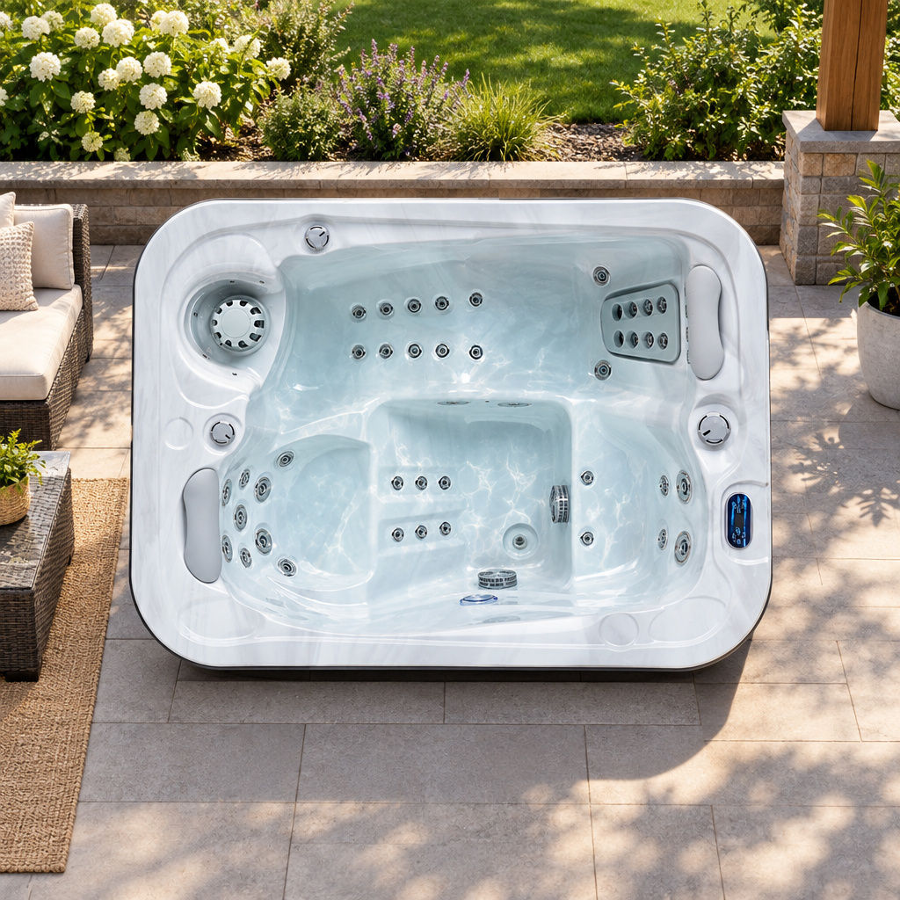
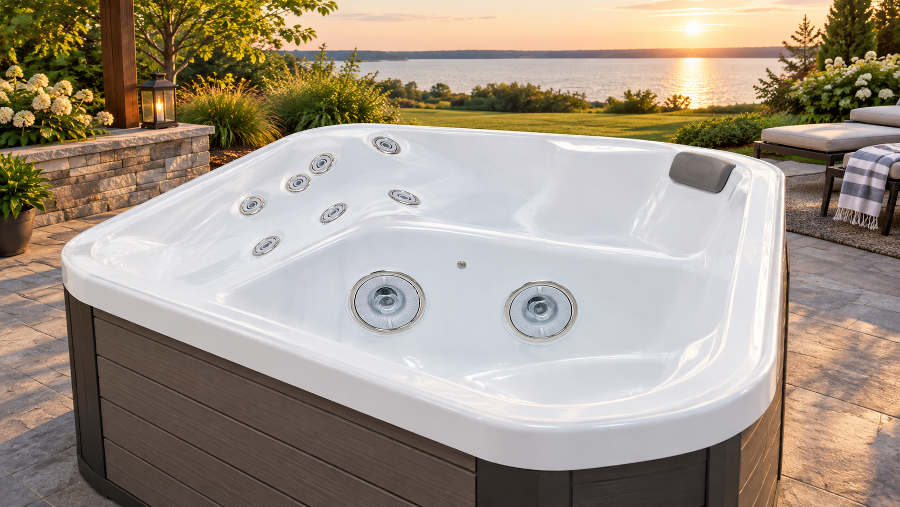
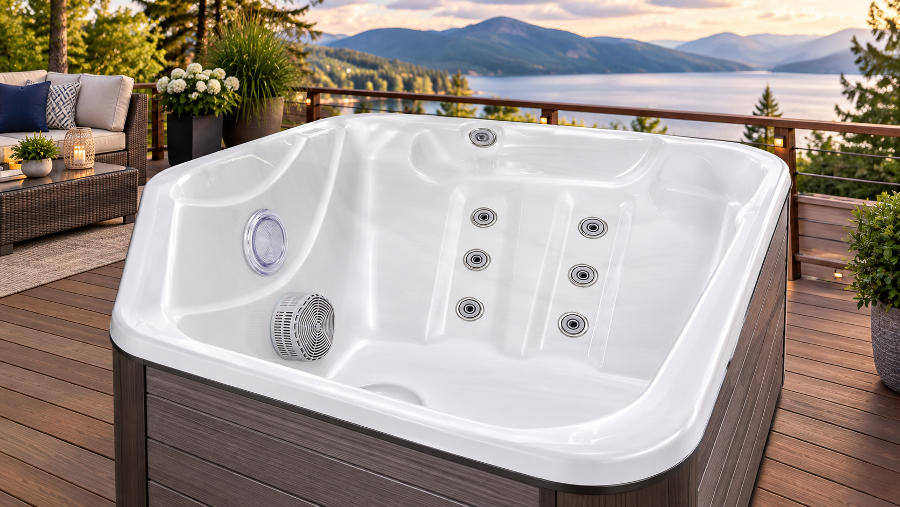
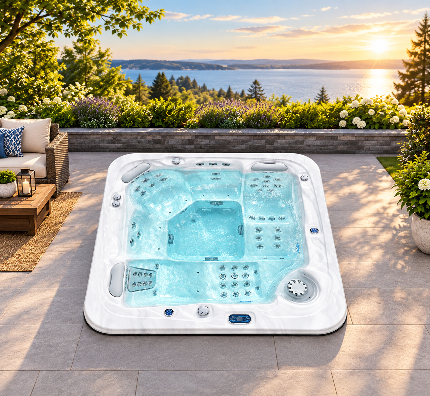
The planning points above are easier to judge against a real model. For us at Victoria Star, the brand of Foshan Gaoming Shiyi Sanitary Ware Technology Co., Ltd., the VS-301L is a compact option for patios and garden spaces. It is designed for small groups who would rather recline than sit upright.
Manufacturer Specifications and Architectural Footprint
The table below lists the VS-301L specifications from our product data. The metric dimensions are the primary figures, and the imperial values are approximate conversions:
Technical Specification
VS-301L Manufacturer Data
Exterior Dimensions
2000 mm × 1500 mm × 800 mm (approx. 6 ft 7 in × 59 in × 31.5 in)
Seating Configuration
3 persons (1 seat + 2 loungers)
Total Hydrotherapy Jets
47 jets
Control System
KL2022 with smart keypad control
Massage Water Pump
1 × 3.0 HP
Circulation Pump
1 × 0.35 HP
Heater Output
1 × 3.0 KW
Total Power Supply
5.45 KW
Water Purification
Filtration and circulation with ozone
Audio System
Bluetooth system with 4 AV speakers
LED Lighting
Multi-color interior and skirt lighting
Shell and Cabinet
Porcelain shell; Platinum or Midnight aluminum plastic skirt
The VS-301L water capacity and dry weight are not specified here. The worked weight example earlier is hypothetical and should not be read as this model’s operating load. Obtain those figures from us before sizing the foundation.
Hydrotherapy Layout: Dual Loungers and Dedicated Seat Ergonomics
The VS-301L pairs one upright seat with two full-length loungers. That means two adults can recline at the same time, while a third person sits upright. According to the product data, the 47 jets are arranged in clusters aimed at the back, lumbar area and legs, intended to mimic massage techniques. This layout suits couples or small households who soak mainly for recovery and relaxation.
Built-in Amenities: Smart Controls, Bluetooth Audio, and LED Ambiance
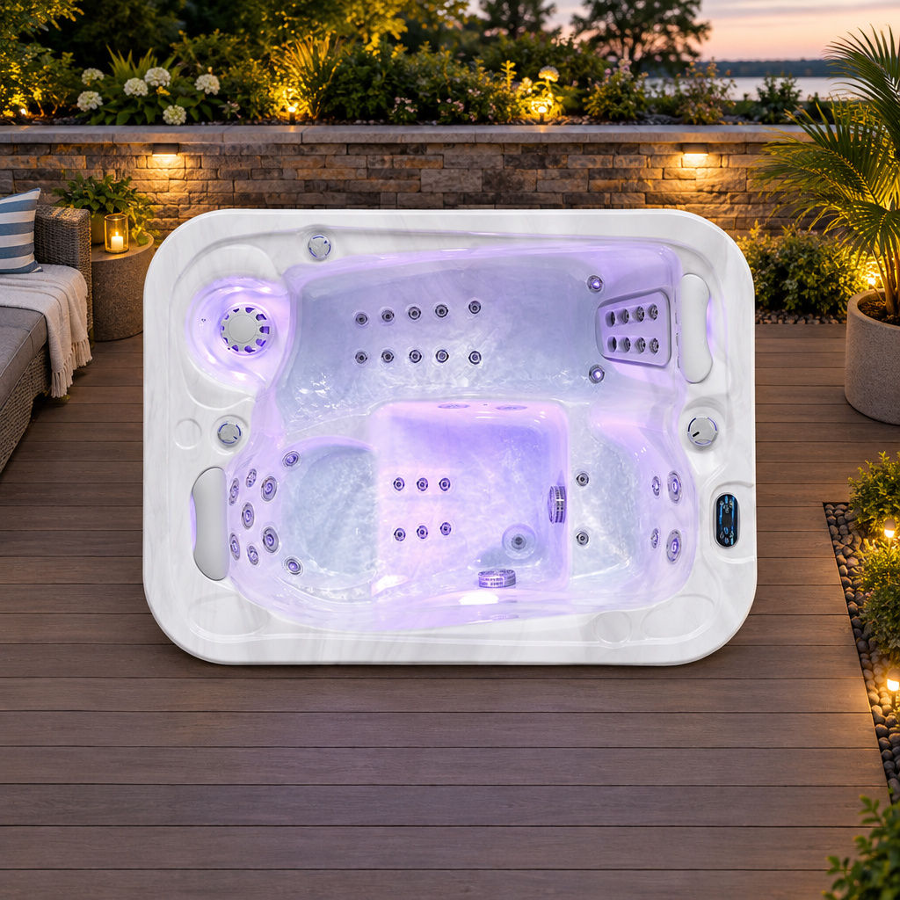
The KL2022 keypad on the top rim controls water temperature, jet operation and lighting. Multi-color LEDs light the interior and the cabinet skirt, which helps bathers see steps and edges at night. A Bluetooth receiver connects to four waterproof speakers, so you can play music from a phone kept safely away from the water. The cabinet uses weather-resistant aluminum plastic paneling in Platinum or Midnight.
Step-by-Step Above Ground Hot Tub Installation Checklist
Whichever model you choose, a smooth installation comes from doing the steps in order. Use this list in the weeks before delivery:
Confirm site rules: check property setbacks and HOA rules, and get any required building or electrical permits.
Build the foundation: pour a reinforced concrete pad or install another approved base. Make it level to the manufacturer’s stated tolerance and structurally adequate under local construction requirements.
Complete the electrical rough-in: have a licensed electrician install the dedicated circuit, mount the GFCI disconnect at the required distance and run conduit to the pad.
Prepare the delivery route: open or remove gate and fence sections if needed, trim low branches and confirm clearance around corners.
Position and inspect the spa: set it on the pad with the equipment panel facing open space, then inspect the shell and plumbing unions.
Connect the power: the electrician brings the wiring into the spa cabinet and connects it to the control pack.
Fill through the filter housing: place the hose in the empty filter compartment so water fills the plumbing first, which helps prevent pump airlocks.
Start up and balance the water: switch on power, check circulation, set filter cycles and temperature, then balance chemistry following your test kit.
Frequently Asked Questions (FAQs)
Can an above ground hot tub be placed directly on grass or dirt?
No. Soil and turf settle unevenly as they absorb water, which can twist the cabinet, stress the shell and strain the plumbing. Ground contact also exposes the cabinet base to moisture, insects and plant growth. Place the spa on a level concrete slab, an approved modular spa pad or a compacted crushed stone base.
How much does it cost to operate an above ground hot tub per month?
Costs vary widely with your electricity rate, climate, usage, set temperature and the quality of the cover and cabinet insulation. To estimate, ask the manufacturer or dealer for typical energy use in kWh per month for your climate, then multiply by your local electricity rate. A tight, well-fitting cover is usually the single biggest factor you control.
Do I need a building permit to install an above ground hot tub?
In many areas, yes, at least for the 240V circuit and GFCI disconnect. Some jurisdictions also have zoning setbacks that control how close a spa can sit to property lines, septic systems or buildings. Check with your city or county building department before delivery.
What is the maximum safe water temperature for soaking?
The CDC advises keeping hot tub water at or below 104°F (40°C). Most people are comfortable at 100°F to 102°F. Limit how long you soak based on the water temperature, the manufacturer’s guidance and advice from a healthcare professional. Leave the water immediately if you feel dizzy, nauseated or overheated, and drink water to stay hydrated.
Can you install an above ground hot tub indoors or in a sunroom?
Yes, but it needs careful planning. A spa releases a lot of moisture into the air, so the room needs proper ventilation or dehumidification and moisture-resistant wall materials to prevent mold. The floor should be slip-resistant, have a nearby drain, and be designed to carry the spa’s full weight.
How often should the hot tub water be drained and refilled?
Drain and refill according to the manufacturer’s schedule and the condition of the water. Sweat, oils, minerals and chemical residues gradually raise total dissolved solids, which makes sanitizer less effective. High-use spas may need fresh water more often, so base the interval on water volume and average bather load. Draining, wiping down the shell and refilling brings the water back to a balanced starting point.
What electrical service is required for the VS-301L?
The VS-301L has a 3.0 KW heater, a 3.0 HP massage pump and a 0.35 HP circulation pump, with a listed total power supply of 5.45 KW. A load of that size calls for a hardwired, dedicated circuit with GFCI protection. Confirm the exact voltage and breaker rating with us and the installation manual, and have a licensed electrician do the work.
Conclusion
The right above ground hot tub is chosen from the ground up. Start with a base that can carry the full weight, a correctly sized electrical circuit and a delivery path that actually fits. Then compare seating, jet placement and insulation against how you plan to use the spa. Whether you choose a compact two-lounger model like the VS-301L or a larger family spa, careful site preparation and steady water care will keep your above ground hot tub comfortable and reliable for many years.
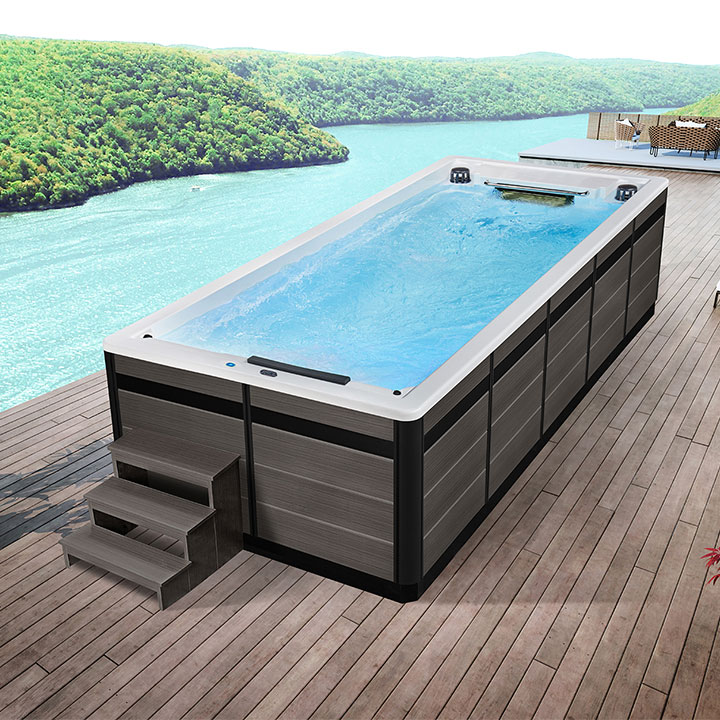
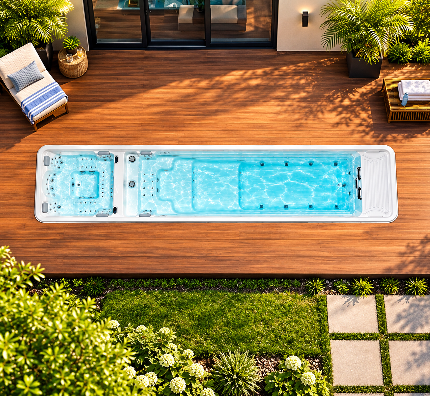
Victoria Star Swim Spa offers the perfect balance between exercise and relaxation, whether you want to swim for fitness or relax in the spacious seating.
Victoria Star Swim Spa offers the perfect balance between exercise and relaxation, whether you want to swim for fitness or relax in the spacious seating.