60 Degree Cold Plunge: Temperature Science, Practical Protocols, and Tub Selection
Home / News / 60 Degree Cold Plunge: Temperature Science, Practical Protocols, and Tub Selection
November 05, 2026
Stepping into water held at sixty degrees Fahrenheit can take your breath away in a single second. For anyone exploring cold water immersion, the 60 degree cold plunge is an approachable but still demanding starting point. Popular culture often shows ice bathing as an extreme sport, with floating ice blocks and near-freezing water. Human physiology tells a more nuanced story. Water conducts heat more readily than air, so immersion can remove body heat faster; the actual rate depends on conditions.
Your goal might be easing post-exercise soreness, practicing calm under stress, or building a steady outdoor wellness habit. In each case, the right temperature range separates a routine you can repeat from one that simply punishes you. Getting there means understanding three things: what happens to the body at this temperature, how to structure each session, and what equipment keeps the water stable through changing outdoor weather.
Demystifying the 60-Degree Cold Plunge: Units, Science, and Context
Clearing the Unit Ambiguity: Why 60°F Matters and 60°C Is Scalding
One technical point needs to come first. In North American wellness circles, cold plunge temperatures are almost always discussed in degrees Fahrenheit. Water at 60°F equals about 15.6°C. That is cool, brisk water that draws heat from the skin quickly without being cold enough to damage tissue during a normal session.
Water at 60°C is a different substance entirely in practical terms. It equals 140°F, which is hot enough to cause serious scald burns within seconds. Product manuals, international studies and digital controllers often switch between the two units. Before every first use, confirm that your control panel and any backup thermometer read in the unit you expect. A single wrong setting can turn a recovery session into a medical emergency.
Where 60°F Sits on the Cold Water Immersion Spectrum
Researchers use different cut-offs, but many sports science papers treat water below about 20°C (68°F) as cold water immersion. A large share of recovery studies test water in the range of roughly 10°C to 15°C, which is 50°F to 59°F. At 15.6°C, a 60 degree cold plunge sits within the temperatures commonly studied for athletic recovery.
Think of 60°F as a threshold rather than a destination. Water at 70°F feels refreshing on a hot afternoon, but it rarely provokes a strong reaction. Water at 60°F reliably triggers the body’s cold response. Blood vessels in the skin narrow, breathing speeds up, and you have to concentrate to stay calm. Cold shock can occur at temperatures between 50°F and 60°F, producing involuntary gasping and rapid breathing that require careful management.
Is 60°F Cold Enough to Trigger Real Physiological Adaptations?
Social media is full of people lowering themselves into slushy tubs of crushed ice. Newcomers understandably ask whether a 60 degree cold plunge is too warm to matter. The available research suggests that near-freezing water is not required to produce the basic cold response that most people are looking for.
Water at 15.6°C sits about 38°F below normal core body temperature of 98.6°F (37°C). Cold receptors in the skin detect that gap almost immediately. The nervous system responds by narrowing blood vessels near the surface, raising arousal and working to protect the temperature of the internal organs. That chain of reactions is the starting point for the effects described below.
Physiological Responses: What Happens to the Body at 60°F?
Peripheral Vasoconstriction and Circulation Dynamics
The first measurable change after entering sixty-degree water is peripheral vasoconstriction. Small blood vessels in the skin and outer tissues narrow, and blood flow shifts away from the hands, feet and skin toward the chest and abdomen. The body is guarding its core, much like a household that closes the rooms it isn’t using to keep the living room warm.
After you leave the plunge and begin rewarming, those vessels gradually widen again and blood returns to the limbs. Many users describe a tingling, flushed feeling during this phase. The exact recovery mechanisms from cold immersion are still debated, and improved recovery through this vascular sequence has not been demonstrated.
Short-Term Muscle Soreness and Exercise Recovery
Athletes often use cold immersion to manage delayed-onset muscle soreness, usually shortened to DOMS. Hard lifting sessions and downhill running cause small amounts of damage in muscle fibers. The body responds with local inflammation and swelling, which people feel as stiffness a day or two later. Cooling the tissue slows local metabolism and may limit some of that swelling.
Several meta-analyses have reported that cold water immersion after exercise reduces perceived muscle soreness in the 24 to 96 hours that follow. The size of the effect is modest and varies between studies. For athletes who must perform again soon, that modest relief can still help them move well through a tournament weekend or a dense block of training.
The Colder Is Better Fallacy: Why Freezing Water Is Not Always Optimal
A common belief among fitness enthusiasts is that dropping the water to 35°F should double the benefit. Biology rarely works on a straight line. Stressors like cold tend to show diminishing returns, while the risks climb faster as the dose increases. Very cold water raises the chance of intense cold shock, cardiovascular strain and impaired movement in vulnerable people.
Cold-water-immersion studies use varying temperatures and durations, and evidence does not establish one universally optimal temperature. A 60 degree cold plunge delivers a real cold stimulus while keeping the experience tolerable for many people. That matters because a routine you can repeat four times a week usually beats one you dread and abandon after a fortnight.
Sympathetic Arousal, Alertness, and Neurochemical Shifts
Cold water triggers a fast response from the sympathetic nervous system. Levels of noradrenaline (norepinephrine) rise, heart rate climbs and attention sharpens. A small and frequently cited study published in 2000 by Šrámek and colleagues found large increases in plasma noradrenaline and dopamine after immersion in 14°C water, which is close to 57°F.
That study was small, so its results should not be stretched too far. Still, it helps explain why many regular bathers report feeling alert and clear-headed for some time after a morning plunge. Pairing the cold with slow, controlled breathing also gives you practice staying composed while your body is under stress. For many people, that practice is part of the appeal.
Step-by-Step Immersion Protocol for a 60°F Session
Recommended Exposure Windows for Beginners and Experienced Users
Time in cold water should always be matched to water temperature and individual tolerance. Cold shock at 50–60°F can cause involuntary gasping and hyperventilation. Individual response varies widely. A cautious, brief initial exposure is appropriate only if the person has no contraindications and can keep the face above water throughout. Exit immediately for concerning symptoms such as chest pain, severe shivering, confusion or difficulty breathing.
Some practitioners begin with exposures as short as one to two minutes and gradually extend duration over weeks or months as their body adapts. Others maintain sessions of several minutes once comfortable. These are non-prescriptive examples; do not assume any listed duration is safe for you.
Pre-Plunge Preparation and Water Verification
A safe session starts before you step into the water. Check the actual temperature instead of guessing. If your controller provides a water-temperature reading, check it before entry; an independent thermometer can help verify the water temperature you will sit in.
Set up your rewarming space before you get in. Place a dry towel, warm socks and loose layers within reach of the tub. Stepping onto cold concrete with wet, chilled feet speeds up heat loss and creates a slip hazard. A few minutes of preparation protects the benefit of the session you just completed.
Safe Entry, Breath Control, and Mitigating Cold Shock
First contact with sixty-degree water often triggers the cold shock response. This reflex causes an involuntary gasp followed by fast, shallow breathing. If you rush in and your face dips under the surface during that gasp, you could inhale water. A calm, deliberate entry prevents most of these problems.
Hold the tub rim firmly and step in calmly, keeping your head well above the waterline.
Lower yourself steadily to shoulder or collarbone depth over a few seconds, rather than dropping in suddenly.
Answer the gasp reflex with a long, slow exhale through pursed lips.
Focus on maintaining steady, controlled breathing. Do not hold your breath. Longer exhales are widely used to help the body calm down.
Stay still. Moving your arms and legs disturbs the thin layer of slightly warmer water next to your skin, which makes the plunge feel colder.
Safe Exit and Post-Immersion Rewarming Routine
Leaving a 60 degree cold plunge calls for slow, careful movement. Reduced blood flow to your fingers and toes can make your grip clumsy and your footing less certain for a few minutes. Hold onto a stable surface as you climb out, and take extra care on wet decking or smooth tile.
Many practitioners advise against jumping straight into a very hot shower. Sudden heat can widen blood vessels quickly, and some people feel lightheaded as a result. A gentler approach works well. Dry off thoroughly, put on warm layers, sip a warm drink, and use light movement or natural shivering to bring your temperature back up. Be aware that core temperature can keep falling slightly for a short time after you leave the water.
Temperature Comparison Guide: 60°F Versus Colder Ranges
Comparing 60°F to 50–59°F and Sub-40°F Regimes
Cold therapy advice makes more sense once you match each temperature band to a purpose. Heat loss, the strength of the cold shock and personal tolerance all change as the water gets colder. The table below shows how a 60 degree cold plunge compares with colder ranges. The time windows are examples from particular protocols, not general safety recommendations; individual response varies.
Temperature Range
Typical Sensation
Example Exposure Windows
Typical Use
Main Safety Considerations
60°F (15.6°C)
Moderate initial shock; can trigger involuntary gasping
Examples range from 1–2 min (beginners) to several minutes (adapted users)
Cold shock hazard present; not risk-free; exit for distressing symptoms
50°F to 59°F (10°C to 15°C)
Brisk; breathing takes conscious control
Examples from 3 to 10 minutes in some protocols
Range used in many sports recovery studies
Greater cardiovascular strain; requires steady breath control
40°F to 49°F (4.4°C to 9.4°C)
Intense, often painful on the skin
Examples from 1 to 4 minutes in experienced-user protocols
Strong alerting effect, fast cooling for experienced users
Higher risk of hyperventilation and cardiovascular strain; not for unsupervised beginners
Below 40°F (< 4.4°C)
Severe, numbing discomfort
Examples under 2 minutes
Experienced cold-exposure practitioners
Risk of excessive or prolonged cold exposure; strong cardiac strain; supervision advised
The Critical Difference Between Acute Recovery and Hypertrophy Goals
The timing of a plunge should follow your training goal. Endurance runners, field-sport players and others with back-to-back competitions often care most about feeling ready for the next effort. For them, a 60 degree cold plunge after exercise may ease perceived soreness. Studies have tested a range of post-exercise timings, and none has been shown to be required, so recovery effects vary with the protocol and the person.
Lifters chasing muscle growth face a different trade-off. Studies have reported that regular cold water immersion right after resistance training can reduce gains in muscle size and strength over several weeks. Researchers have linked this to dampened muscle-building signals, including the mTOR pathway, and reduced satellite cell activity. A practical option is to wait several hours after lifting or to plunge on rest days instead, though evidence does not establish a specific delay that prevents this effect.
Health Risks, Contraindications, and Safety Essentials
Cardiovascular Load and Cold Shock Hazards
Even at sixty degrees, cold immersion asks a lot of the heart. When blood vessels across the skin narrow at the same time, resistance in the circulation rises. Blood pressure goes up, and the heart has to work harder to keep blood moving.
For most healthy adults, this short-lived rise is well tolerated. For people with heart disease, poorly controlled high blood pressure or other vascular problems, the same load can trigger chest pain, dangerous blood pressure spikes or abnormal heart rhythms. The fast breathing of cold shock also raises the risk of inhaling water when entry is rushed.
Pre-Existing Conditions Requiring Strict Medical Clearance
Cold water immersion is a physical stressor, not a passive spa treatment. People with the conditions below should talk with a doctor before starting a 60 degree cold plunge routine:
Heart disease and high blood pressure: Coronary artery disease, a recent cardiac event, an implanted heart device or untreated hypertension all call for medical advice first.
Raynaud’s phenomenon: Cold can trigger spasms in the small arteries of the fingers and toes, causing pain, numbness and, in severe cases, skin damage.
Diabetes and peripheral neuropathy: Reduced sensation can stop you from noticing numbness or early cold injury.
Pregnancy: Strong temperature stress has not been well studied in pregnancy, so medical guidance is essential.
Epilepsy or a history of fainting: A seizure or blackout in water carries a serious drowning risk.
Essential Environmental Precautions and Monitoring
Your surroundings matter as much as your technique. Do not plunge after alcohol or substances that impair alertness, judgment or coordination. Slower reactions and poor coordination make slips, delayed exits and accidents in water more likely, and alcohol is a well-documented factor in drowning.
Place the tub on a level, non-slip surface with clear space around it. While you are still learning how your body responds, avoid plunging alone. Having a partner, family member or training companion nearby means someone can help quickly if you feel dizzy or cramp when standing up.
Selecting an Outdoor Cold Plunge Tub for Reliable 60°F Temperature Control
Mechanical Cooling vs. Ice Bags: The Case for Dedicated Heat Pump Systems
Holding water at sixty degrees through summer is very difficult with an uninsulated tub and bags of ice. In many warm climates, tap water and sun-heated outdoor water can sit well above 70°F. Ice melts unevenly, cools the water for a limited time, and leaves you guessing about the temperature from one session to the next.
For us at Victoria Star, a brand created by Foshan Gaoming Shiyi Sanitary Ware Technology Co., Ltd., reliable temperature control is the starting point for cold plunge design. The integrated system is designed to regulate water temperature; actual performance depends on conditions and the manufacturer’s operating guidance. For many owners, the potential convenience is less reliance on bagged ice and more predictable sessions.
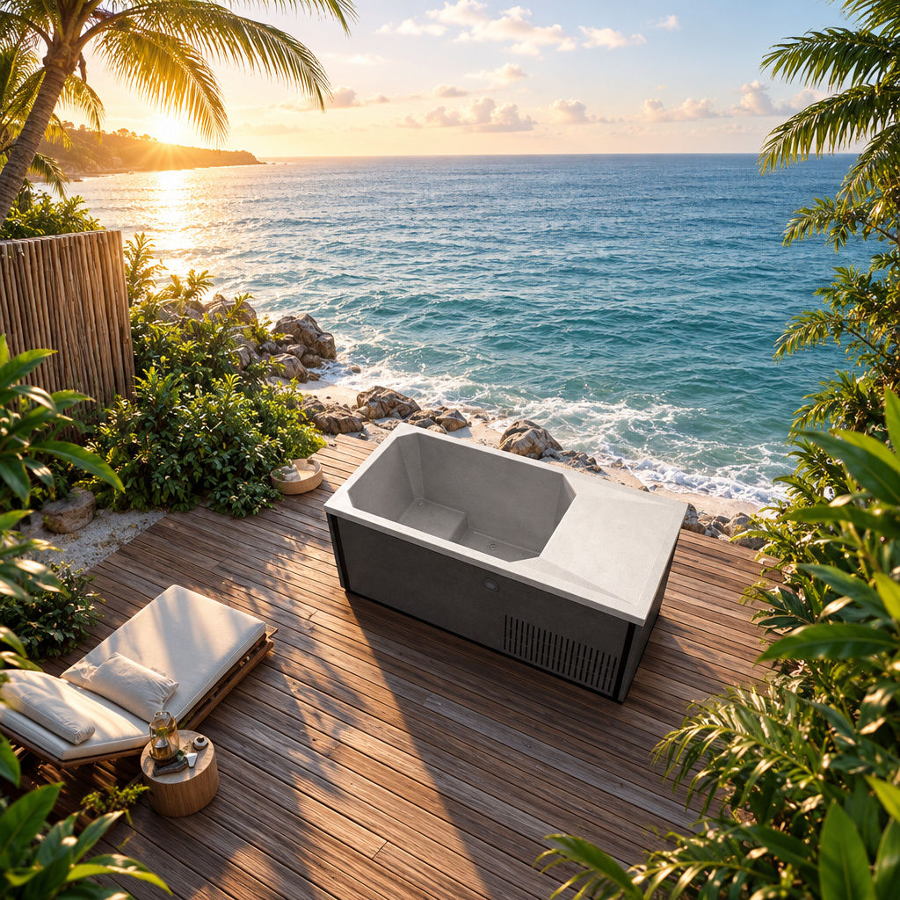
Structural Engineering and Capacity: Evaluating the Outdoor Cold Plunge Tub C02
For a permanent home setup or a commercial facility, size and materials decide how practical a tub is day to day. The following details for the Outdoor Cold Plunge Tub C02 come from the product specifications. Before buying, compare the interior measurements with your height and preferred immersion depth, and confirm fit with the supplier.
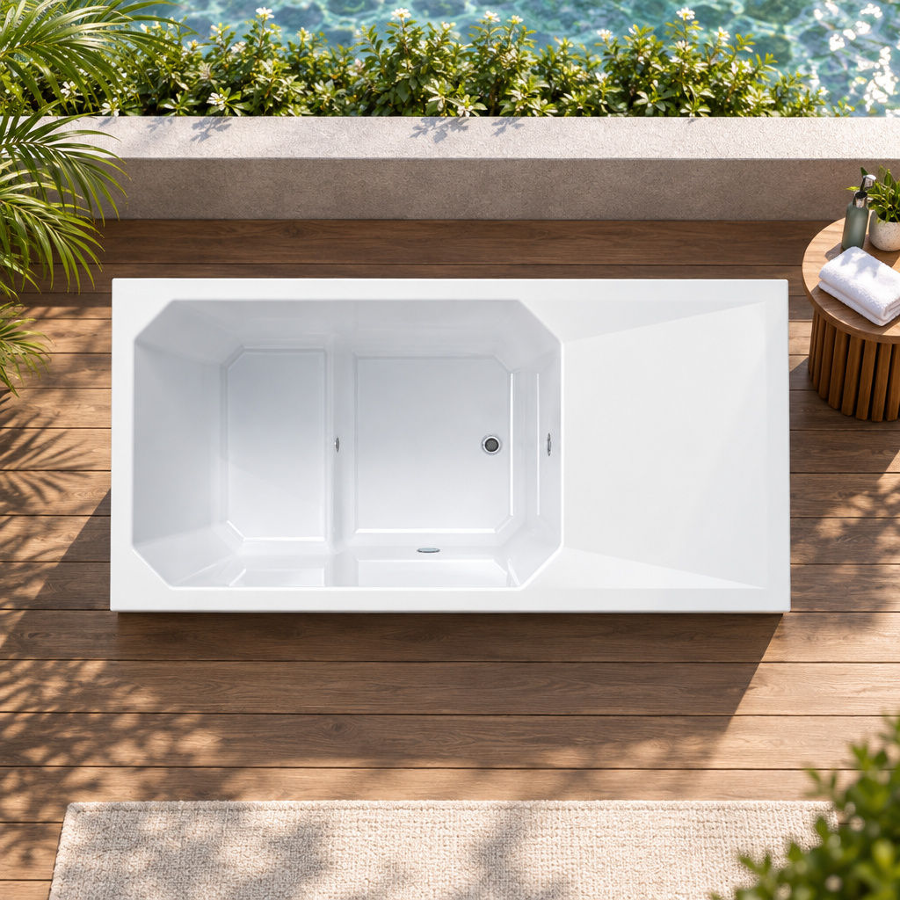
Shell: The shell is acrylic, available in a white/porcelain finish.
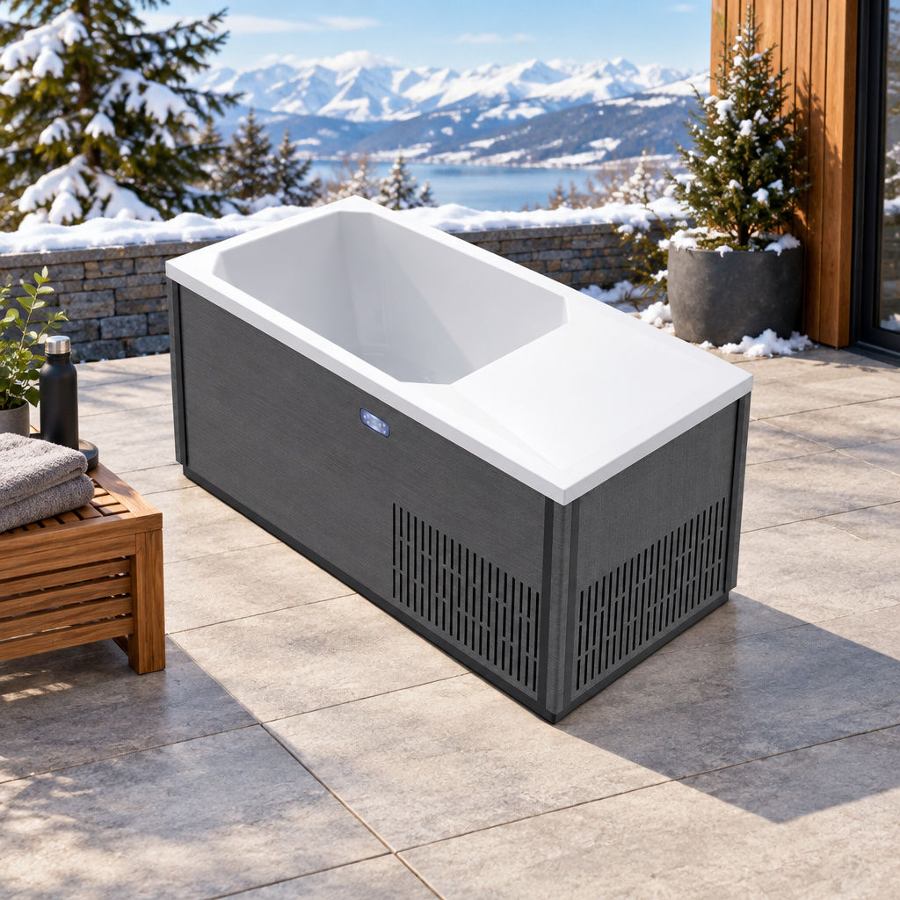
Dimensions: 1695 mm × 830 mm × 850 mm, listed as approximately 6′ × 33" × 34". These are the listed overall dimensions, so check interior length and depth separately.
Capacity and interior: A water capacity of 320 liters, with an integrated interior step described in the product materials as a seating step.
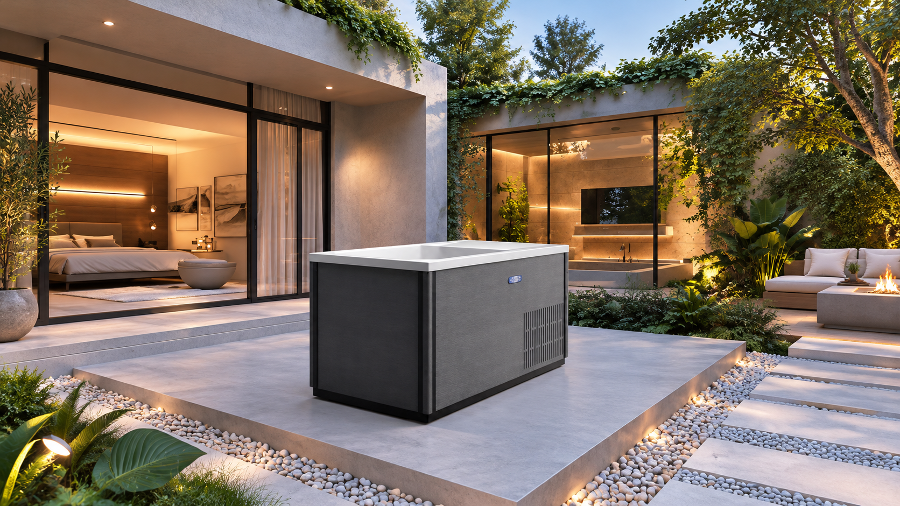
Cabinet: Weather-resistant, vented composite panels in Platinum or Midnight, suited to residential patios, athletic training facilities and spa settings.
Power Delivery, Pump Efficiency, and Thermal Maintenance
According to the product specifications, the C02 cold plunge lists a power supply figure of 0.954 kW. The same specifications list a 900W heat pump system and a 54W brushless pump. These figures describe the listed components rather than measured energy use in a particular climate.
Product materials describe the system as offering reliable temperature regulation with low energy consumption. The specifications do not state how often the pump runs, so ask the manufacturer about circulation and operating cycles if those details matter to you. Real-world cooling speed will still depend on ambient temperature, direct sun exposure and how consistently the cover stays on.
Placement, Foundation, and Water Sanitation Realities
An outdoor plunge tub needs some site preparation. The C02 unit has a net weight of 140 kg and a gross shipping weight of 180 kg. When filled to its 320-liter capacity, the water adds about 320 kg. That brings the approximate weight to roughly 460 kg, or just over 1,000 lbs, excluding occupants and other loads.
Confirm the site’s load capacity with a qualified installer or structural professional. Keep the included insulated cover fastened between sessions. A cover reduces heat gain from sun and warm air, keeps leaves and dust out of the water, and limits the light that encourages algae growth.
FAQs
Is a 60 degree cold plunge cold enough to be effective?
Yes, for most people 60°F (15.6°C) is cold enough to produce a clear physical response. Water conducts heat more readily than air, so immersion can remove body heat faster; the actual rate depends on conditions. Water at 60°F sits about 38°F below core body temperature. It triggers the cold shock response and vasoconstriction, and it may ease post-exercise soreness.
Is 60°F considered a beginner-friendly cold water temperature?
Many coaches and practitioners recommend 60°F as a sensible starting point for cold water immersion, but it is not risk-free. It can still trigger involuntary gasping and rapid breathing. Beginners should start with very brief exposures if appropriate for their health status, practice breath control, learn how their body reacts, and build tolerance gradually.
How long should I stay in a 60°F cold plunge?
Individual response varies widely. Some people begin with exposures as short as one to two minutes and gradually extend duration as their body adapts. Others maintain sessions of several minutes once comfortable. These are examples, not prescriptions. Exit immediately for concerning symptoms such as chest pain, severe shivering, confusion or difficulty breathing.
Can I cold plunge immediately after lifting weights?
If building muscle size or maximal strength is your main goal, avoid plunging right after resistance training. Studies have found that regular cold immersion straight after lifting can blunt muscle-building signals and reduce long-term gains. A practical option is to wait several hours after lifting or to plunge on rest days instead, though evidence does not establish a specific delay that prevents this effect.
How does an integrated heat pump maintain 60°F in warm outdoor weather?
A heat pump uses a refrigeration cycle to move heat out of the water and release it outside the system. In a typical setup, a pump moves water through this loop, and the controller runs the system when the temperature drifts from the set point. Actual performance depends on ambient temperature, direct sun exposure and how consistently the cover stays on. In very hot weather, keeping the cover on and shading the tub from direct sun helps.
What regular maintenance does an outdoor 320-liter cold plunge tub require?
Regular care keeps the water clean and the equipment working well. Keep the insulated cover on when the tub is not in use to block sunlight, debris and warm air. Follow the manufacturer’s guidance for cleaning circulation components and keeping water chemistry balanced. Drain and refill the tub periodically, more often when several people use it each day.
Building a Sustainable, Safe Cold Therapy Routine
Cold water therapy rewards consistency far more than extremes. A steady 60 degree cold plunge routine lets you work with your body’s cold response, ease exercise-related soreness and practice calm focus in water that stays predictable from day to day. Equipment such as the C02 plunge tub, with its 320-liter acrylic basin, 900W heat pump and composite cabinet, is designed to simplify temperature control. That leaves your attention on breathing, timing and the recovery you came for.
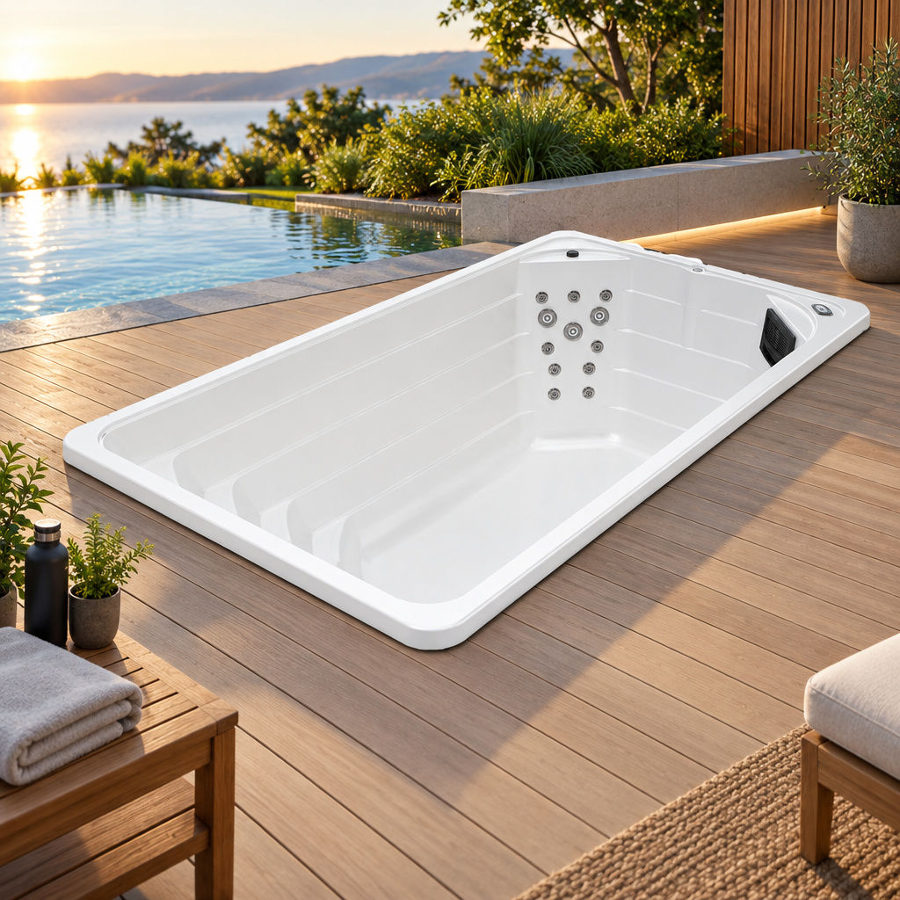
Victoria Star Swim Spa offers the perfect balance between exercise and relaxation, whether you want to swim for fitness or relax in the spacious seating.
Victoria Star Swim Spa offers the perfect balance between exercise and relaxation, whether you want to swim for fitness or relax in the spacious seating.