6 Seater Round Spa: Engineering, Sizing, and Backyard Integration
Home / News / 6 Seater Round Spa: Engineering, Sizing, and Backyard Integration
November 02, 2026
Choosing a 6 seater round spa requires balancing structural mechanics, site preparation, and genuine bathing space. When looking for a 6 seater round spa or a circular multi-person hot tub for the backyard, buyers often struggle to picture how six adults comfortably share one footwell without tangling their legs. A round exterior changes how water circulates, how people converse, and how weight rests on a patio compared to standard rectangular units.
This guide breaks down circular spatial dynamics, structural pad requirements, electrical considerations, and water sanitation routines. By analyzing verified factory specifications alongside realistic site management rules, you can determine if a circular installation fits your outdoor lifestyle.
Understanding the Appeal and Reality of a 6 Seater Round Spa
What Does a Six-Person Capacity Actually Mean for Adult Bathers?
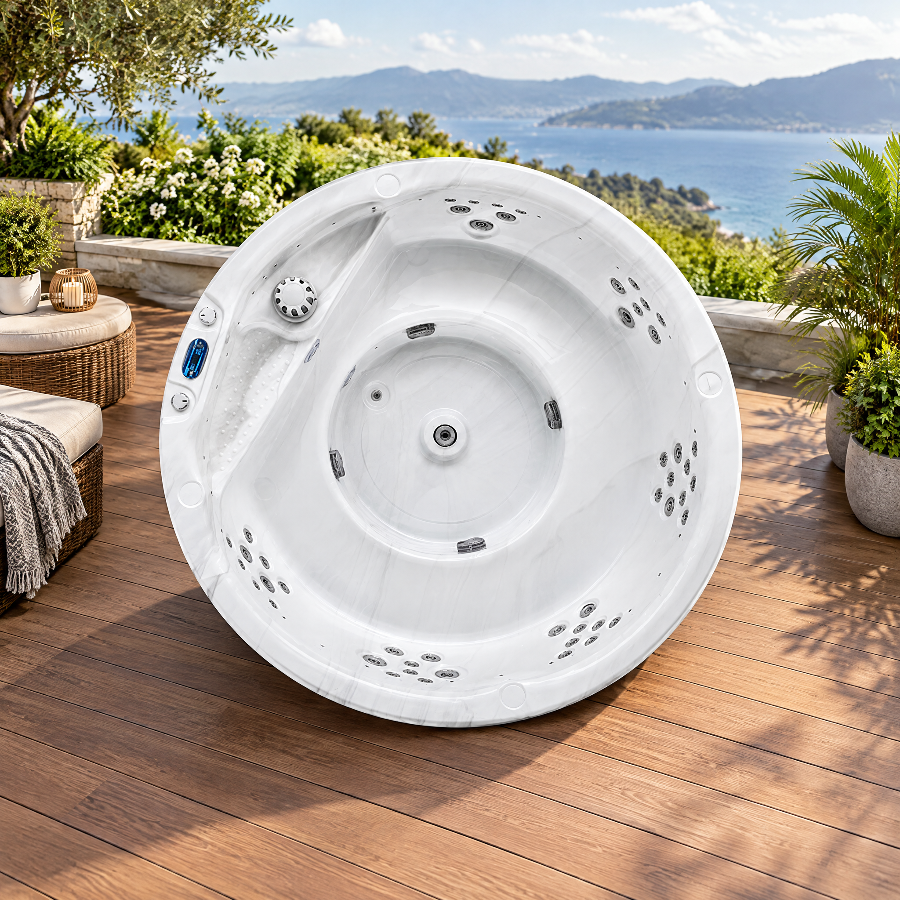
Spa seating charts describe maximum sculpted positions rather than universal physical space. In a 6 seater round spa, the circular layout places six ergonomic seats around the perimeter, so every bather faces the center. However, when six tall adults bathe at once, their legs meet in the center footwell, which requires mutual accommodation.
For families with children or gatherings with mixed adult heights, the arrangement of seats around the circle helps people find a comfortable position. The multi-tier seating gives bathers different sitting elevations, although the available legroom should be checked against the manufacturer’s internal layout.
Why Circular Layouts Change the Social Dynamics of Soaking
Rectangular spas naturally set up parallel sightlines or isolate one person on an elongated lounger. Circular layouts arrange everyone toward a shared focal point, making conversation easy across the water without twisting sideways.
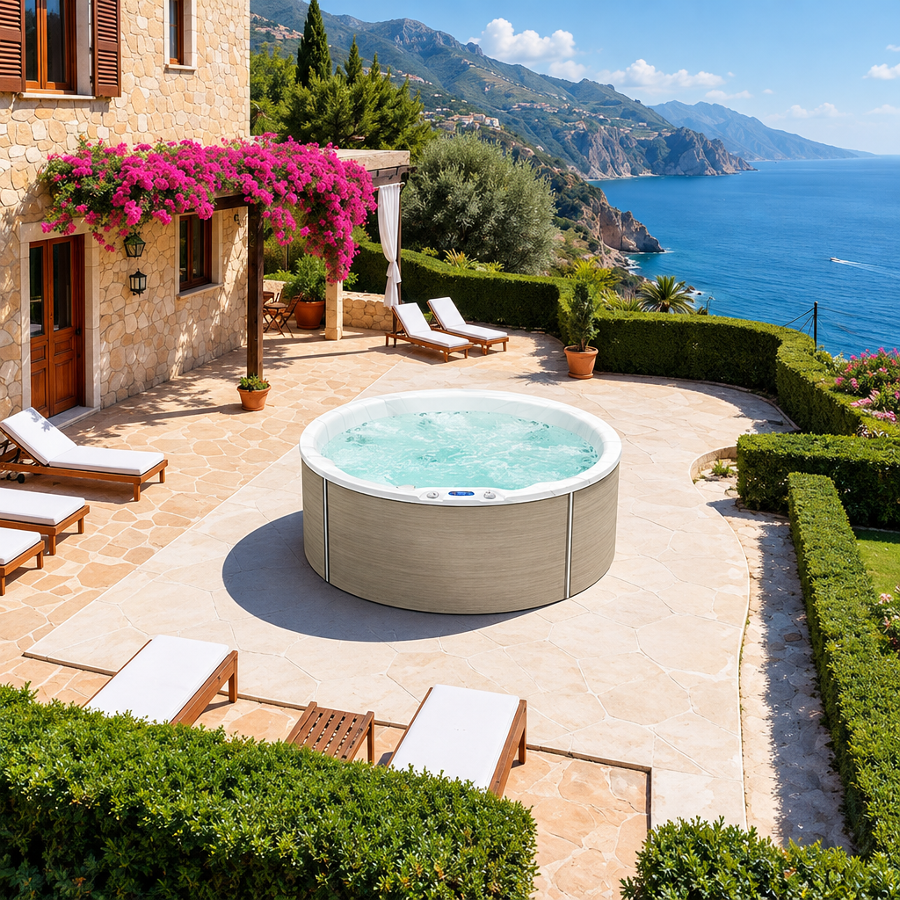
Beyond seating, a circular profile fits smoothly into natural stone patios and organic landscaping. Curved stone retaining walls, round fire pits, and rounded flagstones integrate round shells cleanly, avoiding the boxy look of rectangular acrylic tubs.
Key Physical Factors Buyers Often Overlook Before Ordering
Prospective buyers often measure backyard deck footprints while forgetting vertical delivery clearances. A rigid round shell cannot tilt around tight 90-degree eaves like an asymmetrical rectangular tub can.
Wet operating weight represents a substantial dead load concentrated across a circular contact surface. Ensuring solid ground beneath the tub prevents cracked slabs, shell warping, and costly repairs after installation.
Structural Footprint and Spatial Requirements
Interpreting Diameter and Height Dimensions for Usable Space
Outer dimensions set physical footprint limits, but interior curves dictate true water depth. The Victoria Star VS-002L measures 2,400 mm (approximately 8 feet) in outer diameter with an overall height of 900 mm (approximately 35 inches).
Dimension Property
Measurement Metric
Operational Impact
Outer Diameter
2,400 mm (8 ft)
Total deck clearing footprint needed for perimeter access
Total Height
900 mm (35 in)
Overall installation profile and structural clearance
Shell Geometry
Round shell
Circular footprint for the six-seat layout
Seating Configuration
6 Ergonomic Seats
Multi-tier perimeter seating with padded headrests
The 900 mm overall height affects the installation profile, while actual water depth and shoulder immersion should be confirmed in the manufacturer’s installation documentation. The 2,400 mm circular span provides the perimeter seating arrangement for up to six adults.
Evaluating Footwell Clearance and Multi-Tier Seating Ergonomics
In circular spas, the central footwell acts as a shared hub for six pairs of feet. If a footwell is too narrow, bathers bump knees; if it is too wide, the surrounding seats become shallow perches.
The manufacturer specifies ergonomic multi-tier seating around the circular perimeter. Bathers can choose different seat elevations, although the actual comfort and leg extension depend on individual body size and the number of simultaneous users.
Calculating Structural Load Capacity for Patios, Decks, and Balconies
Placing an eight-foot circular hot tub onto an elevated wood deck requires professional structural calculations. You must calculate the dry shell weight, maximum water volume, and six adult occupants together as a combined downward load.
Water Mass Contribution: Water weighs 1 kg per liter (8.34 lbs per gallon), contributing the largest portion of total load.
Dry Shell and Cabinet Mass: The acrylic shell, aluminum-plastic cabinet, pumps, heater, and other equipment add substantial base tare weight.
Occupant Load Calculation: Using an illustrative assumption of 75 to 80 kg per person, six adults add roughly 450 to 480 kg of live weight. Use the intended users’ actual combined weight in real calculations.
Foundation Contact Area: A structural engineer must calculate the filled spa’s total load, contact area, framing, connections, and local code requirements to determine whether existing decks can support the installation.
Homeowners should consult a licensed structural engineer before installing any large spa on elevated timber or second-story balconies.
Hydrotherapy Performance: Jets, Pumps, and Hydraulics
Decoding Jet Counts: Volume and Placement Versus Sheer Numbers
A common marketing misconception assumes that more jets automatically mean better massage therapy. In practical plumbing, splitting water across too many orifices without larger pumps drops dynamic water pressure at every seat.
The manufacturer specifies 50 jets supplied by two 2 HP pumps; actual pressure and massage coverage depend on jet placement, controls, plumbing, and simultaneous use.
The Separation of Massage Pumps and Dedicated Circulation Pumps
Running large massage pumps solely for water filtration generates excess ambient noise and burns unnecessary electricity. Efficient hydraulic designs use distinct pump types for massage pressure and steady filtration cycles.
Component Type
Power Rating
Primary Mechanical Responsibility
Dual Hydrotherapy Pumps
2 × 2.0 Horsepower
Drives water through the 50 therapy jets
Dedicated Circulation Pump
1 × 0.35 Horsepower
Handles filtration and water turnover
Integrated Inline Heater
1 × 3.0 Kilowatts
Restores and maintains target soaking temperatures
Listed Power Supply
6.25 Kilowatts
Manufacturer-listed specification; confirm circuit requirements on the nameplate and in the installation manual
The 0.35 HP circulation pump handles filtration, while dual 2 HP hydrotherapy pumps power on when bathers demand vigorous massage.
Flow Control, Ergonomic Headrests, and Target Massage Zones
Individual bather comfort depends on localized jet adjustment. An air-adjustment control may allow users to vary the feel of the water flow; confirm its exact function in the product manual.
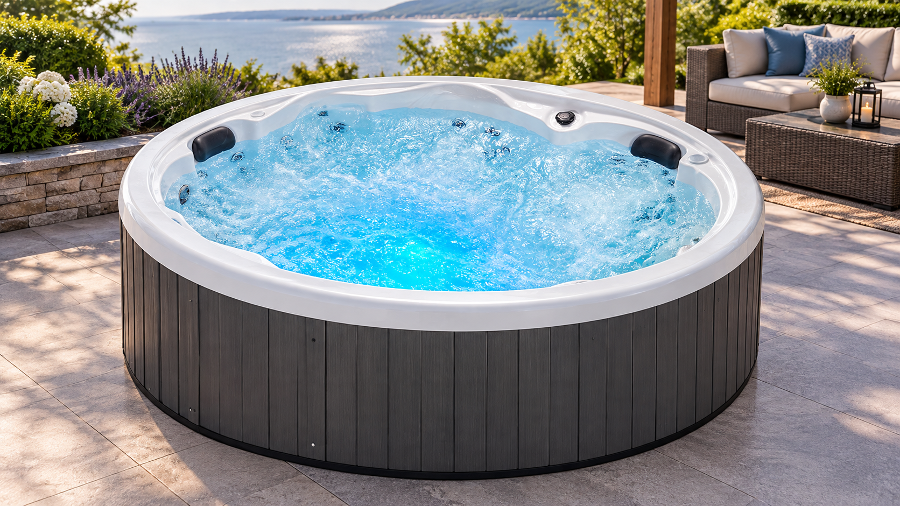
The model includes padded headrests along the seating area. They give bathers a cushioned place to rest their heads against the rim during longer soaks.
Water Sanitation and Ongoing Chemistry Management
How Cartridge Filtration, Ozone, and UV Systems Work Together
Modern sanitation uses multiple barriers to keep warm water crystal clear. The VS-002L pairs mechanical pleated cartridges with an ozone generator and ultraviolet (UV) light tube.
First, pleated paper filter media strain out hair, skin cells, and windblown debris. Downstream, ozone gas oxidizes organic matter, while the UV lamp damages microbial DNA as water passes through the chamber.
Debunking the Myth: Why Smart Water Care Does Not Eliminate Residual Sanitizer
Ozone and UV light sanitize water effectively inside the plumbing, but they provide zero persistent sanitizing action out in the open bathing basin. As soon as six people enter the spa, sweat and skin oils contaminate the water faster than inline units can cycle it.
The CDC recommends maintaining free chlorine between 3.0 and 10.0 ppm (or bromine between 4.0 and 8.0 ppm) and balancing water pH between 7.2 and 7.8 to prevent bacterial growth and shell scaling.
Daily, Weekly, and Periodic Filter Maintenance Routines
Keeping water clear requires a predictable, step-by-step cleaning routine:
Check water chemistry with unexpired test strips or a properly calibrated digital meter, adjusting sanitizer and pH buffers to safe levels.
Pull the pleated filter cartridge from the intake well and rinse away trapped debris with a pressurized garden hose.
Clean or soak the filter only with a cleaner and for a duration approved by the filter and spa manufacturer.
Drain the entire water volume, scrub the Porcelain acrylic shell, and refill fresh water to clear out accumulated total dissolved solids.
Site Preparation, Electrical Infrastructure, and Delivery Access
Power Supply Sizing: Understanding Kilowatt Demands and Dedicated Circuits
The manufacturer lists a 6.25 kW power-supply requirement. The electrician must use the model nameplate and installation manual to determine the voltage, circuit, protection, and wiring required by local code.
Never run an outdoor spa on an ordinary extension cord or tap into shared residential circuits. A licensed electrician must wire a permanent subpanel equipped with a Ground Fault Circuit Interrupter (GFCI) or Residual Current Device (RCD) to guarantee bather safety.
Delivering a Rigid Circular Spa: Vertical Roll Clearance and Gate Constraints
Moving an unbroken 2,400 mm circular spa into a backyard requires planning every inch of the path. Unlike rectangular models that fit through gates vertically on their narrow edge, a round tub demands careful clearance planning.
Obtain a written delivery-route assessment from the supplier before ordering. Typical considerations include:
Side gate openings: Gate latches and fence posts that may pinch tub edges
Eave and gutter overhangs: Low rooflines and tree branches along side alleys
Corner turns: Tight 90-degree corners between walls and fencing
Pathway substrate: Soft garden mud or pea gravel that halts transport dollies
If side pathways are blocked by gas meters or air conditioning units, a qualified delivery company may recommend a crane lift after assessing the site, lift radius, overhead hazards, and local requirements.
Foundation Options: Reinforced Concrete Pads, Pavers, and Structural Framing
Never install a six-person hot tub directly onto bare grass or soft dirt. Over time, ground moisture shifts soil beneath the tub, causing uneven settling that strains the acrylic shell and plumbing.
Use a level, stable foundation designed for the filled spa load. Confirm slab thickness, reinforcement, drainage, and subgrade preparation with the manufacturer, contractor, or structural professional.
Circular Spas vs. Rectangular Spas: Making the Strategic Choice
Inward-Facing Seating Versus Dedicated Full-Body Recliners
Choosing between round and rectangular spas comes down to how you plan to use the space: social, face-to-face soaking or fixed therapeutic positions.
Comparison Aspect
6 Seater Round Spa
Standard Rectangular Spa
Social Interaction
Inward-facing arrangement keeps all bathers engaged
Segmented rows create parallel sightlines
Lounging Style
Upright seats at varied elevations around the perimeter
Dedicated molded loungers lock bathers into place
Landscape Adaptability
Blends naturally into curved patios, rock gardens, and lawns
Fits neatly into straight-edged deck corners
Usable Basin Space
Shared central footwell serves all six seats
Dedicated lounger molds consume interior foot space
Rectangular spas with ergonomic loungers excel at targeted, head-to-toe hydrotherapy for one or two bathers. However, molded loungers take up significant space, leaving less room for active conversation when hosting larger groups.
Backyard Geometry: Integrating Round Outlines into Modern Architecture
Placing a rectangular hot tub against a straight garden wall often leaves awkward, hard-to-maintain gaps. A circular outline softens backyard geometry, serving as an attractive visual centerpiece rather than an imposing square box.
Curved stone steps, circular brick planters, and lush landscaping frame a round spa naturally. This rounded silhouette fits gracefully on flagstone patios, coastal stone decks, and modern luxury villa terraces.
Outdoor spa cabinets must withstand rain, intense sun, and fluctuating temperatures without cracking or rotting. The model uses an aluminum-plastic cabinet skirt intended for the outdoor enclosure; confirm its maintenance and weather-exposure limits with the manufacturer.
Available in contemporary Platinum or Midnight woodgrain finishes, these panels provide exterior cladding for the equipment bay and structural frame.
Hydraulic Core: Dual 2 HP Pumps, 3 kW Heating, and Smart Digital Keypads
The VS-002L is specified with a KL2022 smart keypad for operating the spa’s available controls; confirm exact functions in the product manual.
The model is specified with a 3 kW heater; heating time and heat retention depend on starting temperature, ambient conditions, cover use, insulation, and water volume. Working alongside the dual 2 HP pumps, this system provides the spa’s thermal and hydraulic operation.
Acoustic and Atmospheric Elements: Integrated Perimeter Lighting and AV Audio
Hydrotherapy engages more than just muscle recovery; ambient lighting and music enrich the entire sensory experience. The integrated Bluetooth system is specified with four circular AV speakers.
The perimeter and underwater LEDs provide nighttime illumination and ambience; users still need safe access, adequate surrounding lighting, and appropriate supervision. These vibrant multi-color LEDs let bathers customize their evening atmosphere, whether hosting friends or unwinding alone.
Step-by-Step Purchase and Installation Checklist
Phase 1: Site Geometry and Pathway Survey
Careful planning ensures smooth delivery and a hassle-free setup on installation day:
Measure the narrowest exterior gates, eave clearances, and house corners along the planned delivery route.
Consult a structural professional to confirm that your patio or structural deck can support the filled spa load.
Verify that your planned spa location leaves clear access to the equipment service door for future pump and filter maintenance.
Phase 2: Electrician Consultation and Circuit Verification
Never leave electrical work until after the spa arrives on your driveway:
Hire a qualified, licensed electrician to inspect your main domestic switchboard capacity.
Install a dedicated, direct-wired circuit protected by an outdoor-rated GFCI or RCD breaker.
Run liquid-tight flexible conduit directly to the planned corner of the spa cabinet skirt.
Phase 3: Delivery Inspection and Pre-Fill Checks
Take time to inspect the spa before filling it with water:
Unpack the unit and inspect the Porcelain acrylic shell and cabinet panels for transit scuffs or scratches.
Open the equipment bay and hand-tighten all pump and heater union collars that may have loosened during transit.
Close the drains and fill the spa only through the location specified in the manufacturer’s installation manual.
Frequently Asked Questions
Can six large adults comfortably share a 2,400 mm round spa at the same time?
The manufacturer rates the layout for up to six seats, but actual comfort depends on bather size, posture, and whether users need extended legroom. Because the circular footwell gathers everyone’s feet in the center, bathers need to rest their feet naturally together. For social gatherings, the six perimeter seats keep everyone facing each other, but those wanting full leg extension will find it roomiest with three or four bathers.
Does having an ozone generator and UV system mean zero chlorine is needed?
No, ozone and UV systems are supplemental sanitation tools, not standalone replacements for residual chemicals. These inline systems oxidize organic matter and destroy pathogens as water circulates through the plumbing. The CDC recommends maintaining free chlorine at 3–10 ppm or bromine at 4–8 ppm, with pH at 7.2–7.8, while following the spa manufacturer’s instructions and applicable local requirements.
What surface preparation is required before placing a round hot tub on grass or dirt?
Never set a heavy hot tub directly on turf, sand, or topsoil. Bare ground absorbs water, softens, and settles unevenly under the substantial filled load of a hot tub, warping the acrylic shell and damaging PVC plumbing joints. Obtain the manufacturer’s filled weight for structural calculations, then use a level, stable foundation designed for that load, confirmed with the manufacturer, contractor, or structural professional.
How does the energy consumption of a 6.25 kW system behave during winter?
The manufacturer lists 6.25 kW as the power-supply specification for this model. The model nameplate and installation manual define the actual circuit requirements and which components can operate together. Power use during winter depends on ambient outdoor temperatures, heating demand, regional electricity rates, and keeping a thick, well-fitted thermal cover tightly closed.
Can this round spa model be installed on a raised timber deck or rooftop?
Deck and rooftop suitability cannot be determined from diameter alone. A licensed structural professional must compare the spa’s manufacturer-supplied filled weight and support reactions with the existing structure and applicable code. Installing one safely on elevated decks requires appropriate load-bearing capacity, reinforced framing, and compliance with local building standards.
What should I check if a pathway is narrower than the spa diameter?
If gates or garden corridors are too narrow, check whether fence panels or gate posts can be temporarily removed. When ground paths remain blocked by permanent building extensions or utilities, a qualified delivery company may recommend a crane lift after assessing the site, lift radius, overhead hazards, and local requirements. Always obtain a written delivery-route assessment from the supplier before ordering.
Conclusion
Investing in a 6 seater round spa transforms an ordinary backyard into a functional wellness retreat that brings people together naturally. Circular seating creates an open, engaging space for friends and family while fitting harmoniously into stone patios and modern landscape designs. By obtaining professional pathway assessments, constructing a stable foundation, and wiring a dedicated electrical circuit with your electrician, you protect your investment from day one. Following the manufacturer’s water-care guidance alongside the CDC’s recommended sanitation ranges keeps your 6 seater round spa clean, welcoming, and ready for relaxing soaks year after year.
Victoria Star Swim Spa offers the perfect balance between exercise and relaxation, whether you want to swim for fitness or relax in the spacious seating.
Victoria Star Swim Spa offers the perfect balance between exercise and relaxation, whether you want to swim for fitness or relax in the spacious seating.