3 Person Outdoor Spa: How to Choose the Right Compact Hot Tub
Home / News / 3 Person Outdoor Spa: How to Choose the Right Compact Hot Tub
November 05, 2026
Choosing a 3 person outdoor spa means weighing comfort against the limits of your site. Many homeowners work with narrow patios, raised decks with little spare load capacity, and an electrical panel that has no free circuit. A compact tub can deliver real hydrotherapy without taking over the garden. Pick one that is cramped, underpowered or badly matched to the site, though, and you end up with a backyard project that keeps needing attention.
This guide explains how three-person hot tubs are laid out and what their specifications mean in practice. It covers seating geometry, jet and pump matching, water care, and site preparation. Throughout, the published specifications of the Victoria Star VS-301C serve as a worked example, so each point ties back to real numbers rather than general advice. It is written for homeowners and small rental operators who want to know what to check before ordering.
What Buyers Expect from a 3 Person Outdoor Spa
Balancing Compact Footprints with Usable Interior Space
Many buyers assume a smaller spa must feel cramped. More often, a cramped feel comes from a badly planned shell mold. A poor layout leaves a tight central footwell where knees and feet compete for the same few inches. In a well-designed three-person shell, the seating plan comes first and decorative features come second, because every seat has to work without blocking the others.
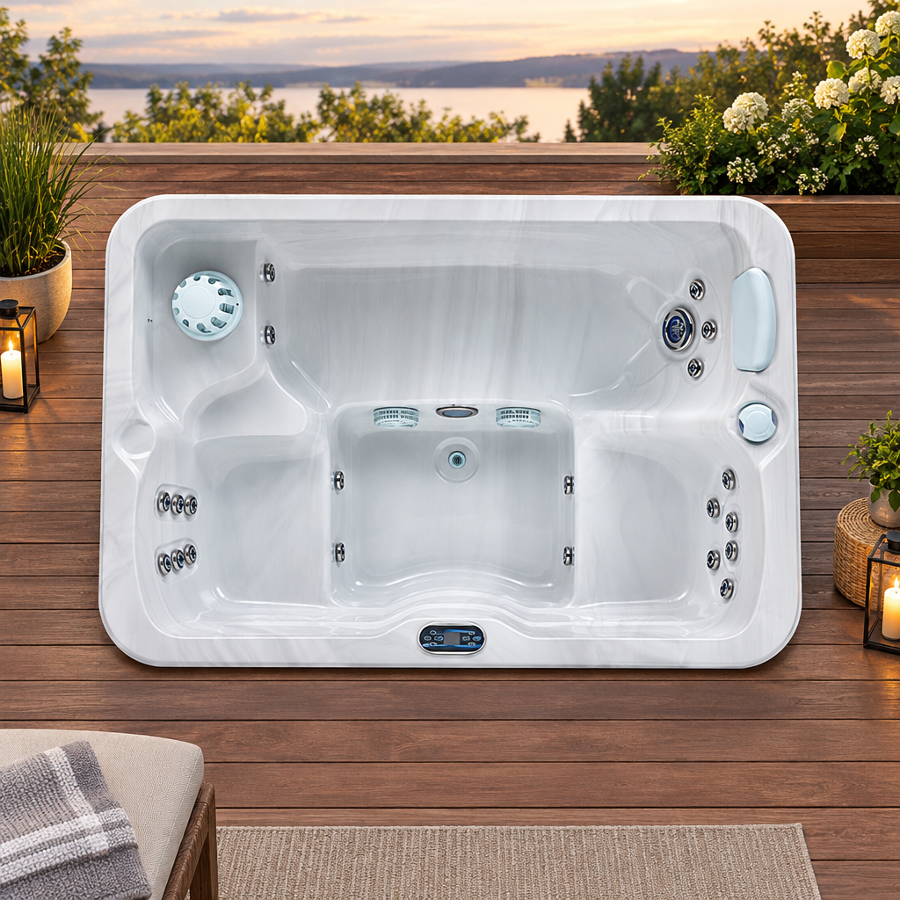
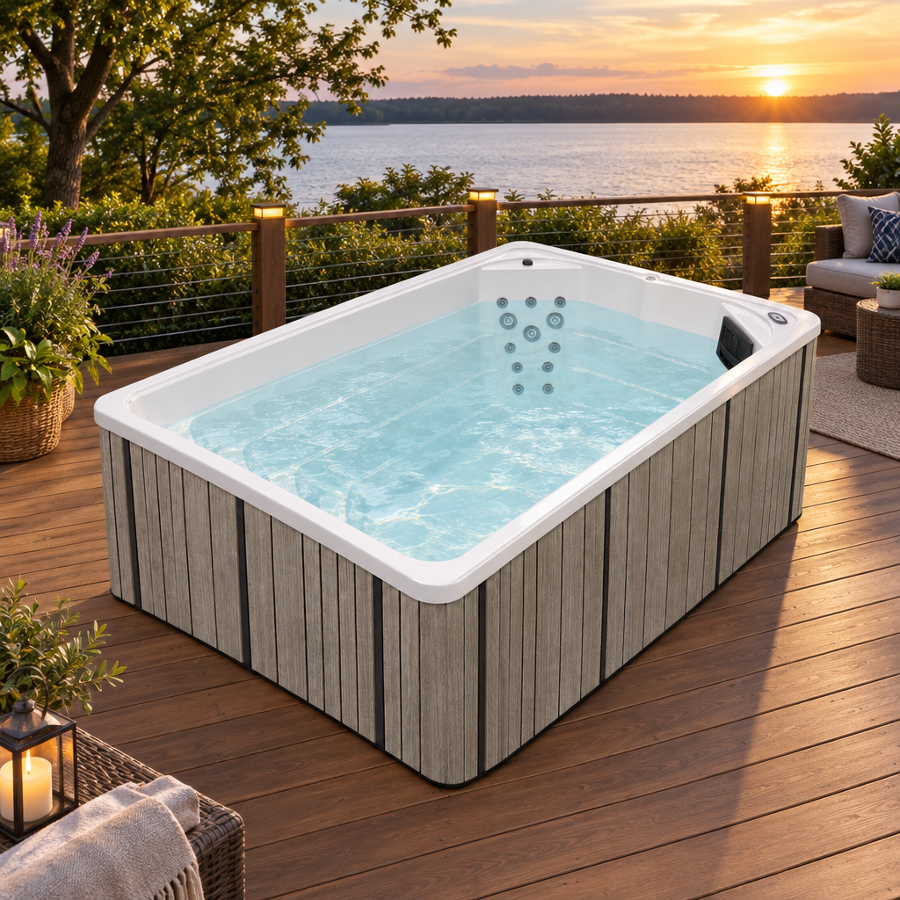
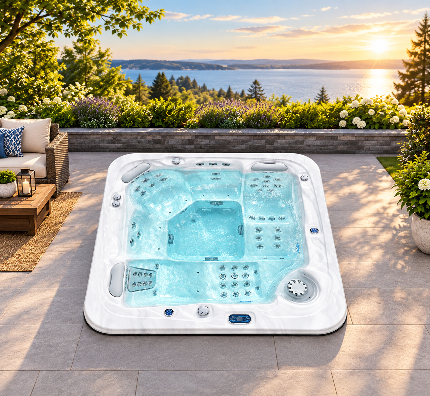
Seats molded at different depths help bathers of different heights sit at a comfortable water level. The VS-301C product data describes tailored seat depths across two upright seats and a full-length lounger, a layout that uses the shell volume efficiently. The result is a footprint that fits a modest porch or terrace while still giving each occupant room for the torso and legs.
Typical Use Cases: Couples, Small Families, and Rental Accommodations
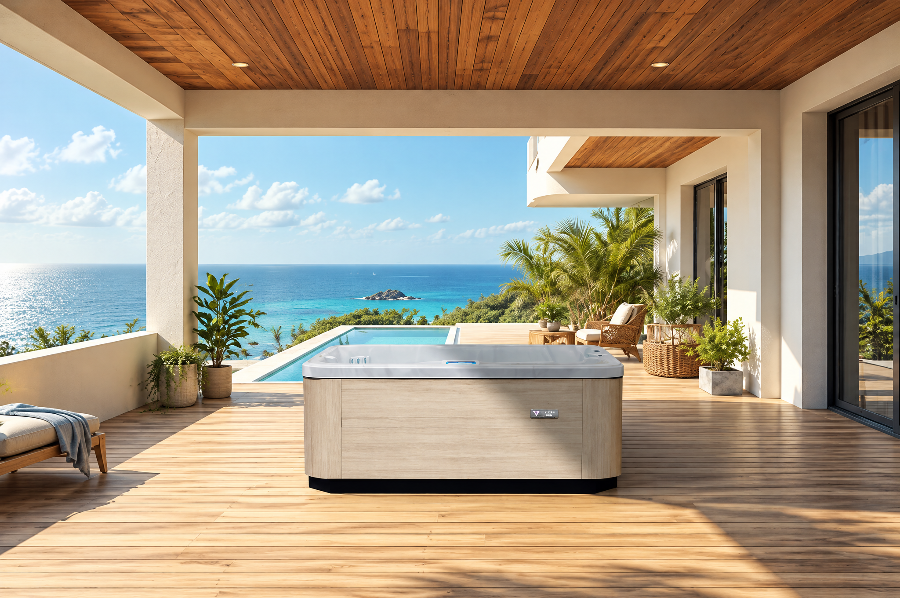
Compact spas suit properties where a six- or seven-person tub would simply not fit. Urban backyards, timber terraces and covered verandas can gain a dedicated soaking spot without losing the space people use for dining or gathering. A smaller perimeter also makes it easier to blend the tub into existing planting and paving, and it leaves more room for a cover lifter and service access.
Holiday villas, vacation rentals and boutique resorts often consider compact tubs for practical reasons. A spa that holds less water may take less time to drain, refill and reheat than a larger model, although actual turnover depends on the specific tub, the water supply and how the operator manages changes. Ask the manufacturer for the water capacity if this matters to your schedule. Guests still get a private soak, and the operator avoids the plant-room footprint of a commercial spa installation.
Key Factors When Evaluating a Three-Person Hot Tub
Seating Configurations: Upright Bench vs. Full-Length Lounger
Spa interiors generally follow one of two patterns: open seating with upright seats only, or a mold that includes a lounger. An all-seat layout usually fits more people and lets bathers shift position or move around freely. However, upright seats cannot support the lower back and legs the way an angled recliner does, so the choice depends on whether you value a full-body recline more than an extra seat.
A lounger supports a reclined posture along the back and legs, which many bathers find more relaxing during a long massage. It does not guarantee that you stay anchored, because body size, water depth and natural buoyancy all affect how well a person stays in place when the jets run hard. The trade-off is space, since a lounger takes up a large share of the shell. A wet test, where the dealer offers one, is the most reliable way to check fit.
Dimensions, Access Pathways, and Delivery Clearance
Delivery is the step buyers most often overlook. A hot tub arrives as one rigid acrylic shell inside its cabinet. It cannot flex around a tight brick corner or squeeze under a low eave, so the route to its final position matters as much as the pad it will sit on. Discovering a blocked path on delivery day can mean extra labor charges, a rescheduled appointment or a crane hire.
Before ordering, walk the route from the street to the installation site. Measure gate openings, fence gaps, downpipes, steps and overhangs. Compact tubs are usually moved on their side on a spa cart. For the VS-301C, at 1860 mm × 1310 mm × 780 mm, the narrowest dimension on its side is 780 mm, so the gate needs to be wider than that plus room for the cart and handlers. Confirm the method with your installer, because a route that fails this check may need a crane.
Hydrotherapy Architecture: Jet Layout and Pump Matching
A high jet count on a brochure says little on its own. If many small nozzles share one modest pump, the flow is split between them, and each jet delivers a weaker stream. What you feel depends on how pump capacity is distributed across the jets, and on where those jets sit relative to your body.
The VS-301C pairs a 2 HP massage pump with 22 jets, which the product data describes as focused on the back, waist and legs. A separate 0.35 HP circulation pump handles filtration. That split matters in daily use. The small pump can run routine circulation and filtration, while the larger pump only runs when someone wants a massage.
Water Sanitization Systems: Filtration, Ozone, and UV Clarification
Hot tub water sits at temperatures that favor bacterial growth, and every soak adds body oils, sweat and cosmetics. Relying only on manual chemical dosing often leads to swings between harsh, over-chlorinated water and cloudy, under-treated water. Built-in water care equipment helps keep conditions more stable between tests.
The VS-301C combines filtration, an ozone generator and UV light. Ozone is a strong oxidizer that breaks down organic contaminants, and UV light inactivates microorganisms as water passes the lamp. According to the product data, this combination significantly reduces chemical requirements. Neither ozone nor UV leaves a lasting residual in the tub itself, so a measurable level of chlorine or bromine is still needed.
Technical Blueprint: Analyzing the VS-301C Specification
Engineering Data at a Glance
Reading the specification sheet against your site is the quickest way to see whether a spa will fit your space, your structure and your electrical supply. The table below sets out the Comfort Series VS-301C data and what each figure means when you plan an installation. Figures not listed here, such as water capacity and filled weight, are worth requesting from the supplier before you order.
Parameter
VS-301C Specification
What It Means in Practice
Exterior Dimensions (Metric)
1860 mm × 1310 mm × 780 mm
Check gates, paths and pad size against these figures
Exterior Dimensions (Imperial)
6′ × 52″ × 31″
Same footprint for buyers working in feet and inches
Seating Layout
3 seats (2 seats + 1 lounger)
Suits couples, or one bather who wants a full recline
Total Jet Count
22 jets
Jets focused on the back, waist and legs per product data
Massage Pump
1 × 2 HP water pump
Drives the hydrotherapy jets
Circulation Pump
1 × 0.35 HP
Runs filtration separately from the massage pump
Heater
1 × 3 kW
Heats and maintains water temperature
Power Supply
4.75 kW
Needs a dedicated circuit sized by a licensed electrician
Control System
KL2022 with smart keypad
Adjusts temperature and jets from the topside panel
Skirt
Aluminum-plastic skirt
Weather-resistant exterior per product data
Cabinet Colours
Platinum, Midnight
Two cabinet finishes to match decking or cladding
Shell Colour
Porcelain
Marble-textured acrylic interior
Cabinetry and Shell Durability
An outdoor spa sits through summer sun, rain and, in many climates, winter frost. The shell and cabinet have to cope with all of it. A smooth acrylic interior such as the Porcelain finish is easy to wipe down, which makes it simpler to clear the scum line that builds up at the waterline between water changes.
The skirt material largely decides how much exterior upkeep you face. Timber cabinets look warm but need periodic sanding, sealing or staining to stay sound in damp conditions. The VS-301C uses an aluminum-plastic skirt, which the product data describes as weather-resistant. Composite panels of this type avoid the refinishing routine that wood requires, although an occasional wash still keeps them looking clean.
Sound, Lighting, and Controls Integration
A soak relaxes the mind as well as the muscles, and small comforts help. The VS-301C product data lists built-in Bluetooth speakers, so you can stream music or a podcast from your phone without placing a portable speaker near the water. If you plan to soak after dark, check whether the specification sheet of any spa you consider includes underwater or step lighting, and plan outdoor lighting around the tub if it does not.
Controls should be simple to use with wet hands. The VS-301C uses the KL2022 control system with a digital topside keypad. From that panel you can set the water temperature and switch the jets on or off without leaving the tub. Check the manual for the full list of filtration and mode settings before your first fill, so you know how the default filtration cycles are set and how to adjust them for your usage.
Outdoor Site Planning and Pre-Installation Requirements
Structural Load Capacity for Patios and Wooden Decks
Water weighs about one kilogram per liter, and a spa concentrates that weight on a small area. Add the empty weight of the tub, several hundred liters of water and three adults, and a compact spa can approach or exceed a tonne. Ask the manufacturer for the filled weight of your chosen model before you plan the base.
Deck capacity varies widely with the original design, materials, span and condition, so there is no single figure you can safely assume. A concrete slab on compacted ground is usually the simplest base. For any raised or existing deck, have a qualified structural engineer assess the joists, ledger connection and footings using the spa’s filled weight, its footprint and how it will sit on the structure.
Dedicated Electrical Infrastructure and Safety Grounding
The VS-301C lists a 4.75 kW power supply, driven mainly by its 3 kW heater and 2 HP massage pump. A load of that size cannot run from an extension cord or a shared household socket circuit. Overloading a general-purpose circuit trips breakers at best and creates a fire risk at worst. Plan the electrical work early, because running a new cable to the garden can take longer to arrange than the delivery itself.
A licensed electrician should run a dedicated circuit from your consumer unit or main panel to an outdoor-rated disconnect. That disconnect should be within sight of the spa, but it must also sit at the minimum distance from the water that your local code requires. In many U.S. jurisdictions a minimum of five feet commonly applies, so it should not be mounted immediately beside the tub. The circuit also needs ground fault protection, called a GFCI in North America and an RCD in many other regions, which cuts power quickly if current leaks.
Service Panel Access and Drainage Routing
It is tempting to push a spa tight into a corner or against a wall to save space. Doing so can block the equipment panel, and that becomes a problem the first time a technician needs to reach a pump seal, the control pack or a valve. Routine checks become a job that starts with moving the tub.
Leave clear working space beside the main access panel, and check the installation manual for the exact clearance it specifies. Plan for draining too. In a private home, spa water is typically changed every few months, following the manufacturer’s guidance. Rental and public-use installations need a usage-based replacement schedule that meets local health requirements, which may mean much more frequent changes. Either way, the site needs a safe route to a suitable drain, or easy hose access, so old water does not soak foundations or pool near basement windows.
Long-Term Maintenance and Safe Operation
Essential Water Chemistry and Routine Sanitizer Care
Warm water lets bacteria multiply quickly once sanitizer levels drop. Even with ozone and UV running, the open water still needs a steady chemical baseline. Regular testing protects bathers first, by confirming that the disinfectant level is high enough to control germs. It also protects equipment, because water that drifts out of balance can corrode heaters or leave scale on surfaces and inside plumbing.
Public health guidance aims to protect bathers from bacteria such as Legionella and Pseudomonas, which can grow in poorly maintained hot tubs. CDC guidance for home pools and hot tubs recommends testing disinfectant and pH at least twice a day, and more often when the tub is used heavily. Ozone and UV do not remove the need for that testing. Use these targets when you test, and keep filter care on its own schedule:
Disinfectant level: Keep free chlorine between 3 and 10 parts per million, or bromine between 4 and 8 parts per million, in line with CDC guidance for hot tubs.
pH: Hold the reading between 7.2 and 7.8. Outside this range, water can irritate eyes and skin and is more likely to form scale.
Total alkalinity: Aim for roughly 80 to 120 parts per million, which helps buffer the water against sudden pH swings.
Filter cartridges: Rinse debris from the pleats on the schedule the manufacturer recommends, and give the cartridge a periodic soak in filter cleaner to remove oils.
Recommended Water Temperature and Immersion Safety
Hot water relaxes muscles by widening blood vessels, but too much heat puts strain on the heart and circulation. The Centers for Disease Control and Prevention advises that hot tub water should not exceed 104°F (40°C). Many healthy adults find somewhere between 98°F and 102°F (about 37°C to 39°C) comfortable for a longer soak.
Heat carries greater risk for pregnant people and anyone with a heart condition, and they should consult a doctor before using a hot tub. The CDC also advises that children younger than five should not use hot tubs at all. For other bathers at the upper end of the temperature range, keep sessions short, around fifteen to twenty minutes. Drink water before and after, and stand up slowly, especially when stepping out into cold evening air.
Thermal Insulation and Winter Cover Management
When a hot tub sits uncovered, or its cover seals poorly, evaporation from the warm water surface can carry away a large share of its heat. A well-fitted cover reduces that loss considerably. Without one, the 3 kW heater cycles more often to hold temperature, and the electricity bill rises with it. The insulation inside the cabinet, shown in the VS-301C detail images, helps reduce losses through the shell and sides.
A thick, tapered cover that seals firmly on the rim keeps both heat and moisture in. Wipe the underside regularly to clear condensation and chemical residue, and treat the vinyl top with a protectant as the cover maker recommends. In freezing weather, keep the spa powered and circulating, because still water in pipes can freeze and crack plumbing.
Pre-Purchase Checklist: Five Steps Before Ordering
Before you compare models on features, confirm that your site, budget and support arrangements are ready. The five steps below cover the site, structural, electrical and support checks that are far easier to resolve before an order is placed than on delivery day, when a missed detail can stall the whole installation:
Measure the delivery route: Walk the full path from where the truck will park to the final position, checking gates, eaves, steps and corners against the tub dimensions.
Confirm the base: Use a level reinforced concrete pad, or have a structural engineer confirm that your deck can carry the filled, occupied weight supplied by the manufacturer.
Arrange the electrical work: Have a licensed electrician install a dedicated circuit and an outdoor-rated GFCI or RCD disconnect, located within sight of the spa and at the minimum separation from the water that local code requires.
Ask about parts and support: Find out who supplies the pumps, heater and keypad, and how quickly replacement parts can be shipped.
Clarify delivery terms: Check whether the quote covers curbside drop-off only, or includes placing the tub in the backyard and removing packaging.
FAQs
Is a 3 person outdoor spa large enough for three tall adults simultaneously?
A 3 person outdoor spa is rated to seat three people, but how comfortable it feels for three tall adults depends on their proportions and on the seat and footwell geometry. A lounger takes up part of the floor area, so legs may share the central footwell. Exterior dimensions alone do not show how three particular adults will fit. Ask for interior dimensions, seat depths and footwell measurements, or arrange to sit in the tub with the people who will use it.
What are the exact electrical supply requirements for a 4.75 kW hot tub?
The exact breaker and cable size depend on your supply voltage and local electrical code, so a licensed electrician must specify them. As a guide, 4.75 kW at 230 V draws about 21 amps, so a 20-amp breaker would be too small. The spa should be hardwired through an outdoor-rated GFCI or RCD disconnect, placed within sight of the tub and at the minimum distance from the water that local code requires. Your electrician should also confirm cable size for the length of the run.
Can an ozone and UV filtration system completely eliminate the need for chlorine?
No. Ozone and UV treat water as it passes through the equipment inside the cabinet, but they leave no lasting sanitizer in the tub itself. They can reduce how much chemical you use. You still need a residual of chlorine or bromine in the open water to control germs passed between bathers, and you still need to test disinfectant and pH regularly to confirm that the residual stays in range.
Can I install a compact outdoor hot tub directly on a timber deck?
Yes, but only after a structural engineer confirms that the framing can carry the full load. A filled three-person spa with people in it can weigh around a tonne or more, which may exceed what an existing deck was designed to support. Give the engineer the filled weight and footprint from the manufacturer. Reinforcement, extra footings or a concrete pad may be needed, and they are far easier to add before the tub arrives.
What is the maximum safe operating temperature for an outdoor hot tub?
The CDC advises that hot tub water should not exceed 104°F (40°C). Many bathers prefer 100°F to 102°F (about 38°C to 39°C) for a longer soak. Lower temperatures reduce the risk of dizziness, dehydration and overheating. Pregnant people and anyone with a heart condition should ask a doctor before soaking, and children younger than five should not use hot tubs.
Conclusion
A well-chosen compact hot tub can turn a small backyard, veranda or rental patio into a spot that gets used all year. Look for a seating layout that fits the people who will use it, a pump sized for the jets it drives, a good cover and built-in water care. Then do the groundwork: check the delivery route, the base and the electrical supply before ordering, and keep the water chemistry on a steady testing schedule. Careful site assessment, professional installation and regular maintenance give a 3 person outdoor spa the best chance of safe, dependable use and relaxing soaks over the long term.
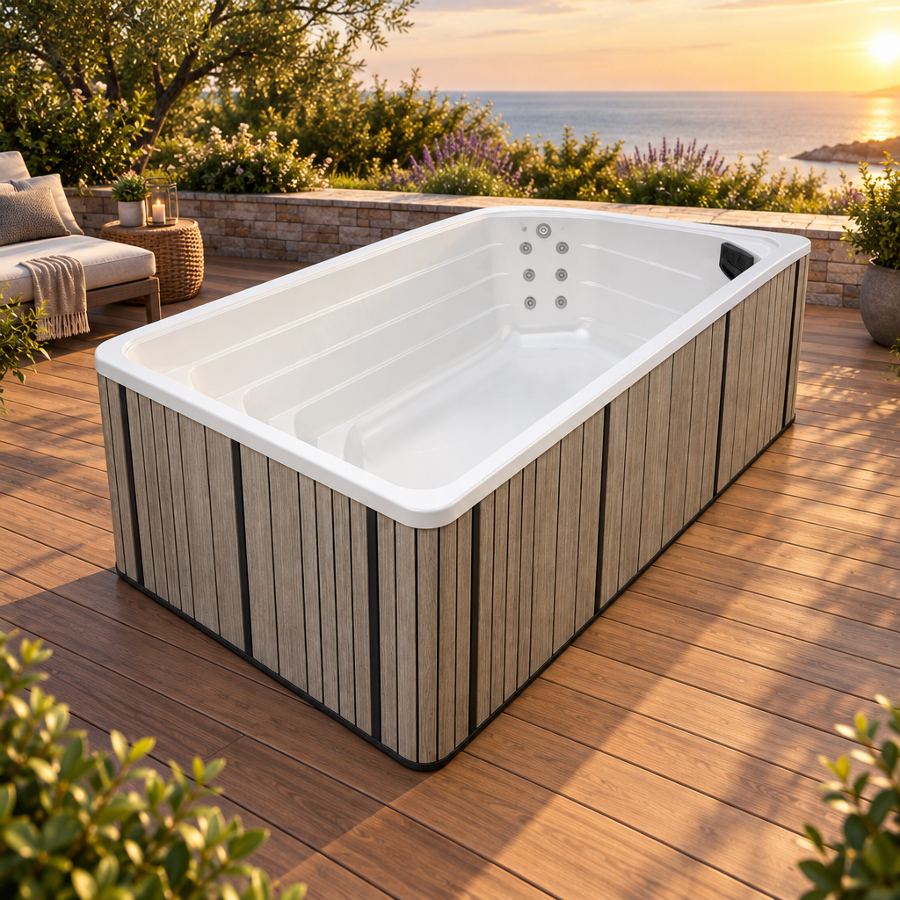
Victoria Star Swim Spa offers the perfect balance between exercise and relaxation, whether you want to swim for fitness or relax in the spacious seating.
Victoria Star Swim Spa offers the perfect balance between exercise and relaxation, whether you want to swim for fitness or relax in the spacious seating.