220V Hot Tub Buying and Installation Guide: Power, Performance, and Compact Luxury
Home / News / 220V Hot Tub Buying and Installation Guide: Power, Performance, and Compact Luxury
October 27, 2026
Stepping into warm water on a freezing evening should feel restorative, yet many homeowners watch their water temperature drop the moment the massage jets turn on. Choosing a hot tub with higher electrical capacity can help address this common frustration by providing the power needed to run a dedicated water heater and hydrotherapy pumps. Whether you are planning a 220v hot tub installation for a private backyard patio or evaluating a compact 2 person 220v hot tub for an urban balcony, understanding how electrical supply shapes thermal recovery and jet pressure helps you invest wisely.
Why Voltage Shapes Your Hydrotherapy Experience
Many first-time buyers assume that electrical voltage only affects how fast a spa heats up after being filled with a garden hose. In reality, the voltage supplying your control box acts like the diameter of a main highway, governing the total power available for your heating element and massage pump.
The Thermal Trade-Off in Plug-and-Play Spas
A standard 110V to 120V plug-and-play spa connects to a household outlet that is typically limited to 15 or 20 amps of total current. Because a single jet pump running at high speed consumes most of that available amperage, the internal circuit board in many models uses a load-shedding relay to shut off the heating element whenever you activate the massage jets.
Consequently, when you remove the insulated cover in cold weather and switch on the therapy jets, the water begins losing heat to the surrounding air. The rate of cooling depends on ambient temperature, wind exposure, and spa insulation, and bathers may find their soaks affected as temperatures decline.
How Higher-Voltage Hot Tubs Can Support Simultaneous Heating and Jet Pressure
By contrast, a hardwired hot tub with 220V to 240V electrical service receives power through a dedicated dual-pole breaker that can supply significantly higher wattage to the spa pack. This expanded electrical headroom may allow a multi-kilowatt heater to stay fully engaged even while the main hydrotherapy pump pushes water through the nozzles at maximum velocity, depending on the specific spa’s control configuration and electrical design.
For the homeowner, this electrical architecture can translate into uninterrupted warmth during extended evening sessions. Check the manufacturer’s electrical specifications to confirm whether your chosen model supports simultaneous heating and high-speed jet operation, as this capability varies by design.
220V Hot Tub vs. 110V Plug-and-Play Spas: A Technical Comparison
When comparing a hardwired hot tub against a 110V plug-and-play unit, buyers are weighing upfront electrical installation costs against daily thermal and mechanical performance. Examining the underlying engineering specifications side by side clarifies why permanent wiring remains the preferred standard for year-round hydrotherapy.
Specification Metric
110V–120V Plug-and-Play Spa
220V–240V Hardwired Hot Tub
Electrical Connection
Standard 15A or 20A GFCI cord-and-plug outlet
Dedicated hardwired GFCI circuit
Heater Output (Illustrative)
Often 1.0 kW to 1.5 kW
Often 3.0 kW to 5.5 kW, varies by model
Simultaneous Heat and High Jets
May turn off heater during high-speed jet use
May support simultaneous operation; verify with model specifications
Primary Pump Configuration
Single pump or low-wattage shared pump
May include dedicated jet pump plus separate circulation pump
Heating Recovery Rates in Cold Ambient Temperatures
Water has a remarkably high specific heat capacity, meaning it requires substantial thermal energy to raise the temperature of several hundred gallons by just a single degree. A 1.0 kW heater on a 110V circuit typically heats water more slowly than higher-output units, which can turn an initial refill or a winter temperature boost into a lengthy wait.
Upgrading to a hot tub with a 3.0 kW or larger heating element increases that thermal input, with actual recovery rates depending on water volume, ambient conditions, and spa insulation. Smaller two-person cabinets benefit from this ratio because a higher-output heater warms a compact water volume more rapidly.
Pump Configuration and Hydrotherapy Jet Pressure
Effective hydrotherapy relies on volumetric flow rate and water pressure to deliver comfort to the back and shoulders. Higher-voltage electrical service can provide the wattage needed to support dedicated pumps for massage and filtration, separating these duties rather than relying on a single shared pump.
A well-engineered hot tub may pair its therapy pump with a quiet, low-wattage circulation pump dedicated strictly to continuous water treatment. This separation supports quieter operation during filtration cycles and allows the massage pump to focus on delivering consistent jet pressure.
Long-Term Operating Efficiency vs. Upfront Wiring Costs
A common misconception is that a 220v hot tub consumes twice as much electricity on your monthly utility bill as a 110V model. In electrical physics, you pay for kilowatt-hours—the total amount of energy required to overcome heat loss through the cabinet and cover—rather than voltage alone.
A higher-capacity heater can shorten recovery time after the water has cooled, but actual operating costs depend on heat loss through the cabinet and cover, water temperature setpoint, usage frequency, and pump operation. Proper insulation and a well-sealed cover remain the primary factors in managing energy consumption over years of ownership.
Inside a Compact Hot Tub: Engineering for Small Spaces
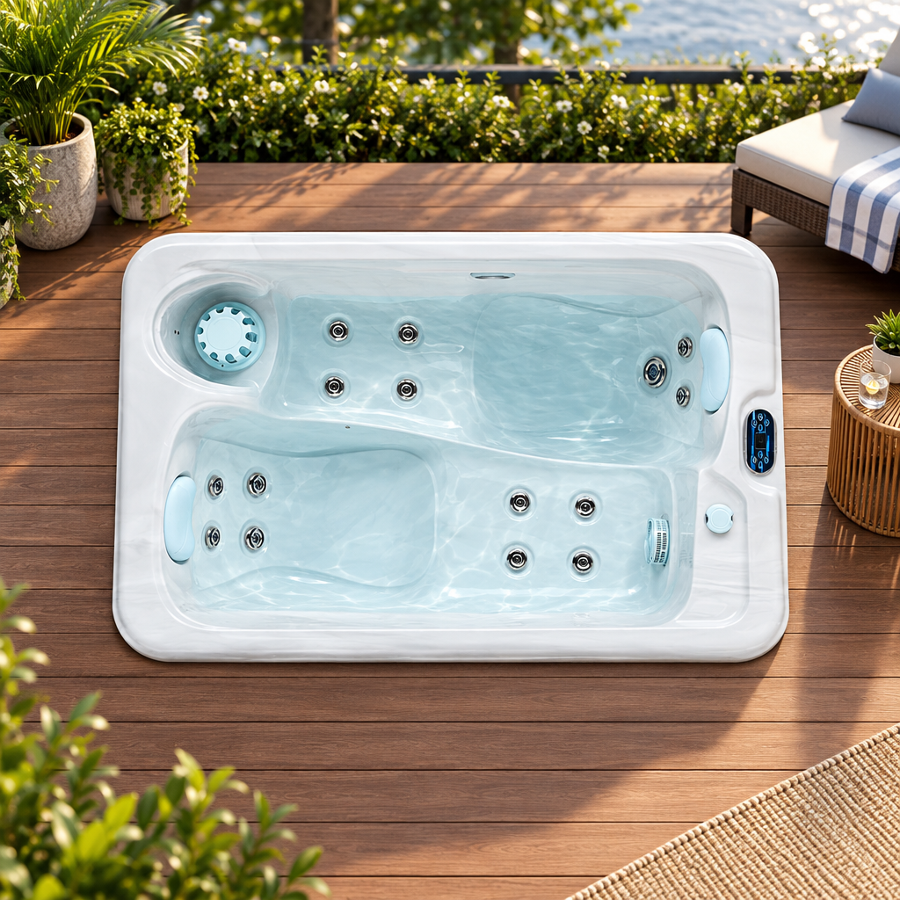
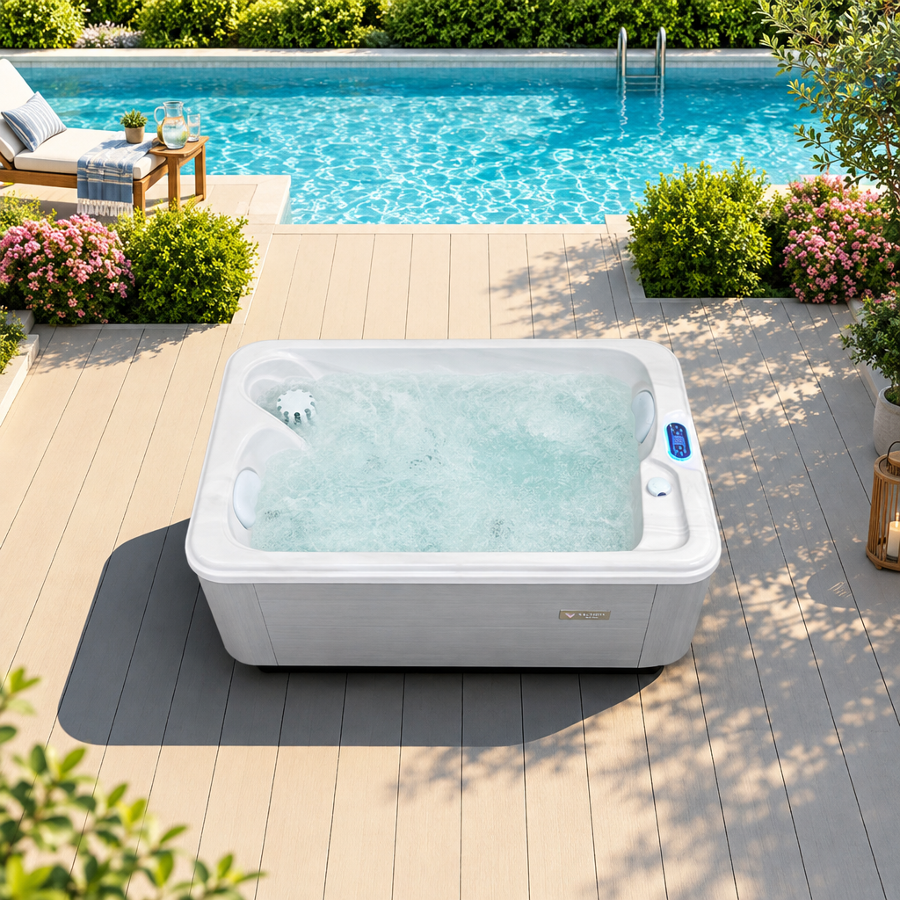
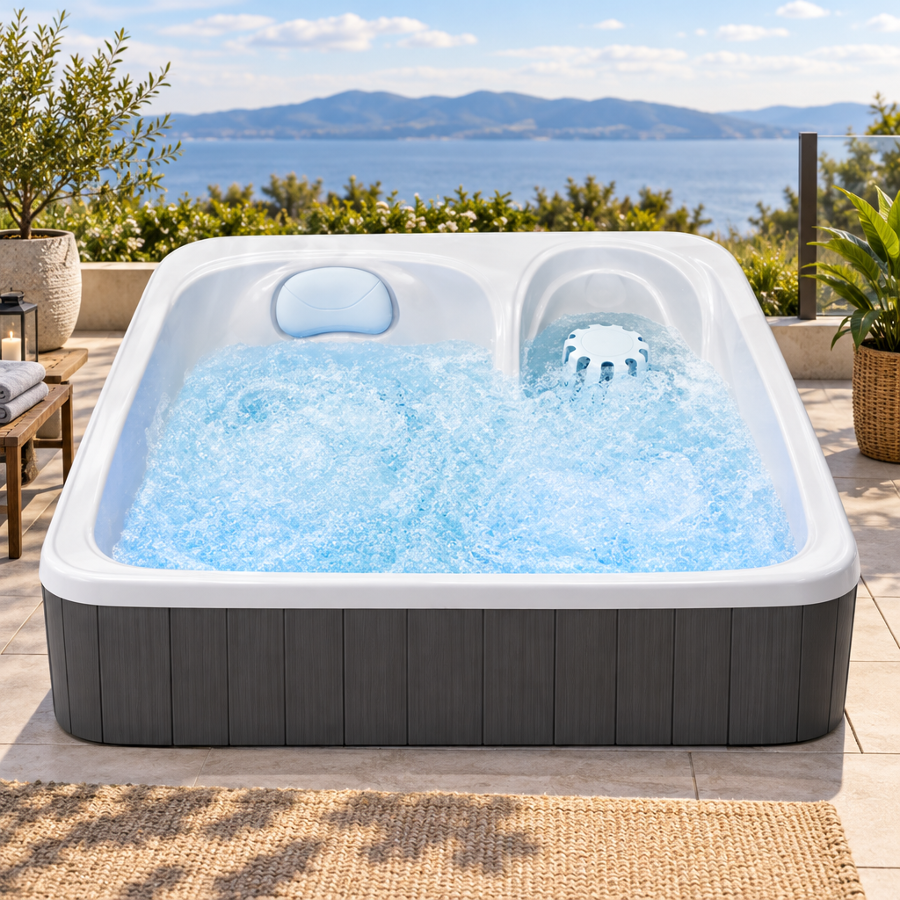
Homeowners with limited square footage often worry that they must settle for a weak plug-and-play tub if they cannot fit a massive eight-person spa in their yard. At Victoria Star, we combine product design with healing, relaxation and long-term wellness to provide high-end customized services for hot tubs and swim spas. Our Comfort Series 2 Person Rectangular Hot Tub VS-201C demonstrates how capable performance can be packaged into a space-saving architectural footprint.
Understanding the VS-201C Power and Pump Specifications
According to the technical specifications for the VS-201C, the unit lists a 4.5 kW power supply rating, a 3 kW heater, a 2 HP hydrotherapy water pump, and a dedicated 0.35 HP circulation pump. Consult the model’s nameplate, wiring diagram, and installation manual for the required supply voltage, circuit configuration, and confirmation of which components can operate simultaneously.
Measuring 1750 × 1150 × 750 mm (approximately 5′9″ × 45″ × 29.5″), the rectangular frame holds a focused volume of water around two bathers instead of heating empty corner space. Have a licensed electrician verify that your existing electrical service can accommodate the model’s power requirements, or determine whether a main panel upgrade is needed.
Ergonomic Dual Loungers and Targeted Back Hydrotherapy
Many small spas force bathers to sit upright with their knees pressed together, which creates tension in the lower back rather than relieving it. Inside the VS-201C shell, two full-body ergonomic loungers are contoured to match natural human body curves so two adults can recline simultaneously without competing for legroom. The shell is available in a Porcelain color finish.
To address muscular stiffness, the shell integrates 15 hydrotherapy massage jets, featuring a Targeted Comfort Back Massage layout with strategically positioned rotating nozzles. Driven by the 2 HP water pump, these rotating jets direct continuous streams of warm water along the spine and shoulders to provide comfort after long hours at a desk or physical training.
Automated Multi-Stage Sanitation and Smart Controls
Maintaining clean water in a compact spa requires consistent turnover because a smaller water volume reacts more quickly to bather oils and organic debris. The VS-201C addresses this challenge with a Hassle-Free Clean Water System that pairs its 0.35 HP circulation pump with multi-layer filtration, ozone oxidation, and UV sanitation to keep water clear and hygienic with minimal manual intervention. This multi-stage approach reduces the frequency of manual chemical adjustments and extends the time between full water changes.
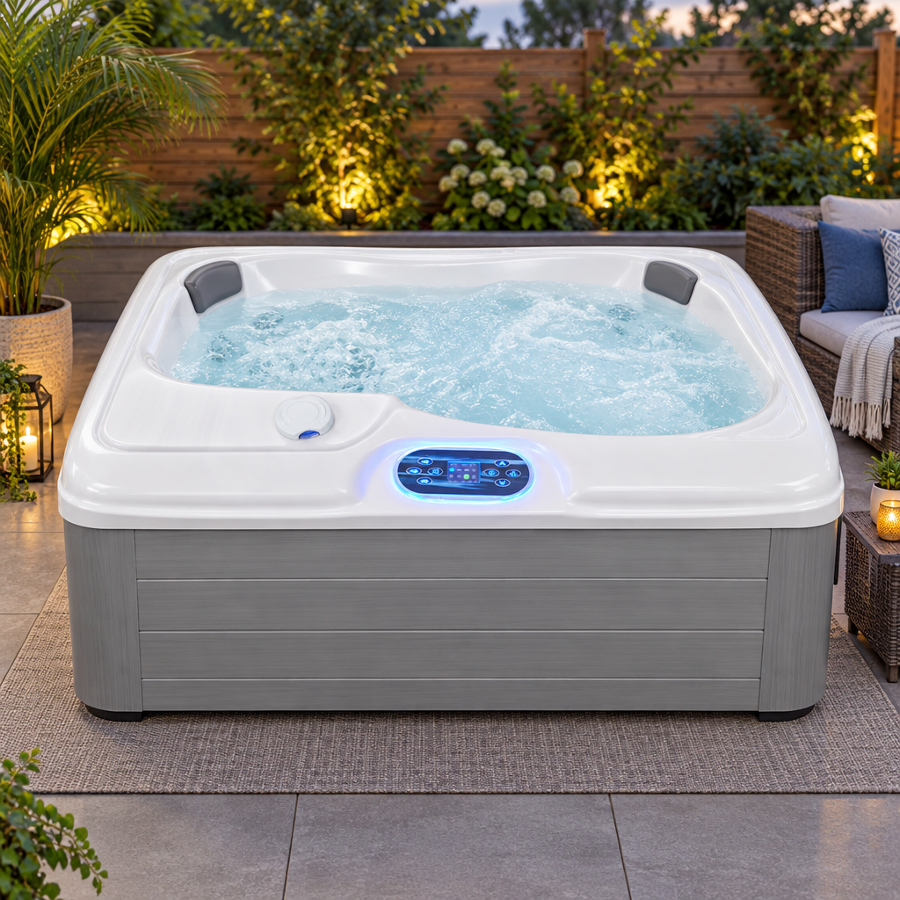
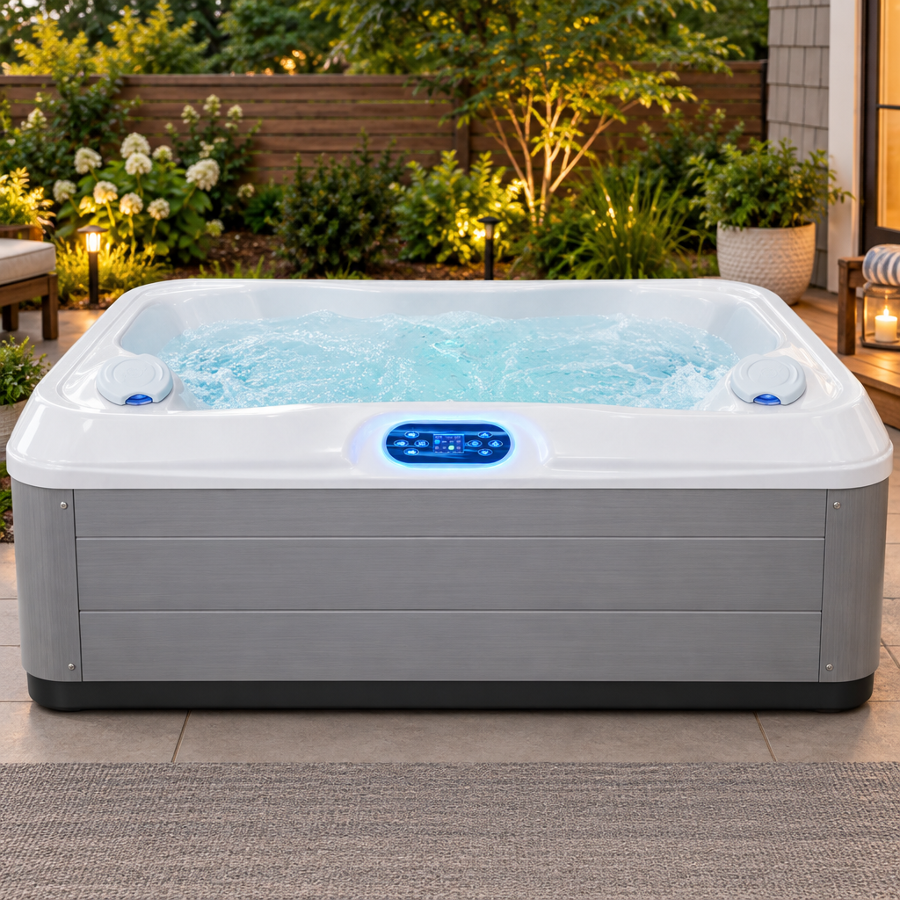
Managing these systems should never feel like operating industrial machinery. An integrated KL2022 smart digital keypad mounted on the tub rim lets bathers adjust water temperature, jet activation, and underwater LED lighting with a single touch. Built-in Bluetooth surround sound speakers provide audio connectivity for quiet evening relaxation, allowing you to stream music or podcasts directly from your mobile device without additional equipment.
Electrical Requirements for Installing a Hot Tub Safely
Because water and high-voltage electricity require strict physical separation and fault protection, a hot tub cannot simply be plugged into a dryer outlet. Preparing your site with a licensed electrician ensures your spa operates reliably and complies with national and local electrical codes.
Planning the Dedicated Circuit and GFCI Protection
Verify Main Panel Capacity: Have a licensed electrician inspect your home’s main service panel to confirm it has available capacity and open slots to support a dedicated circuit for the spa.
Calculate Circuit Amperage for Your Load: Have a licensed electrician size the breaker and wire gauge according to the spa’s nameplate ratings and the locally adopted electrical code. Circuit requirements vary by model and configuration.
Install Required GFCI Protection and Disconnect: Install GFCI protection and a maintenance disconnect as required by the spa’s installation manual and applicable code. The disconnect must be readily accessible, within sight of the spa, and located at least 5 feet horizontally from the spa water unless a permanent barrier provides the exception; follow the locally adopted code.
Run Approved Wiring and Protection: Have the electrician select wiring methods, conduit types, and conductors that comply with the specific spa manual and applicable local code requirements, running them from the disconnect to the spa’s internal terminal block.
Energize and Test Protection: Have the electrician energize the circuit and test the GFCI device according to its manufacturer’s instructions. Fill and prime the spa according to the VS-201C manual before powering the spa equipment to prevent dry-firing the heater.
Following the Model’s Wiring Diagram and Nameplate
Modern hot tub control systems often utilize multiple internal voltage pathways—running the heater and main pump at high voltage while stepping down voltage for logic boards, LED lights, or auxiliary components. Always follow the exact wiring diagram, nameplate voltage and frequency rating, and conductor requirements provided by the manufacturer.
Attempting to reuse an old appliance circuit without following the spa’s documented electrical requirements can cause immediate protection-device tripping or damage the digital control board. The spa’s installation manual specifies which wiring methods and conductor types are suitable for wet locations and outdoor temperature swings.
Understanding Code Requirements for GFCI Protection and Disconnects
In North America, Article 680 of the National Electrical Code (NEC) establishes strict safety boundaries for residential spas and hot tubs. Applicable rules require GFCI protection and a readily accessible maintenance disconnect, with installation details governed by the spa instructions and locally adopted code. Class A GFCI devices trip when current leakage is detected in a range typically between 4 and 6 milliamperes.
The disconnect switch location and accessibility requirements are specified in the applicable code to ensure that a person immersed in the spa cannot reach electrical enclosures, and that technicians servicing the equipment can visually confirm that power is off.
Structural Load and Surface Preparation for Balconies and Decks
Electrical planning goes hand in hand with structural engineering, especially when placing a compact hot tub on an elevated condominium balcony, rooftop terrace, or timber deck. While the dry frame of a two-person unit is relatively light, you must calculate the dead load of the tub plus the weight of the water and two adult bathers.
Before routing electrical conduit across a balcony or indoor bathroom floor, confirm that the underlying slab or joist structure is completely level and rated to support the concentrated load per square foot. A flat, non-compressing base prevents torsional stress on the shell and keeps the aluminum-plastic cabinet panels aligned over decades of use.
How to Choose the Right Hot Tub for Your Property
Selecting a hardwired spa involves matching the mechanical specifications of the unit to your architectural layout and regional weather patterns. Use the following technical criteria to evaluate whether a compact model fits your home.
Key Selection Criteria
Total Kilowatt Draw vs. Panel Headroom: Check the rated power supply (such as the 4.5 kW rating on the VS-201C) against your existing electrical service so you can determine whether the installation requires a main utility panel upgrade.
Cabinet Skirt Durability: Look for a durable aluminum-plastic cabinet skirt—available in finishes like Platinum or Midnight—designed to resist outdoor exposure.
Pump Separation for Quiet Nighttime Operation: Prioritize models that include a separate circulation pump alongside the main pump, ensuring that automated filtration cycles won’t disturb sleeping neighbors on a condominium balcony.
Dimensional Clearance for Delivery: Measure the actual access route, including stairwells, elevator doors, side-yard gates, doorway clear openings, and turns, against the tub’s profile and delivery orientation requirements. The VS-201C measures approximately 5′9″ × 45″ × 29.5″ (1750 × 1150 × 750 mm).
Matching Heater Output to Your Local Climate Zone
If you live in a region where nighttime temperatures routinely dip below 40°F (4°C), higher heater output can help maintain soaking temperatures more effectively. Pairing capable heating with a weather-resistant cabinet skirt and a tight-sealing thermal cover creates a heat-retention envelope that keeps winter energy consumption predictable.
Even in warmer coastal or desert climates, higher heater wattage offers practical convenience for vacation homes and boutique hospitality suites. A higher-output heater may shorten heating time, while actual time depends on the model’s water volume, starting temperature, and installation conditions.
Evaluating Space Constraints and Access Pathways
Urban homeowners and apartment dwellers frequently overlook the delivery pathway between the street and the final installation pad. A traditional six-person square spa often requires hiring a crane to lift the shell over a roofline or fence, adding thousands of dollars to the installation budget and requiring street permits or neighbor coordination.
A compact rectangular footprint like the VS-201C offers flexibility for tight access routes. Once positioned in a corner of a balcony or patio, the rectangular geometry leaves ample walking space around the perimeter.
Frequently Asked Questions About 220V Hot Tubs
Is there a difference between a 220V, 230V, and 240V hot tub?
In North American marketing, 220V, 230V, and 240V labels are often used loosely to describe high-voltage hardwired electrical service. Over several decades, utility standards shifted nominal split-phase household voltage from 110V/220V to 120V/240V, while many international grids operate at 230V single-phase. Always follow the exact voltage and frequency specified on your spa’s nameplate and in its installation manual; do not assume that all products labeled with these voltages are interchangeable across different electrical systems.
Can a 220V hot tub run the heater and massage jets at the same time?
Simultaneous operation of the water heater and high-speed massage pump is a common advantage of hardwired hot tubs with sufficient electrical supply. Whether a specific model supports this depends on its control configuration and circuit capacity. Check the manufacturer’s electrical specifications to confirm whether your chosen model can maintain heating while running high-speed jets.
How much electricity does a compact hot tub use per month?
Monthly electricity consumption depends on ambient outdoor temperature, cover insulation quality, water volume, temperature setpoint, and how many hours per week you run the high-speed jets. A smaller water volume may reduce the energy needed to heat a refill, but standby consumption depends on insulation, cover quality, setpoint, ambient conditions, and circulation pump operation. Check comparative test data or manufacturer estimates for the specific model.
Why does a hot tub require GFCI protection and a dedicated disconnect?
GFCI protection monitors the current balance between the hot and neutral conductors and cuts power within milliseconds if a ground fault is detected, protecting bathers from electrical shock. The dedicated maintenance disconnect allows technicians to safely service the equipment by ensuring that power can be visually confirmed as off. Both are required by electrical codes for residential spa installations.
Can a two-person hot tub fit on a residential balcony or indoor bathroom?
A compact rectangular model such as the VS-201C—measuring 1750 × 1150 × 750 mm (approximately 5′9″ × 45″ × 29.5″)—is specifically sized for residential balconies, private courtyards, and modern indoor bathroom suites. Before installation, you must confirm with a building engineer or property manager that the floor structure can support the combined weight of the spa, water, and bathers, and provide proper floor drainage and ventilation.
Conclusion: Investing in Reliable Hydrotherapy Performance
Selecting a hardwired hot tub transforms your daily wellness routine from a compromise into a dependable retreat. Rather than watching the water cool down when you need muscle relief the most, a dedicated high-voltage circuit can empower capable heating and hydrotherapy pump performance to work together, depending on the model’s design. When that electrical capability is housed inside a compact, two-lounger design like the VS-201C—complete with multi-stage ozone and UV water sanitation, an aluminum-plastic skirt, and KL2022 smart keypad controls—even a cozy balcony or courtyard can support year-round hydrotherapy. Confirm the required supply voltage from the model’s nameplate or installation manual to ensure your 220v hot tub is engineered for reliable performance.
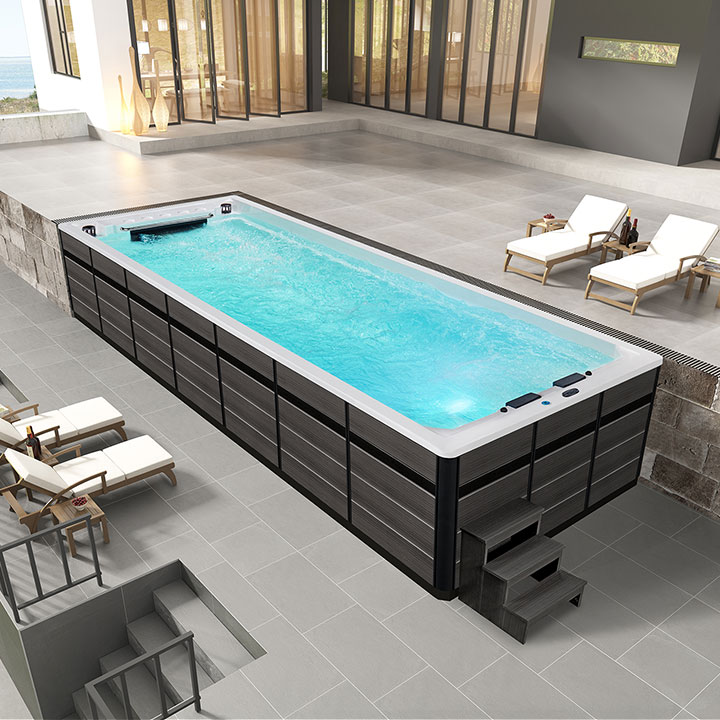
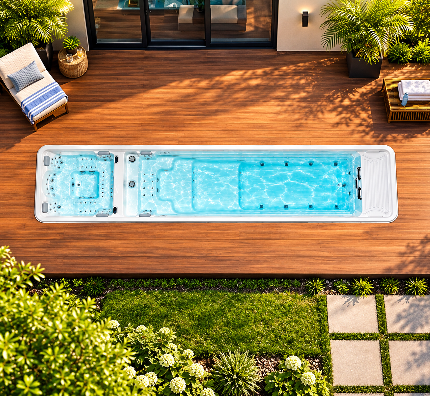
Victoria Star Swim Spa offers the perfect balance between exercise and relaxation, whether you want to swim for fitness or relax in the spacious seating.
Victoria Star Swim Spa offers the perfect balance between exercise and relaxation, whether you want to swim for fitness or relax in the spacious seating.