2 Person Ice Bath Engineering Guide: Dimensions, Thermal Loads, and Recovery
Home / News / 2 Person Ice Bath Engineering Guide: Dimensions, Thermal Loads, and Recovery
October 31, 2026
Investing in a dedicated cold plunge tub for single or occasional dual use represents a major functional upgrade from improvised recovery methods. When searching for a 2 person ice bath, consumers encounter products ranging from compact single-user models to true multi-occupant systems. Cold immersion allows individuals, training partners, and wellness-focused couples to experience contrast therapy in a controlled environment. However, selecting a cold plunge system requires careful attention to thermal efficiency, ergonomic clearance, and structural support.
Selecting an effective ice bath requires looking past basic marketing claims. A tub must manage water displacement, sustained heat absorption, and considerable structural loads. This comprehensive guide examines the mechanical, physical, and architectural factors that determine successful long-term installation for residential and commercial settings. The Outdoor Cold Plunge Tub C02 discussed in this guide should be treated as a single-user model unless the manufacturer confirms measured internal dimensions and two-person capacity.
What Defines an Effective Cold Plunge Tub?
Usable Basin Geometry vs. External Footprint
Many consumers evaluate cold plunge tubs strictly by their outer dimensions, assuming that an overall length of six feet guarantees comfortable bathing. In practice, external cabinets house integrated pumps, chillers, pipe insulation, and electrical control systems that consume interior space. A tub measuring roughly 1700 mm externally features a basin smaller than its exterior suggests. To achieve practical immersion for adults, internal dimensions must provide adequate clearance and depth.
Actual two-person suitability requires verified internal basin width, usable waterline dimensions, and manufacturer confirmation. Without these verified measurements, consumers should not assume that external dimensions translate to comfortable dual occupancy. When individuals immerse, basin depth and contour dictate comfort and posture. Without contoured footwells or integrated seating steps, maintaining a stable seated position becomes difficult, reducing the relaxing benefits of cold water therapy.
Displaced Water Volume and Basin Overflow Dynamics
Archimedes’ principle plays a decisive role whenever a bather enters an ice bath. A submerged person displaces approximately the volume corresponding to the submerged portion of their body, so actual displacement varies with body mass, posture, and immersion depth. When a bather enters a compact basin, displaced water can spill across the rim and pool on the deck or surrounding subfloor if the basin lacks adequate freeboard. Planning for water displacement prevents damage to outdoor surfaces.
Excessive splash-out can lower the water level, so users should verify the minimum operating level and refill according to the manufacturer’s instructions before restarting circulation equipment. Proper basin design accounts for displacement during entry and maintains adequate water coverage over suction fittings throughout the session.
Target User Demographics for Cold Plunge Systems
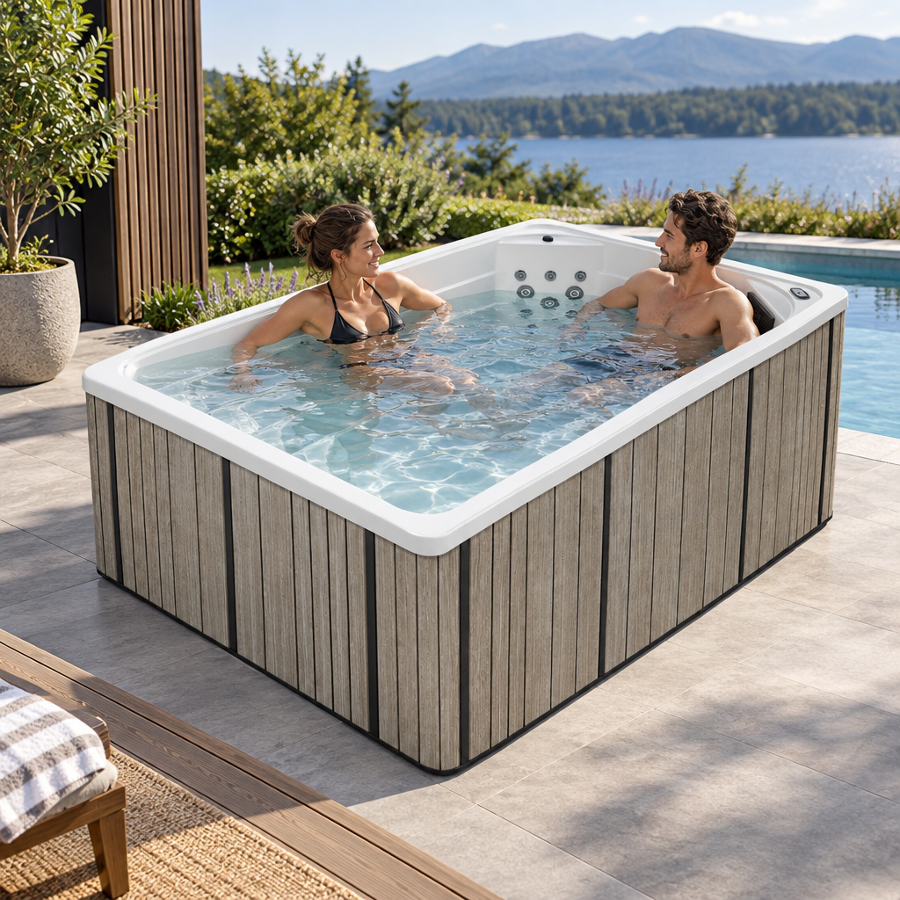
Cold immersion setups serve specific user groups that require proper basin geometry and responsive thermal controls. Athletic training facilities rely on individual immersion to cycle athletes through post-workout recovery schedules without delay. Couples and wellness partners incorporate ice bath sessions into shared daily routines to maintain accountability, with mutual exposure making initial cold shock more tolerable through shared breath pacing and quiet encouragement, though each person typically plunges individually. Taller individuals seek out elongated formats when standard units feel restrictive, as additional length allows users to stretch out fully into a semi-recumbent posture, achieving full clavicle submersion without bending their knees awkwardly.
Cold-Water Immersion Physiology: Evidence vs. Marketing Hype
Hemodynamic Response: Vasoconstriction and Cold Shock
Stepping into water held between 8°C and 12°C triggers an immediate sympathetic nervous system response. Peripheral cutaneous blood vessels rapidly constrict, shunting systemic blood circulation inward toward core thoracic organs to conserve heat. This initial sudden plunge causes an involuntary gasp reflex and rapid acceleration in ventilation. Users must practice deliberate, controlled exhalations to overcome the natural impulse to panic or hyperventilate during the initial phase.
As the vascular system constricts, arterial blood pressure rises transiently while skin temperatures fall. Some users report improved alertness or calm after the initial cold-shock response, but the longer-term mental-health effects remain uncertain. Controlled breathing practice and gradual acclimatization help manage the initial physiological stress response.
Scientific Evidence on Delayed-Onset Muscle Soreness
Cold therapy remains widely used for physical conditioning, yet its physiological mechanisms require realistic evaluation rather than exaggerated wellness promises. Systematic clinical evaluations demonstrate that cold water immersion primarily impacts perceived fatigue and post-exercise muscle tenderness. Systematic reviews and meta-analyses show that immersing in chilled water may reduce perceived soreness and fatigue after some forms of exercise, as the low temperature minimizes tissue edema and temporary microvascular leakage.
However, cold water is not a proven treatment for injury or inflammation and does not guarantee faster performance recovery. The practical benefit lies in helping users feel more ready to resume training, not in repairing structural tissue damage. Users should maintain realistic expectations about what cold immersion can and cannot accomplish.
Strategic Timing: When to Avoid Cold Immersion
Cold application is not universally beneficial across every training discipline, making deliberate scheduling crucial. Repeated immediate post-resistance-training cold-water immersion may attenuate some hypertrophy or strength adaptations, although study quality and protocol differences limit certainty. Users prioritizing hypertrophy may avoid immediate post-lifting immersion and should discuss timing with a qualified sports professional. Those focused on aerobic conditioning face fewer timing constraints.
Engineering and Hardware Specifications to Evaluate
Heat Pump Capacity and Thermal Pull-Down Rates
A functional cold plunge tub must manage bather heat load. A bather adds heat to the water, and the temperature effect depends on water volume, starting temperature, immersion time, and equipment performance. Using ice requires repeated loading and offers less precise temperature maintenance than an active refrigeration system, especially when water volume, ambient temperature, and bather heat load vary.
Active heat pumps provide precise refrigeration through continuous thermodynamic cycling. Manufacturers typically rate heat pump systems by power consumption or thermal output. Users should request measured cooling capacity, pull-down time from ambient temperature, and thermal-load testing data to evaluate performance under actual operating conditions.
Filtration, Turnover Rates, and Sanitation
Bather use introduces biological and environmental residue into the closed water loop. Body oils, dead skin cells, and ambient debris require continuous mechanical circulation and sanitation. Maintaining pristine water clarity depends on the filtration system, disinfection protocol, and routine testing. Users should follow the manufacturer’s actual filtration, disinfection, testing, and water-replacement instructions rather than relying on generic guidance.
Water-change intervals depend on bather load, disinfectant, filtration capacity, temperature, testing results, and maintenance. Test water routinely and replace it when testing or water condition indicates. Proper water management preserves equipment longevity and ensures sanitary bathing conditions.
Structural Shell Materials and Thermal Boundary Insulation
The physical longevity of an outdoor cold plunge depends fundamentally on its construction materials. Thin plastics can deform under constant hydrodynamic pressure and degrade when exposed to ultraviolet radiation. High-grade acrylic surfaces provide a durable basin material that resists scratching. Cabinet materials, venting design, and insulated covers work together to protect mechanical components and limit passive heat transfer.
External cabinet insulation plays a crucial role in thermal efficiency. An insulated top cover limits heat transfer, reducing the workload on the internal cooling system during warm weather. Proper insulation lowers operating costs and extends equipment service life.
Product Profile: Outdoor Cold Plunge Tub C02
Published Technical Specifications
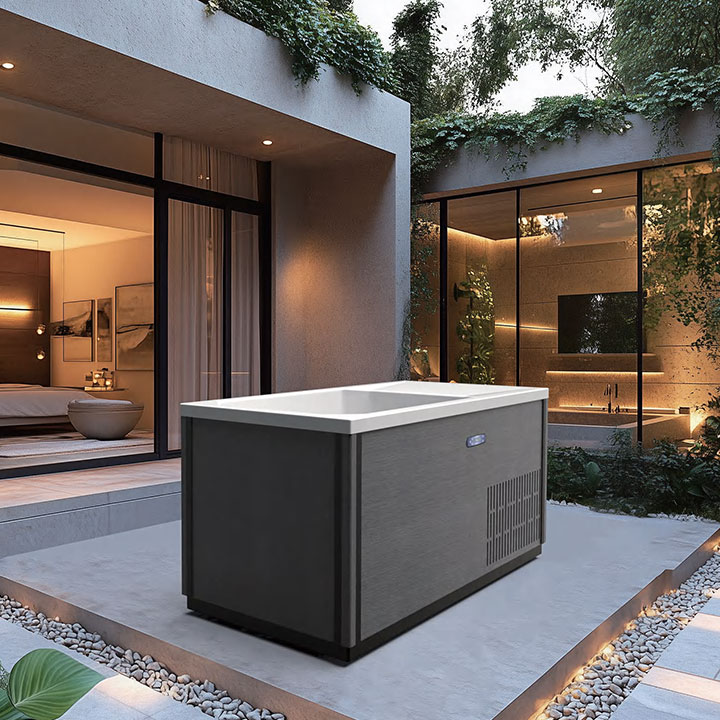
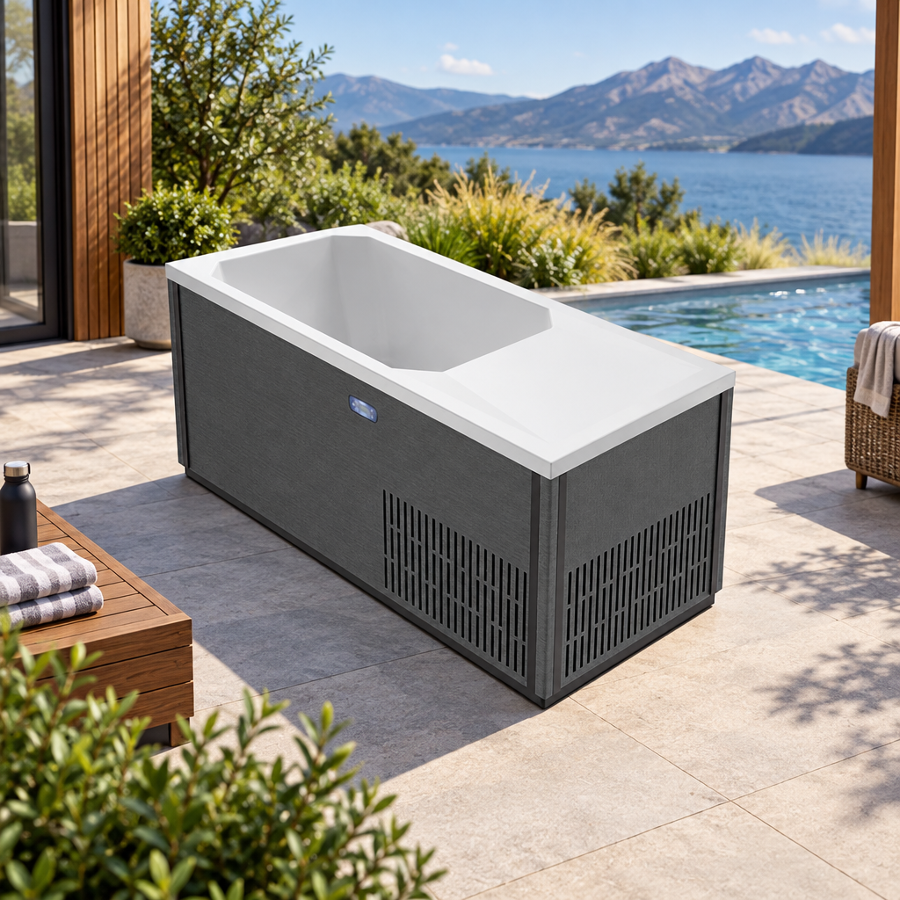
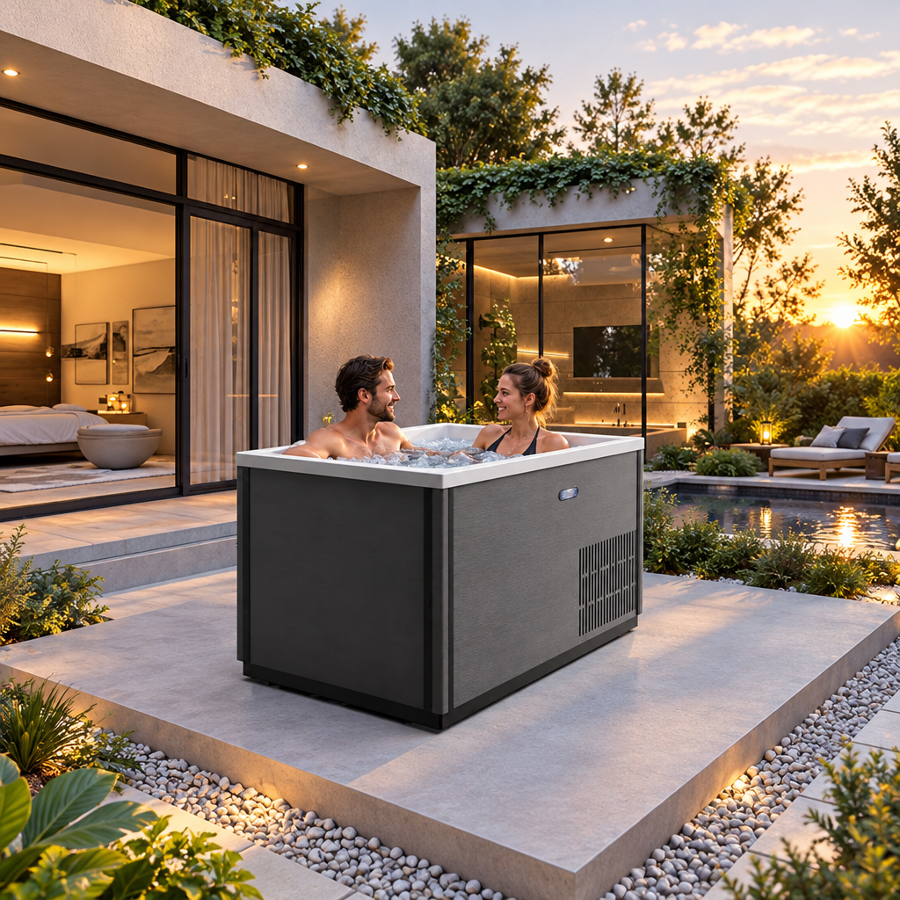
Engineered as an all-in-one recovery station, the Outdoor Cold Plunge Tub C02 combines temperature control with durable construction. Designed and assembled by Victoria Star, this unit combines its heat-pump control system, brushless pump, cabinet, and acrylic basin in a single self-contained footprint.
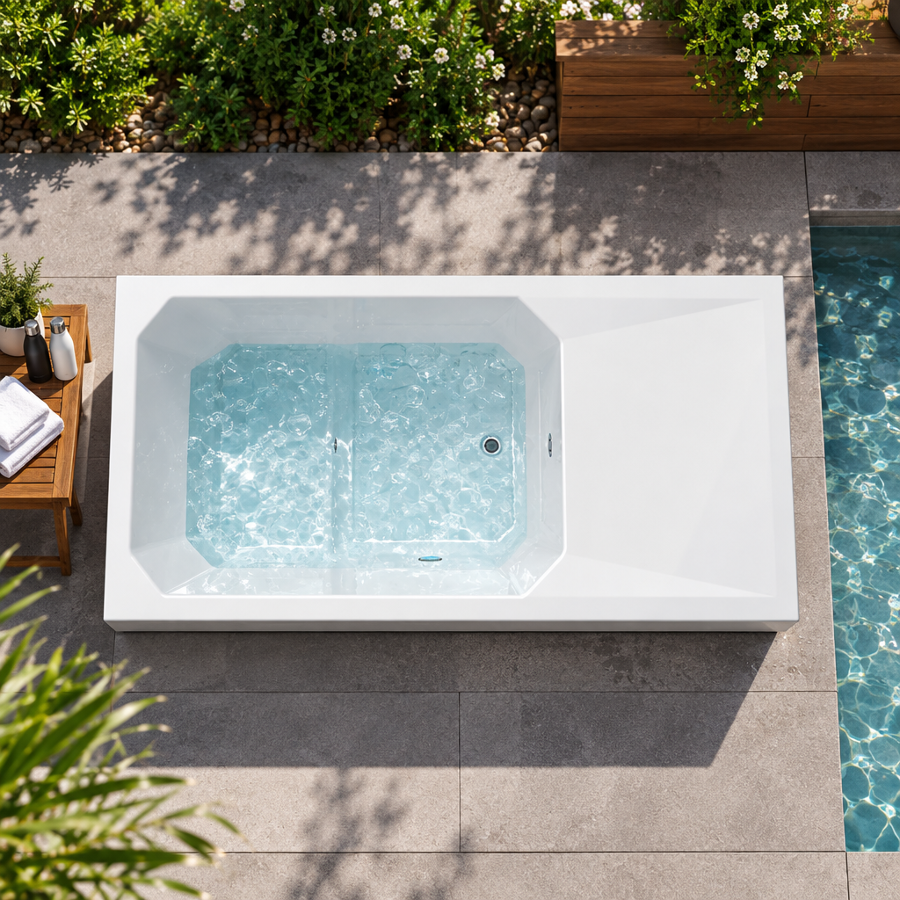
The C02 model occupies a practical middle ground between ultra-compact personal tubs and oversized commercial plunge tanks. With an external length of 1695 mm and a liquid capacity of 320 liters, it provides generous space for individual immersion. Inside the acrylic basin, an integrated seating step creates a dual-level layout that acts as a secure entry platform and a physiological rest for partial leg plunge protocols. The external length may suit users seeking more room than a compact tub, but actual legroom depends on the internal basin dimensions and integrated step. Confirm those measurements before purchase.
The published external width of 830 mm and cabinet construction indicate that this model is designed primarily for single-user immersion. Users considering dual occupancy should request verified internal dimensions from the manufacturer before purchase.
Installation Environments and Commercial Suitability
The exterior cabinet houses the equipment, and the vented composite panels are intended to provide airflow around it. Its footprint may suit some residential outdoor areas, but deck installation requires structural assessment. Its clean exterior profiles match modern outdoor patio architectural finishes. The stated application scenarios include sports facilities, wellness centers, boutique spas, and resort villas, subject to site and installation requirements.
Its exterior digital control interface is intended to allow users or staff to manage the heat-pump system; the available specifications do not state control accuracy or response time. Prospective buyers should request detailed operation and performance data during the purchasing process.
Site Preparation, Structural Loads, and Safety Standards
Calculating Subfloor Loading: Total Operational Weight
Homeowners frequently overlook static load limits when installing cold plunges on elevated surfaces. A full tub exerts concentrated structural force that requires verified load-bearing support. Using an 80 kg example bather, the combined dry unit, water, and bather mass is approximately 540 kg before adding installation materials or applying structural safety factors. A qualified professional must verify the actual design load.
Net dry chassis weight of the C02 unit: 140 kg
Water mass when filled to internal operating capacity (320 L): 320 kg
Live mass of an example submerged adult bather: approximately 80 kg
Illustrative minimum combined load: roughly 540 kg
The published external dimensions have a rectangular plan area of approximately 1.4 square meters, but the actual supported contact area and load distribution must be verified from the base design and installation instructions. On elevated wooden patio decks, joist spans must be inspected to ensure they can safely support the concentrated load.
Electrical Supply, Safety, and Drainage Paths
Installation must follow the product manual and applicable local electrical code. A licensed electrician should determine circuit requirements, ground-fault protection, disconnect switches, bonding, and outdoor-equipment standards for the specific installation. The C02 lists a power supply rating of 0.954 kW and a heater output of 900 W. Actual electrical consumption during cooling depends on duty cycle, ambient temperature, target temperature, and runtime. Request manufacturer energy-consumption data before estimating operating costs.
Install the tub on a level, stable, load-bearing base with drainage designed according to the manufacturer’s instructions and local site conditions. Proper site preparation prevents water accumulation, equipment damage, and structural deterioration over time.
Cold Immersion Safety Protocol: Mitigating Real Hazards
Cold immersion delivers clear wellness benefits, but extreme water temperatures carry physical risks if safety practices are ignored. Beginners must approach cold exposure cautiously rather than attempting aggressive endurance feats.
Consult a healthcare professional before starting cold immersion if you have cardiovascular disease, uncontrolled blood pressure, arrhythmias, circulation disorders, Raynaud’s phenomenon, pregnancy, or other relevant conditions. Some individuals may be advised to avoid cold plunges entirely.
Begin with warmer water and shorter durations, gradually acclimating to lower temperatures over weeks. Keep your head and airway above water at all times.
Focus on slow, rhythmic diaphragmatic breathing to manage the involuntary gasp reflex and hyperventilation that accompany sudden cold exposure.
Never plunge alone. Exit immediately if you experience uncontrolled breathing, dizziness, chest discomfort, confusion, or numbness.
Step out of the tub carefully onto non-slip floor surfaces and allow your body to warm up gradually through gentle movement rather than jumping directly into hot showers.
Decision Matrix: Selecting the Right Cold Plunge Tub
When to Invest in a Dedicated Single-User System
Choosing the right cold plunge tub depends on your practical daily routine and recovery goals. Investing in a dedicated system makes sense under specific household and training circumstances.
Consistent recovery protocol: You follow a regular athletic training schedule and require reliable post-session immersion at controlled temperatures.
Space and budget constraints: You need a compact footprint that fits residential outdoor spaces without requiring extensive deck reinforcement or excessive water volume.
Long-term commitment: You plan to use cold therapy consistently over years, making the initial investment worthwhile compared to purchasing ice repeatedly.
If these circumstances reflect your daily routine, prioritize models with efficient thermal controls, durable construction, and appropriate basin dimensions for your height and build. Verify internal dimensions and manufacturer-supported use cases before purchase.
Evaluating Elongated Single-User Layouts
For many homeowners, choosing an elongated, versatile layout provides a balanced recovery solution. Compact single-user tubs preserve outdoor patio space and lower ongoing electrical consumption compared to larger commercial systems. The C02’s 1695 mm length and 320 L volume provide space for tall individuals to stretch out their legs without joint compression. The included insulated cover and integrated heat pump system support efficient temperature maintenance. Balancing manufacturing quality with practical hydrotherapy drives thoughtful product design, and the C02 provides a thermal footprint that supports focused solo recovery.
Frequently Asked Questions (FAQs)
What is the ideal size for a single-user cold plunge tub?
A single-user cold plunge tub should provide enough length to accommodate your height while seated or semi-reclined, typically between 1500 mm and 1800 mm internally. Width should allow comfortable shoulder clearance without forcing your arms against the sides. Verify internal basin dimensions with the manufacturer rather than relying solely on external measurements, as cabinet thickness, equipment placement, and seating steps reduce usable interior space.
What is the power consumption of an integrated heat pump system compared to adding ice bags?
The C02 lists a power supply rating of 0.954 kW and a heater output of 900 W, but operating cost depends on duty cycle, ambient temperature, target temperature, electricity rates, and runtime patterns. Request manufacturer energy-consumption data for accurate cost projections. Relying on commercial bagged ice requires purchasing significant quantities per session to chill ambient water. Active refrigeration systems eliminate the ongoing ice expense and logistical hassle, but the relative cost depends on local electricity and ice prices.
How does cold water immersion affect muscle recovery after resistance training?
Cold-water immersion may reduce perceived soreness and fatigue after some forms of exercise, but it is not a proven treatment for injury or inflammation and does not guarantee faster performance recovery. Athletes recover subjective readiness more quickly in some protocols. However, repeated immediate post-resistance-training immersion may attenuate some hypertrophy or strength adaptations. Athletes focusing on building lean muscle should discuss timing strategies with a qualified sports professional.
What are the structural requirements for installing an outdoor ice bath on a raised deck?
A fully filled 320-liter plunge tub occupied by one bather weighs over 500 kilograms. This substantial mass exerts concentrated point loads across its supporting footprint. Before installation, a qualified contractor should verify that supporting beams and joists can sustain the concentrated load. Ground-level concrete slabs or gravel beds provide the most stable surfaces without requiring structural reinforcement.
How often should water be replaced in a cold plunge tub?
Water-change frequency depends on bather load, disinfectant, filtration capacity, temperature, testing results, and maintenance practices. Follow the manufacturer’s sanitation and water-management instructions rather than relying on generic time estimates. Test the water routinely using appropriate test strips or kits, and replace it when testing or water condition indicates. Users should shower briefly before entering to prolong water clarity and protect system components.
What medical conditions should prevent someone from using a cold plunge?
People with cardiovascular disease, uncontrolled blood pressure, arrhythmias, circulation disorders, Raynaud’s phenomenon, pregnancy, or other relevant conditions should consult a healthcare professional before cold immersion. Some may be advised to avoid it. Sudden cold exposure causes peripheral vasoconstriction and can sharply increase blood pressure, heart rate, and breathing rate. Always seek individualized medical advice rather than relying on general guidance when health risks exist.
Achieving Practical Balance in Cold Recovery
Selecting an effective cold plunge tub requires balancing basin geometry, thermal system specifications, structural weight distribution, and water sanitation. Prioritizing verified performance data over unverified wellness hype helps you evaluate whether the equipment can support a consistent recovery routine. The Outdoor Cold Plunge Tub C02 bridges the gap between compact home units and larger commercial systems. Its durable acrylic construction, integrated heat pump system, and space-conscious 320-liter basin provide a solid foundation for individual cold therapy.
By carefully evaluating structural site limits, planning electrical connections with a licensed professional, and respecting cold exposure safety protocols, you can establish an outdoor recovery space that supports long-term physical vitality. Whether you plunge solo to build mental resilience or share accountability with a partner who plunges separately, investing in a properly engineered 2 person ice bath or single-user cold plunge tub elevates your wellness routine.
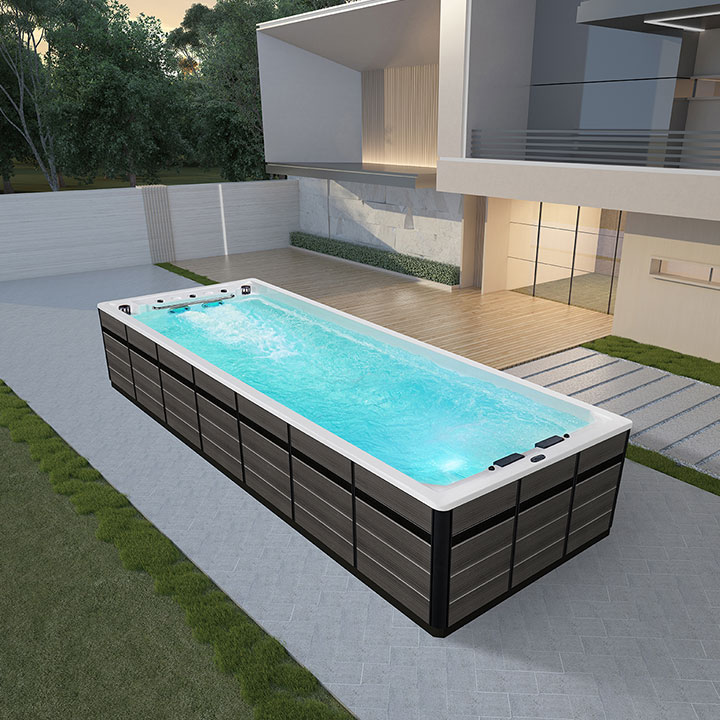
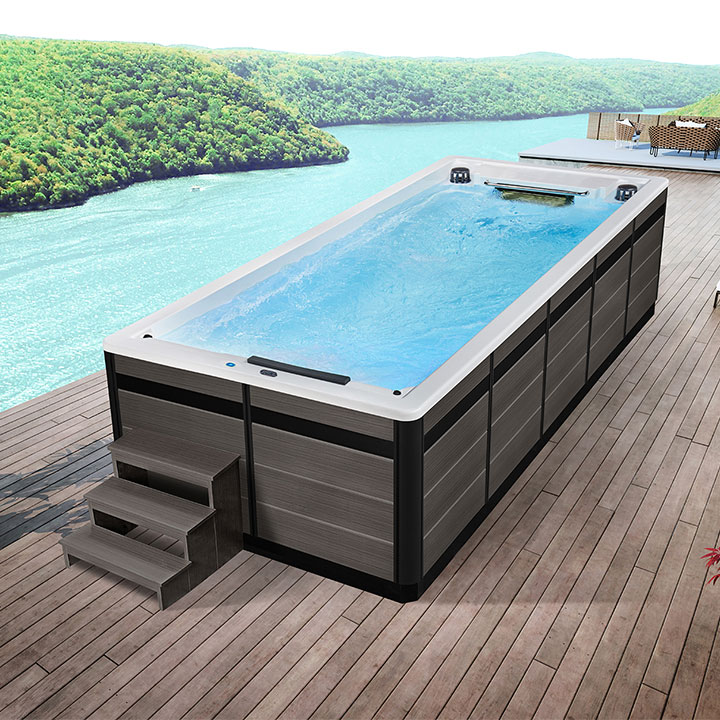
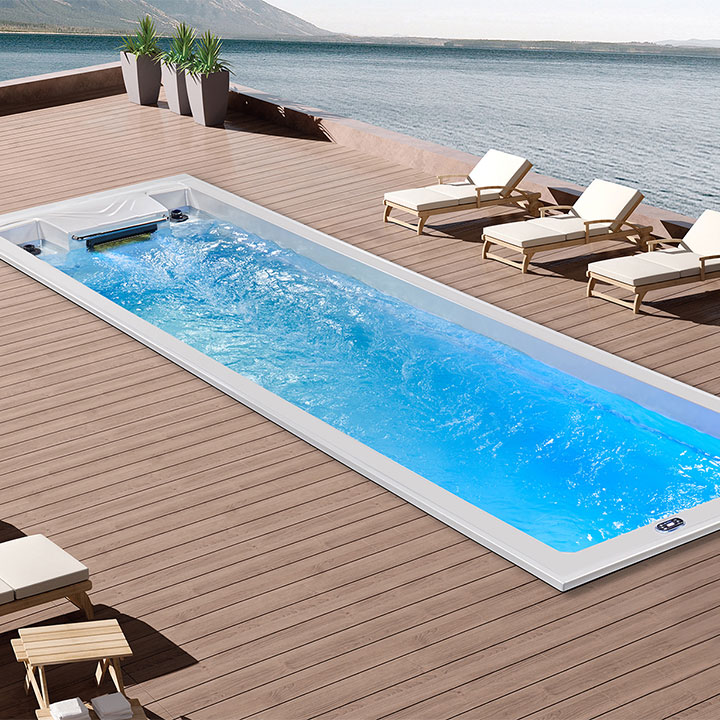
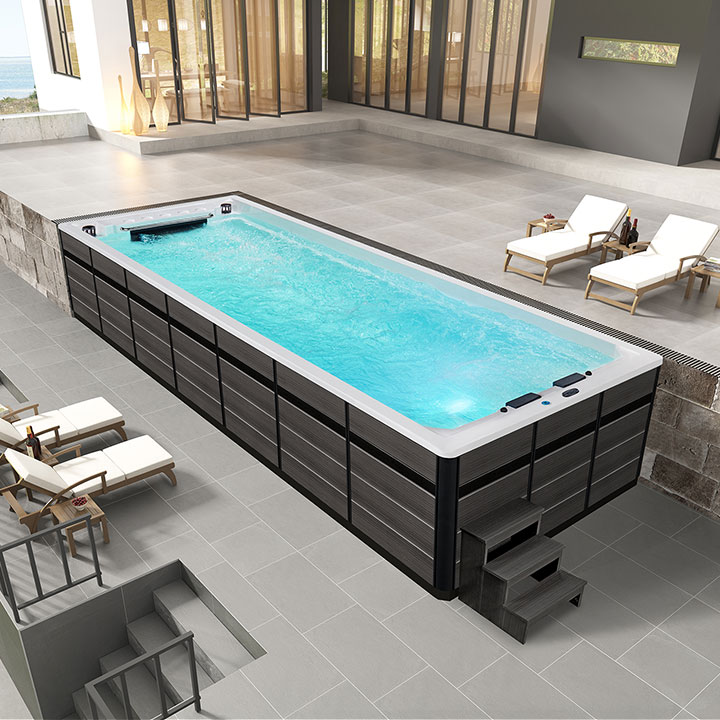
Victoria Star Swim Spa offers the perfect balance between exercise and relaxation, whether you want to swim for fitness or relax in the spacious seating.
Victoria Star Swim Spa offers the perfect balance between exercise and relaxation, whether you want to swim for fitness or relax in the spacious seating.