110V vs 220V Hot Tub Wiring: Complete Electrical and Planning Guide
Home / News / 110V vs 220V Hot Tub Wiring: Complete Electrical and Planning Guide
November 06, 2026
Choosing between 110v vs 220v hot tub wiring represents one of the most consequential decisions in residential spa planning. While retail showrooms often emphasize hydrotherapy jet placement and ergonomic lounge contours, the electrical supply running behind your drywall determines how the spa actually functions. Your chosen voltage establishes how quickly the water reaches temperature, whether the heater can operate alongside high-speed pumps, and what physical modifications your home electrical infrastructure requires before delivery day.
Many prospective spa owners assume that hot tub electrical connections work like standard patio appliances. In reality, water heating and fluid pumping demand substantial continuous electrical power. Choosing an inadequate setup can lead to tripping breakers, sluggish heating in winter weather, or expensive electrical rework after the tub arrives on your deck.
Decoding Hot Tub Electrical Terminology: 110V/120V vs. 220V/240V
Navigating hot tub electrical specifications often feels confusing because manufacturers, electricians, and retailers frequently swap different voltage numbers. You will see references to 110V, 115V, and 120V in one brochure, alongside 220V, 230V, and 240V in another. Understanding the origin of these terms helps you evaluate your home electrical panel with absolute clarity.
Nominal vs. Supply Voltage: The 110V and 120V Distinction
Residential electrical service in North America delivers power at nominal utility levels that have evolved over the past century. Historically, residential grids operated around 110 volts, establishing a colloquial term that persists across home improvement culture today. Modern utility transformers standardly supply single-phase power at 120 volts nominal, with permissible operating tolerances spanning roughly 114 to 126 volts.
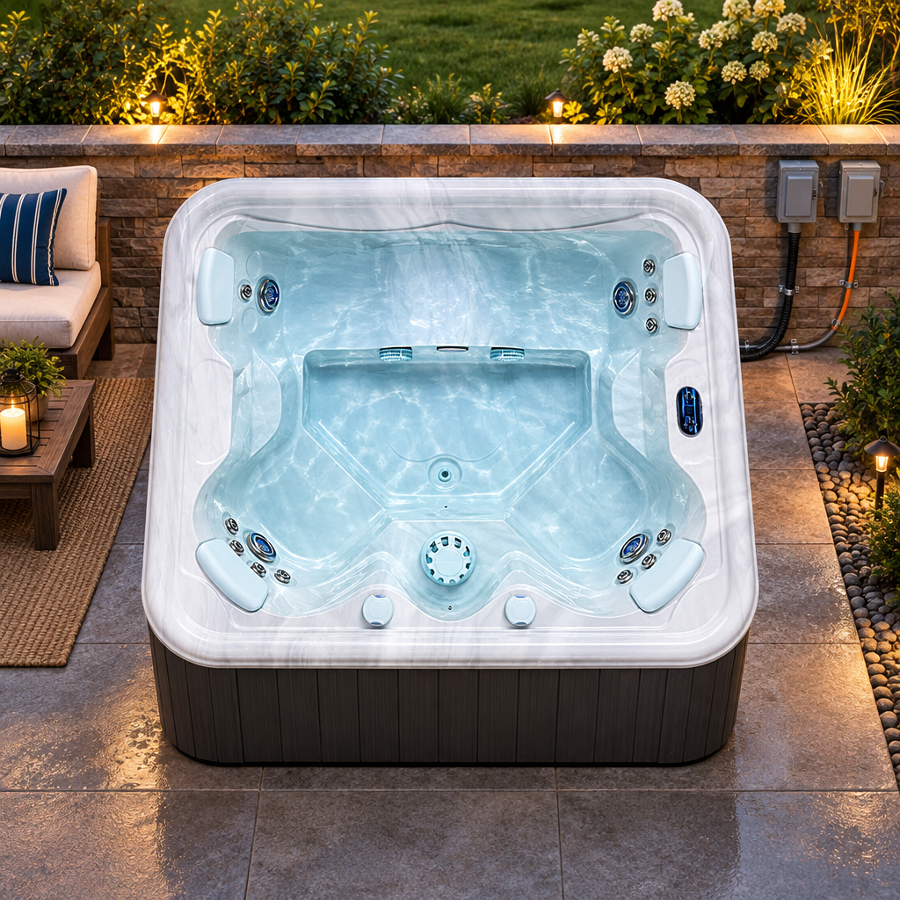
When North American markets refer to spas as 110V models, the label is colloquial shorthand for equipment designed to operate on standard 120V household circuits. However, you must verify the specific spa’s nameplate and manufacturer wiring instructions rather than assuming compatibility based solely on the colloquial voltage designation. These units are commonly categorized as plug-and-play spas because they frequently terminate in a standard grounded plug equipped with an integrated ground fault interrupter.
Split-Phase Residential Power: Understanding 220V, 230V, and 240V
Heavy residential appliances do not rely on a single 120V line conductor to generate intensive thermal energy. Instead, utility services enter the residence as split-phase 120/240V power, carrying two separate 120V hot legs that are 180 degrees out of phase with one another. Connecting across both hot legs yields a nominal 240 volts of electrical potential.
Much like the 110V terminology, references to 220V or 230V are simply historical or international shorthand for split-phase North American 240V supplies. Unless a product manual explicitly specifies commercial three-phase power, any residential spa listing 220V, 230V, or 240V is engineered to run across standard split-phase dual-pole household feeds. You cannot plug these units into ordinary convenience outlets.
Voltage Is Only Part of the Equation: Amperage, Watts, and Circuit Capacity
Evaluating 110v vs 220v hot tub wiring requires examining electrical amperage alongside voltage ratings. Electrical power in watts represents the product of voltage and current in amperes. A 120V circuit with a 15-amp breaker yields a nominal calculation of 1,800 watts (120V × 15A), though the actual continuous load capacity permitted on that circuit must be determined by a qualified electrician based on applicable codes, equipment nameplate requirements, and circuit conditions.
Similarly, a 240V circuit protected by a 50-amp breaker represents a theoretical voltage-times-current calculation of 12,000 watts for illustration purposes, but this nominal figure does not represent the spa’s usable capacity or the continuous load allowance. Available continuous load capacity must be determined by a qualified electrician based on applicable codes, the spa nameplate requirements, and manufacturer instructions. This substantial difference in nominal wattage potential explains why higher-voltage spas can support larger heating elements and more powerful hydromassage pumps.
Technical Comparison: 110V vs. 220V Hot Tub Wiring at a Glance
Comparing entry-level electrical requirements against heavy-duty installations highlights distinct mechanical and lifestyle differences. A 110V setup prioritizes convenience and lower upfront site preparation, whereas 220V hardwiring can support higher-capacity components for thermal stability and uncompromised hydrotherapy.
Side-by-Side Electrical and Operational Comparison
To understand how these electrical categories differ in day-to-day operation, examine the fundamental technical parameters governing both setups:
Technical Parameter
110V / 120V Hot Tub Wiring
220V / 240V Hot Tub Wiring
Supply Method
Dedicated branch circuit, often with plug
Hardwired through maintenance disconnect
Simultaneous Pump/Heat
Often limited; some models shed heating load during high-speed jet operation
Some configurations support concurrent operation; verify with manufacturer
Site Electrical Work
Minimal if an isolated dedicated circuit exists nearby
Typically requires conduit run, disconnect installation, and breaker addition
Heating Rates, Ambient Heat Loss, and Recovery Performance
Water possesses a high specific heat capacity, requiring 8.33 British Thermal Units to raise one gallon by one degree Fahrenheit. Heating element wattage directly affects how quickly water temperature rises, though actual heating time depends on water volume, initial temperature, insulation quality, and ambient conditions. Consult the specific spa model’s specifications and manufacturer performance data for accurate heating estimates.
Thermal recovery becomes paramount when using the spa in freezing outdoor temperatures. When a tub is uncovered, it loses heat through evaporation and to the surrounding air; the rate depends on conditions and spa design. A higher-wattage heater produces enough thermal energy to offset active heat loss, helping maintain your desired soak temperature throughout an extended session.
Component Load Sharing: Heater Draw vs. Multi-Speed Jet Pumps
Circuit capacity directly governs internal control board programming. On a 15-amp or 20-amp 110V system, running the electric heater pulls substantial continuous current. If an owner switches on a multi-horsepower water pump, the combined motor and heater demand may exceed the circuit threshold.
Some models are configured to shed heater load during high-speed pump operation to prevent overcurrent tripping. The specific control strategy, including whether the heating element shuts off during certain pump speeds and whether concurrent operation is supported, varies by model and configuration. Review the specific spa’s wiring diagram and manufacturer documentation to understand the component coordination for your chosen unit.
Installation Planning: Circuit, Subpanel, and Site Infrastructure
Bringing power safely to an outdoor hot tub requires systematic infrastructure planning. The physical path from the primary utility entrance to your backyard retreat must satisfy rigid safety standards and mechanical load limits.
Evaluating the Main Service Panel and Available Amperage Headroom
Before buying an outdoor spa, check the main breaker rating on your home electrical panel. Older residences frequently operate on 100-amp main services that already support central air conditioners, electric ranges, and laundry equipment. Adding a continuous high-amperage spa circuit may require an electrician to calculate total residential load demand before quoting a subpanel or service upgrade.
A 200-amp service may have capacity for a spa, but the available load and panel space must be evaluated separately by a qualified electrician. If your primary panel is completely filled with tandem breakers or lacks remaining capacity, consult a qualified electrician to evaluate your options.
Dedicated Circuits vs. Shared Household Outlets
A common misconception among new buyers is that a 110V plug-and-play spa can share an existing patio outlet with landscape lighting or a garage refrigerator. Hot tubs operate as continuous motor and heating loads under electrical safety standards. They require an isolated, dedicated branch circuit with no other receptacles or lighting loads attached.
Plugging a spa into a shared branch line leads to annoying phantom breaker trips whenever another appliance cycles on. Worse, running heavy continuous current through aged, daisy-chained branch wiring creates localized resistance points, deteriorating insulation and generating hazardous heat inside junction boxes.
Wire Sizing, Conduit Runs, and Voltage Drop Over Distance
Physical distance between the main panel and the outdoor installation pad governs conductor selection. Running electrical current over long wire lengths creates internal resistance, causing voltage drop that strains electric pump motors and reduces heater efficiency. Wire gauge must be selected based on the spa nameplate’s minimum circuit ampacity, maximum overcurrent protection, manufacturer wiring instructions, and circuit conditions as determined by a qualified electrician.
All exterior wiring must use a wiring method permitted for the location and installation under the locally adopted code. Your electrician will determine the required burial depth and confirm whether rigid conduit, liquid-tight flexible metallic conduit, direct-burial cable, or other approved methods are appropriate for your specific installation.
Electrical Safety, GFCI Mandates, and Code Compliance
Water and high-amperage electricity present severe shock hazards when mismanaged. National building regulations, including model standards such as the International Residential Code and National Electrical Code, enforce strict protective measures for residential spas.
Ground-fault circuit-interrupter protection must be provided in accordance with the spa’s listing, manufacturer instructions, and applicable local codes. The type and location of GFCI protection depends on the equipment design and installation method. A Class A GFCI device for personnel protection typically trips when it detects a ground imbalance exceeding 4 milliamperes but not exceeding 6 milliamperes, cutting power within milliseconds.
On some portable units, this protection takes the form of an inline GFCI module integrated directly into the factory power cord. On hardwired spas, GFCI protection may be provided by a circuit breaker or other approved device positioned as specified by the manufacturer and applicable codes.
Maintenance Disconnect and Location Requirements
Applicable codes typically mandate a maintenance disconnecting means installed in accordance with the spa listing and local regulations. The disconnect location must meet specific visibility and accessibility requirements, commonly including a minimum horizontal distance from the inside wall of the spa, unless permitted barriers or enclosures are provided. Consult the locally adopted electrical code and manufacturer instructions for precise requirements.
The disconnect allows maintenance technicians to isolate power to the equipment pack during service or emergencies without entering the house.
Equipment Grounding, Bonding, and Why DIY Wiring Is Hazardous
Equipotential bonding connects the metallic components of the spa equipment, pump motor frames, and surrounding conductive surfaces together. Bonding establishes a common electrical potential across all adjacent metal objects, helping reduce potential differences between conductive parts.
Because outdoor wet environments multiply electrocution risks, consumer safety agencies recommend hiring a licensed electrician for spa electrical work. Sizing conduit, setting grounding electrodes when required, and balancing circuit loads require specialized tools and verified trade knowledge that typical DIY handymen do not possess.
Evaluating Real-World Spa Specifications: A Case Study with the VS-402C
Evaluating the technical specifications of a real spa demonstrates why prospective owners must consult engineering nameplates rather than relying on generalized assumptions. For us at Victoria Star, balancing hydrotherapy performance with residential power delivery requires intentional hardware integration.
Consider the VS-402C four-person lounger spa. Reviewing its available product documentation reveals how physical component specifications influence site electrical planning.
Published Power Metrics: Deconstructing 4.75 kW Total Draw and a 3 kW Heater
The available technical data for the VS-402C lists an aggregate power supply requirement of 4.75 kW, anchored by a 1 × 3 kW electric heating assembly. However, the product documentation provided does not confirm the rated voltage, minimum circuit ampacity, or maximum overcurrent protection for this specific model.
Because the total system requires 4.75 kW, prospective buyers should request the complete nameplate specifications and manufacturer wiring instructions directly from the supplier before planning electrical infrastructure. The aggregate power rating indicates this unit requires careful circuit planning based on confirmed electrical requirements.
Hydrotherapy Demands: Balancing a 2 HP Jet Pump and 0.35 HP Circulation Pump
The VS-402C incorporates a 2 HP water pump dedicated to powering 15 targeted therapeutic massage jets, paired alongside an independent 0.35 HP circulation pump for continuous filtration and water management. Water pumps draw substantial inductive motor loads upon startup, demanding stable electrical service.
Operating both pumps alongside the 3 kW heating element requires reliable current delivery without fluctuating line voltage. The control system coordinates these components, but the physical electrical feed must deliver adequate continuous amperage as specified by the manufacturer.
Pre-Purchase Checklist: Clarifying Site Requirements with the Manufacturer
Before scheduling concrete pad pouring or hiring an electrical contractor, prospective owners should obtain and verify several precise technical details directly from the manufacturer nameplate and installation manual:
Nameplate Line Voltage: Confirm the rated voltage and whether the spa requires dedicated higher-voltage service or supports field-convertible input.
Minimum Circuit Ampacity (MCA): Obtain the exact MCA figure to ensure your electrician sizes the copper conductors accurately.
Maximum Overcurrent Protection (MOCP): Verify the required circuit breaker rating specified by the manufacturer.
Approved Terminal Block Configurations: Review the wiring diagram to determine whether 3-wire or 4-wire cabling is required and confirm grounding and bonding requirements.
Decision Framework: Choosing Between 110V and 220V
Deciding between lower-voltage simplicity and higher-capacity performance requires matching your household circumstances against the physical realities of your intended spa model. Use this structured decision path to pinpoint the ideal setup for your property.
A Step-by-Step Selection Methodology
Follow these sequential planning steps to eliminate costly oversights during spa acquisition:
Audit Available Panel Capacity: Inspect your main breaker rating and consult a qualified electrician to confirm whether your home service can accommodate the spa’s electrical requirements without a panel upgrade.
Analyze Your Regional Climate: Determine your local winter lows; sub-freezing temperatures may benefit from higher heater wattage to maintain stable soaking temperatures.
Assess Bather Habits and Entertaining: Decide whether you plan to host multiple bathers for extended sessions and whether you require simultaneous heating and massage pump operation.
Calculate Total Site Preparation Costs: Solicit itemized estimates from licensed electricians for circuit installation, conduit, disconnect enclosures, and permitting fees.
Cross-Check Spa Model Requirements: Match your site infrastructure directly against the complete nameplate specifications and manufacturer installation instructions for your chosen spa model.
When a Lower-Voltage (110V/120V) Spa Fits the Scenario
A 110V configuration proves beneficial when minimizing upfront installation complexity is your primary concern. Renters or temporary residents who cannot make permanent alterations to an electrical panel often find plug-and-play spas advantageous. Similarly, homeowners living in temperate, mild climates who use their tub primarily for short, casual soaks may find lower-capacity configurations adequate for their needs.
When a Higher-Capacity (220V/240V) Setup May Be Advantageous
Higher-voltage configurations can support larger heating elements and, in some cases, allow simultaneous operation of heating and massage systems. Year-round users in four-season climates may benefit from higher heating capacity to maintain comfortable water temperatures when ambient air temperatures drop significantly.
Spas accommodating four or more bathers and featuring multiple pumps, circulation loops, and automated sanitation systems may require higher circuit capacity to operate all components without taxing internal electronics. However, the necessary electrical configuration depends on the specific model’s nameplate requirements rather than seating capacity alone.
Calculating Total Project Cost: Beyond the Spa Sticker Price
True ownership costs encompass more than the spa purchase invoice. A standard 110V installation may only require verifying an existing isolated circuit or adding a dedicated branch. A higher-capacity hardwired installation typically involves conductor runs, conduit, a maintenance disconnect enclosure, municipal building permits, and skilled professional labor, which collectively add to the upfront investment.
Common Electrical Planning Pitfalls to Avoid
Overlooking fundamental electrical rules during spa installation creates safety hazards and risks voiding your manufacturer warranty. Avoid these frequent planning errors.
Using Standard Household Extension Cords
Homeowners are occasionally tempted to connect a 110V spa to an outlet across the yard using a standard utility extension cord. Household extension cords use undersized conductors that overheat under continuous high-amperage draws, degrading cord insulation and creating serious fire hazards while starving the pump motor of necessary operating voltage. Never use extension cords for permanent spa connections.
Sizing Circuits Based on Generic Guidelines Instead of the Nameplate
Every spa is engineered around specific internal component combinations. Selecting circuit components based solely on generic online recommendations can result in improper overcurrent protection or inadequate wire sizing. Always match the circuit breaker amperage and wire gauge to the Minimum Circuit Ampacity and Maximum Overcurrent Protection values provided by the manufacturer on the unit’s nameplate and in the installation manual.
Assuming Every Tub Can Be Converted in the Field
Some spas feature convertible control systems that permit field rewiring between different voltage configurations via jumper settings and approved procedures. However, many models are built strictly as dedicated single-voltage appliances. Never attempt to convert an electrical system unless the factory installation manual explicitly provides approved schematic diagrams and conversion instructions for that specific model.
FAQs
Is a 110V hot tub the same as a 120V hot tub?
In North American residential contexts, 110V and 120V are colloquial terms referring to the same single-phase utility electrical supply category. Utility providers deliver nominal 120V power to residential circuits, but historical terminology leads manufacturers and consumers to use 110V and 120V interchangeably. Always verify the specific spa’s nameplate voltage rating and manufacturer instructions.
Does a 220V hot tub require a dedicated subpanel?
Whether a separate subpanel is required depends on the equipment design, available space in the main panel, and local code requirements. Applicable codes typically require a maintenance disconnecting means installed within sight of the spa and meeting specified distance and accessibility requirements. Consult a qualified electrician and the locally adopted electrical code to determine your installation needs.
Does a 220V connection make a hot tub heat faster than 110V?
Higher-voltage circuits can power larger heating elements in some spa models. Actual heating performance depends on the specific heater wattage installed in your chosen model, along with water volume, initial temperature, insulation, and ambient conditions. Consult the manufacturer’s specifications for your specific spa model to understand heating capacity and estimated warm-up time.
Can I plug a 110V hot tub into any standard outdoor outlet?
No, you cannot safely plug a hot tub into an arbitrary outdoor outlet. Hot tubs require a dedicated branch circuit that does not share wiring, outlets, or light fixtures with other household loads. The circuit must be sized and protected according to the spa’s nameplate requirements and manufacturer instructions.
Can all hot tubs be converted from 110V to 220V?
No, field convertibility depends entirely on the design of the internal control system and heating assembly. Some spas feature convertible control boxes that accept different voltage configurations via approved internal adjustments, while others are built with dedicated, non-convertible single-voltage components. Only attempt conversion if the factory installation manual explicitly provides approved conversion procedures for your specific model.
What technical details should I provide my electrician before requesting a quote?
Provide your electrician with the complete manufacturer specification sheet showing rated line voltage, aggregate power draw, Minimum Circuit Ampacity (MCA), Maximum Overcurrent Protection (MOCP), and any special wiring or grounding requirements. You should also specify the exact physical distance between your main home service panel and the planned spa location, along with any obstacles that may affect conduit routing.
Conclusion
Navigating the nuances of 110v vs 220v hot tub wiring comes down to balancing structural site readiness against your expectations for hydrotherapy performance and thermal recovery. While lower-voltage plug-and-play connections offer installation simplicity, higher-capacity dedicated wiring can support more powerful components and, in some configurations, simultaneous operation of multiple systems. By auditing your home electrical panel early, obtaining complete nameplate specifications and manufacturer installation instructions for your chosen model, and engaging a qualified licensed electrician, you protect your investment and ensure safe, compliant installation for years of therapeutic relaxation.
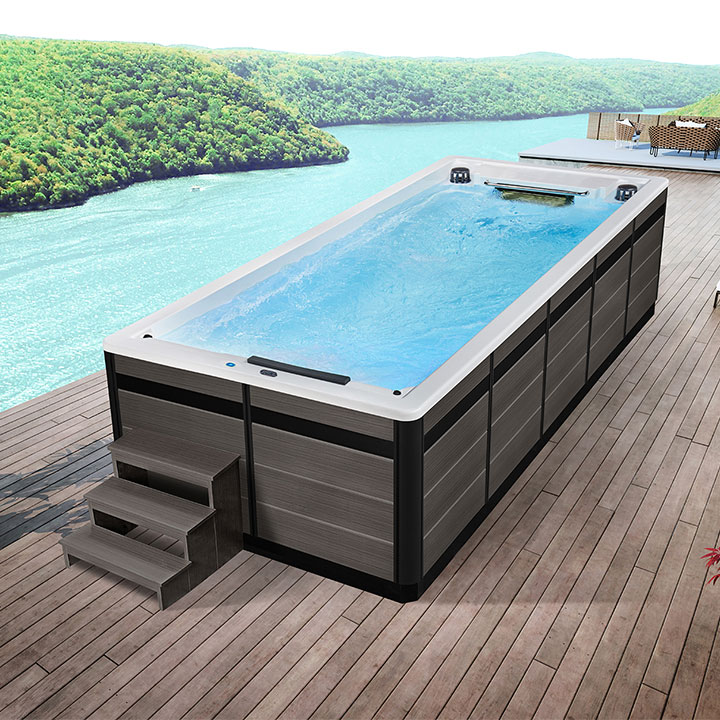
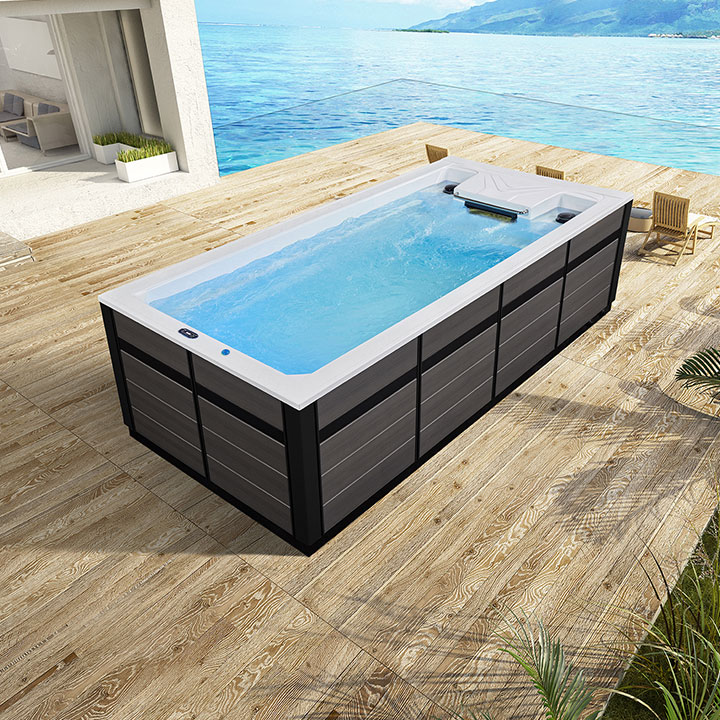
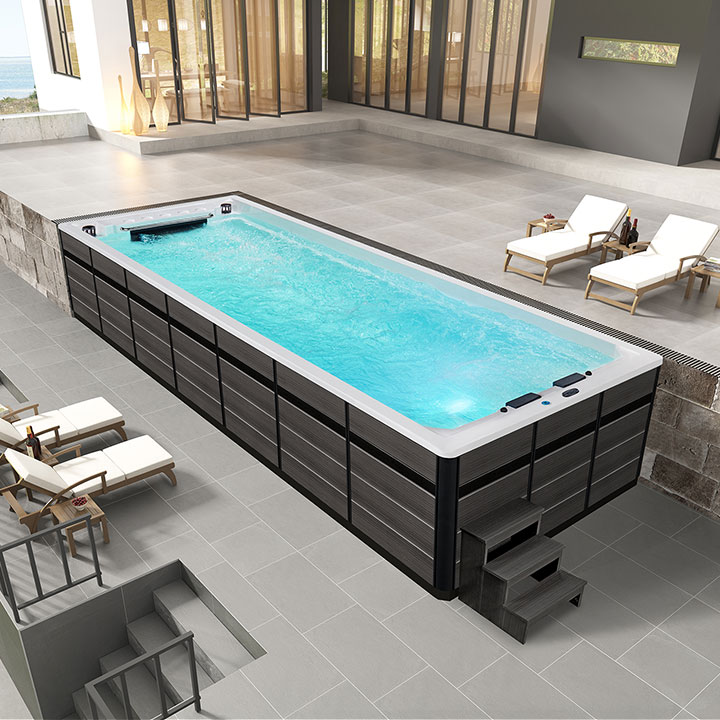
Victoria Star Swim Spa offers the perfect balance between exercise and relaxation, whether you want to swim for fitness or relax in the spacious seating.
Victoria Star Swim Spa offers the perfect balance between exercise and relaxation, whether you want to swim for fitness or relax in the spacious seating.